Javanese treebine
Cissus nodosa · Accepted scientific name
Scientific literature: Very Sparse (1 studies) · ★☆☆☆☆
Javanese treebine, scientifically known as Cissus nodosa, is a vigorous climbing woody vine native to tropical regions. Renowned for its medicinal properties, it is frequently utilized in traditional healing practices to treat inflammation, skin ailments, and various infections, offering a potent natural resource for holistic wellness and pharmacological research.
- Family
- Vitaceae
- Native range
- Asia-Temperate
- Parts used
- Not available
- Common names
- Javanese Treebine
- Scientific synonyms
- Vitis Nodosa · Vitis Glaberrima · 2 more
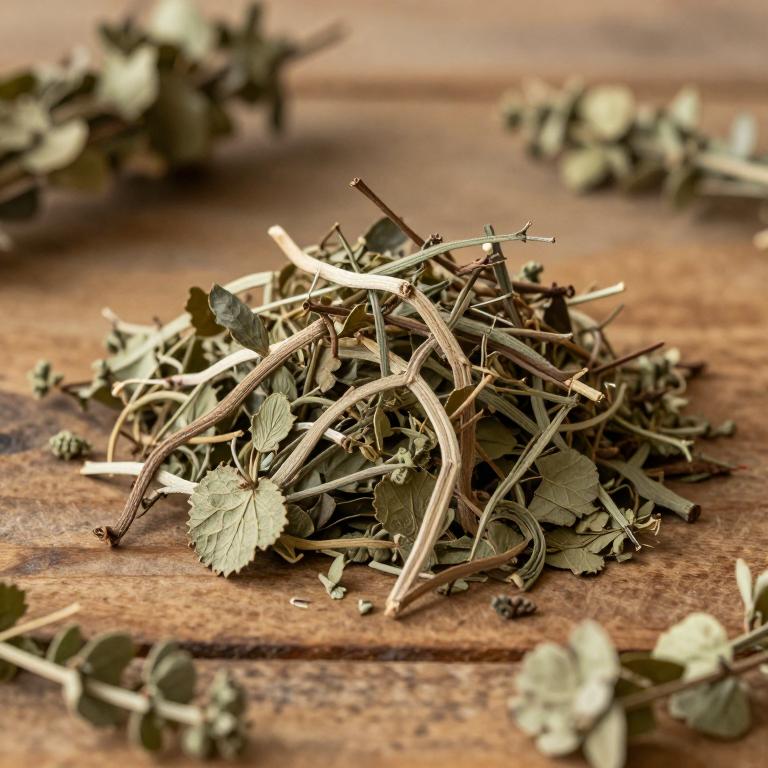
Names and Synonyms
Common Names
- Javanese treebine
Scientific Names
Accepted name
Cissus nodosaSynonyms
- Vitis nodosa
- Vitis glaberrima
- Cissus glaberrima
- Cissus subtetragona
Sources: Wikidata, Catalogue of Life
Taxonomical Classification
This plant, Cissus nodosa, belongs to the kingdom Plantae and is classified under the phylum Streptophyta within the class Equisetopsida. It falls under the subclass Magnoliidae and the order Vitales, specifically being a member of the family Vitaceae. Finally, its taxonomic identity is established within the genus Cissus.
| Rank | Classification |
|---|---|
| Kingdom | Plantae |
| Phylum | Streptophyta |
| Class | Equisetopsida |
| Subclass | Magnoliidae |
| Order | Vitales |
| Family | Vitaceae |
| Genus | Cissus |
Sources: The World Checklist of Vascular Plants (WCVP)
Distribution
This plant exhibits a diverse geographical distribution across several key regions in Asia. In China, it can be found spanning from the South-Central provinces to the Southeast coastal areas. Its presence is also noted on the tropical island of Hainan. Moving into the Indo-China region, the species thrives within the Andaman Islands. Finally, its range extends into the mainland territory of Cambodia.
| Region | Area |
|---|---|
| China | China South-Central |
| China | Hainan |
| China | China Southeast |
| Indo-China | Andaman Is. |
| Indo-China | Cambodia |
| Indo-China | Laos |
| Indo-China | Myanmar |
| Indo-China | Thailand |
| Indo-China | Vietnam |
| Malesia | Borneo |
Sources: The World Checklist of Vascular Plants (WCVP)
Botanical Identification
Ecology
The ecology of Cissus nodosa is characterized by its presence across a diverse altitudinal gradient, allowing it to inhabit various landscape positions. It is found at elevations ranging from a minimum of 50 m AMSL to a maximum of 1300 m AMSL, with a mean elevational range centered around 675 m AMSL. This broad distribution suggests an adaptability to different thermal and moisture regimes found between lowland and mid-elevation environments.
- Elevational range max:
- 1300 m AMSL
- Elevational range mean:
- 675 m AMSL
- Elevational range min:
- 50 m AMSL
Life history
The life history of Cissus nodosa is characterized by its status as a perennial plant, allowing it to persist in its environment through multiple growing seasons. As a long-lived species, it establishes a stable presence within its habitat, often utilizing its climbing growth habit to navigate through surrounding vegetation over several years. This perennial nature ensures that the plant can undergo successive cycles of vegetative growth and reproduction, contributing to its longevity and its ability to maintain ecological niches within its native range.
- Lifecycle :
- perennial
Morphology
The morphology of Cissus nodososa is characterized by its growth form as a woody, climbing vine, functioning as an obligatory climber that relies on external support to ascend. Although it exhibits characteristics of a woody shrub in its structural density, it primarily operates as a liana, spreading through various environments. While its habitat can span across aquatic, semiaquatic, and terrestrial zones, the plant is fundamentally terrestrial in its epiphytic and ecological positioning, maintaining an independent existence rather than acting as a parasite. This combination of a woody stem structure and a climbing habit allows it to navigate diverse landscapes, transitioning from a herbaceous-like flexibility in younger stages to a more robust, woody vine as it matures.
- Aquatic :
- terrestrial
- Climber :
- vine
- Climber :
- obligatory
- Epiphyte :
- terrestrial
- Growth form :
- herb
- Growth form :
- shrub
- Parasite :
- independent
- Woodiness :
- woody
Physiology
The physiological characteristics of Cissus nodosas are prominently reflected in its foliar morphology, which plays a critical role in its metabolic and photosynthetic processes. The leaves exhibit a significant range of dimensions, with a mean length of 12.5 cm and a minimum length of 6 cm, reaching a maximum length of up to 19 cm. This variation in longitudinal growth is complemented by a diverse width profile; the leaves maintain a mean width of 4.5 cm, fluctuating between a minimum of 2 cm and a maximum breadth of 7 cm. These morphological variations in leaf surface area are essential for regulating gas exchange and light interception, directly influencing the plant's overall energy production and physiological vigor.
- Leaf length max:
- 19 cm
- Leaf length mean:
- 12.5 cm
- Leaf length min:
- 6 cm
- Leaf width max:
- 7 cm
- Leaf width mean:
- 4.5 cm
- Leaf width min:
- 2 cm
Reproduction
The reproduction of Cissus nodosa is characterized by the development of small, globular fruits that serve as the primary vehicle for seed dispersal. These fruits exhibit specific morphological dimensions, typically maintaining a mean diameter where both the fruit length and fruit width average approximately 1 cm. The size of these fruits can vary slightly depending on environmental conditions and maturity, with minimum dimensions recorded at 0.8 cm for both length and width, while the maximum dimensions can reach up to 1.2 cm in both length and width, resulting in a nearly spherical shape. This consistency in fruit geometry ensures a standardized method for seed distribution within its natural habitat.
- Fruit length max:
- 1.2 cm
- Fruit length mean:
- 1 cm
- Fruit length min:
- 0.8 cm
- Fruit width max:
- 1.2 cm
- Fruit width mean:
- 1 cm
- Fruit width min:
- 0.8 cm
Sources: Global Inventory of Floras and Traits (GIFT)
Chemicals
Cissus nodosa has 1 reported phytochemicals identified across 0 scientific publications and several other databases. The most consistently reported chemicals include Flavonoid.
| Chemical | Supporting sources | Consensus |
|---|---|---|
| Flavonoid | 1 supporting sources | ★☆☆☆☆ |
Flavonoid
- Molecules (Basel, Switzerland)