Cissus gongylodes
Cissus gongylodes · Accepted scientific name
Scientific literature: Very Sparse (20 studies) · ★☆☆☆☆
Cissus gongylodes, scientifically known as Cissus gongylodes, is a versatile medicinal vine prized in traditional herbal medicine. Renowned for its therapeutic potential, this plant is frequently utilized to support joint health, reduce inflammation, and promote overall vitality, making it a significant botanical resource in holistic wellness practices.
- Family
- Vitaceae
- Native range
- Southern America
- Parts used
- Leaf
- Common names
- Not available
- Scientific synonyms
- Vitis Tricuspis · Vitis Gongylodes · 3 more
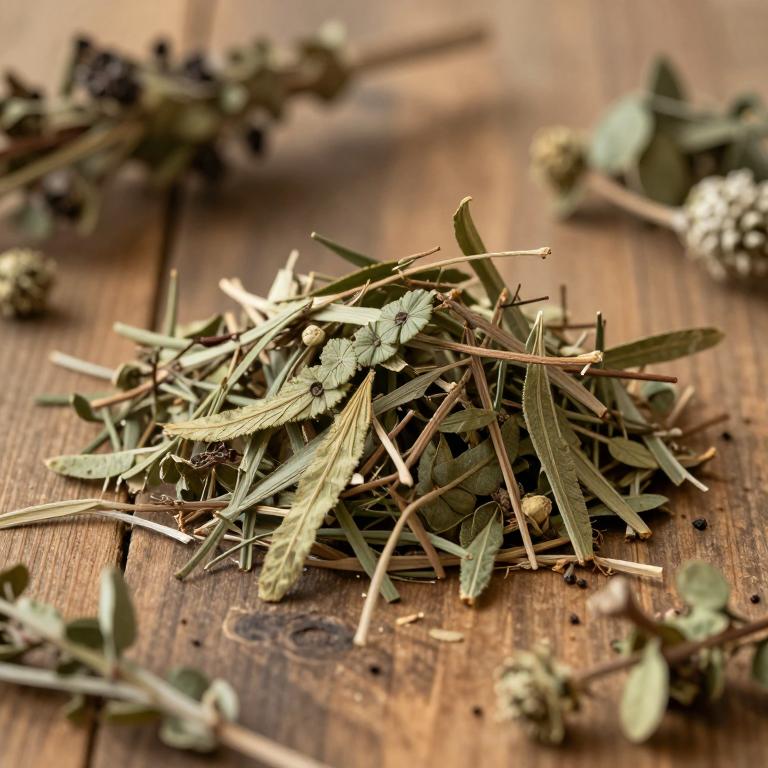
Names and Synonyms
Scientific Names
Accepted name
Cissus gongylodesSynonyms
- Vitis tricuspis
- Vitis gongylodes
- Cissus gongylodes var. lobata
- Cissus cervii
- Cissus tricuspis
Regional and Traditional Names
Spanish:
- guembé
- oavióncica
- samopero
Sources: Wikidata, Catalogue of Life
Taxonomical Classification
This plant belongs to the kingdom Plantae and is classified within the phylum Streptophyta and the class Equisetopsida. It is further categorized under the subclass Magnoliidae and the order Vitales, placing it in the family Vitaceae. Finally, its specific taxonomic designation is within the genus Cissus.
| Rank | Classification |
|---|---|
| Kingdom | Plantae |
| Phylum | Streptophyta |
| Class | Equisetopsida |
| Subclass | Magnoliidae |
| Order | Vitales |
| Family | Vitaceae |
| Genus | Cissus |
Sources: The World Checklist of Vascular Plants (WCVP)
Distribution
This plant exhibits a broad geographical presence across several regions of the South American continent. In Northern South America, its range extends into the country of Venezuela. Moving toward the western part of the continent, the species is found within the territories of Colombia, Peru, and Bolivia. Additionally, the plant is distributed within the West-Central region of Brazil. Collectively, these locations highlight a diverse habitat spanning both northern and western South American landscapes.
| Region | Area |
|---|---|
| Northern South America | Venezuela |
| Western South America | Bolivia |
| Western South America | Colombia |
| Western South America | Peru |
| Brazil | Brazil West-Central |
| Brazil | Brazil Northeast |
| Brazil | Brazil Southeast |
| Brazil | Brazil North |
| Brazil | Brazil South |
| Southern South America | Paraguay |
Sources: The World Checklist of Vascular Plants (WCVP)
Botanical Identification
Ecology
The ecology of Cissus gongylodes is characterized by a broad altitudinal distribution and a diverse range of environmental settings. This species is found across an elevational range spanning from sea level (0 m AMSL) up to a maximum of 1,300 m AMSL, maintaining a mean elevation of approximately 1,300 m AMSL. Its habitat preference is notably varied, allowing it to thrive in anthropized areas (Área Antrópica) as well as distinct natural biomes, including the Caatinga (strictu sensu), Terra Firme forests (Floresta de Terra Firme), and Semi-deciduous Seasonal Forests (Floresta Estacional Semidecidual).
- Elevational range max:
- 100 m AMSL
- Elevational range mean:
- 1300 m AMSL
- Elevational range min:
- 0 m AMSL
- Habitat :
- Área Antrópica, Caatinga (stricto sensu), Floresta de Terra Firme, Floresta Estacional Semidecidual
Morphology
The morphology of Cissus gongylodes is characterized by its growth habit as a non-woody liana, functioning as an obligatory climber that relies on external structures for support. Although it can occupy various ecological niches, its primary growth form is terrestrial rather than aquatic or semiaquatic. While it exhibits characteristics that allow it to navigate complex environments, it remains a terrestrial entity rather than acting as a holoepiphyte, hemiepiphyte, or any other specialized epiphytic form. Furthermore, the plant operates as an independent organism, lacking the parasitic traits of obligatory or facultative parasites, maintaining its own physiological autonomy as it climbs.
- Aquatic :
- terrestrial
- Climber :
- liana
- Climber :
- obligatory
- Epiphyte :
- terrestrial
- Parasite :
- independent
- Woodiness :
- non-woody
Sources: Global Inventory of Floras and Traits (GIFT)
Plant Parts
Cissus gongylodes has 1 reported plant parts identified across 1 scientific publications and several other databases that are studied for medicinal purposes. The most consistently reported plant part include leaf.
| Plant part | Supporting sources | Consensus |
|---|---|---|
| Leaf | 1 supporting sources | ★☆☆☆☆ |
Leaf
- Journal of ethnopharmacology
Chemicals
Cissus gongylodes has 5 reported phytochemicals identified across 1 scientific publications and several other databases. The most consistently reported chemicals include DL-malic acid, Flavonoids, Isoquercetin, L-Malic acid, RUTIN.
| Chemical | Supporting sources | Consensus |
|---|---|---|
| DL-malic acid | 1 supporting sources | ★☆☆☆☆ |
| Flavonoids | 1 supporting sources | ★☆☆☆☆ |
| Isoquercetin | 1 supporting sources | ★☆☆☆☆ |
| L-Malic acid | 1 supporting sources | ★☆☆☆☆ |
| RUTIN | 1 supporting sources | ★☆☆☆☆ |
DL-malic acid
- Journal of ethnopharmacology
Flavonoids
- Journal of ethnopharmacology
Isoquercetin
- Journal of ethnopharmacology
L-Malic acid
- Journal of ethnopharmacology
RUTIN
- Journal of ethnopharmacology
Conditions
Cissus gongylodes has 9 reported investigations on conditions identified across 1 scientific publications and several other databases. The most consistently reported conditions include acute pain, disinfection, gastritis, joint pain, kidney stone.
| Condition | Supporting sources | Consensus |
|---|---|---|
| Acute pain | 1 supporting sources | ★☆☆☆☆ |
| Disinfection | 1 supporting sources | ★☆☆☆☆ |
| Gastritis | 1 supporting sources | ★☆☆☆☆ |
| Joint pain | 1 supporting sources | ★☆☆☆☆ |
| Kidney stone | 1 supporting sources | ★☆☆☆☆ |
| Kidney stones | 1 supporting sources | ★☆☆☆☆ |
| Rheumatism | 1 supporting sources | ★☆☆☆☆ |
| Struvite | 1 supporting sources | ★☆☆☆☆ |
| Urolithiasis | 1 supporting sources | ★☆☆☆☆ |
Acute pain
- Journal of ethnopharmacology
Disinfection
- Journal of ethnopharmacology
Gastritis
- Journal of ethnopharmacology
Joint pain
- Journal of ethnopharmacology
Kidney stone
- Journal of ethnopharmacology
Kidney stones
- Journal of ethnopharmacology
Rheumatism
- Journal of ethnopharmacology
Struvite
- Journal of ethnopharmacology
Urolithiasis
- Journal of ethnopharmacology
Preparations
Cissus gongylodes has 2 reported preparations identified across 1 scientific publications and several other databases. The most consistently reported preparations include decoction, leaf decoction.
| Preparation | Supporting sources | Consensus |
|---|---|---|
| Decoction | 1 supporting sources | ★☆☆☆☆ |
| Leaf decoction | 1 supporting sources | ★☆☆☆☆ |
Decoction
- Journal of ethnopharmacology
Leaf decoction
- Journal of ethnopharmacology