Black Wild Grape
Cissus cornifolia · Accepted scientific name
Scientific literature: Very Sparse (6 studies) · ★☆☆☆☆
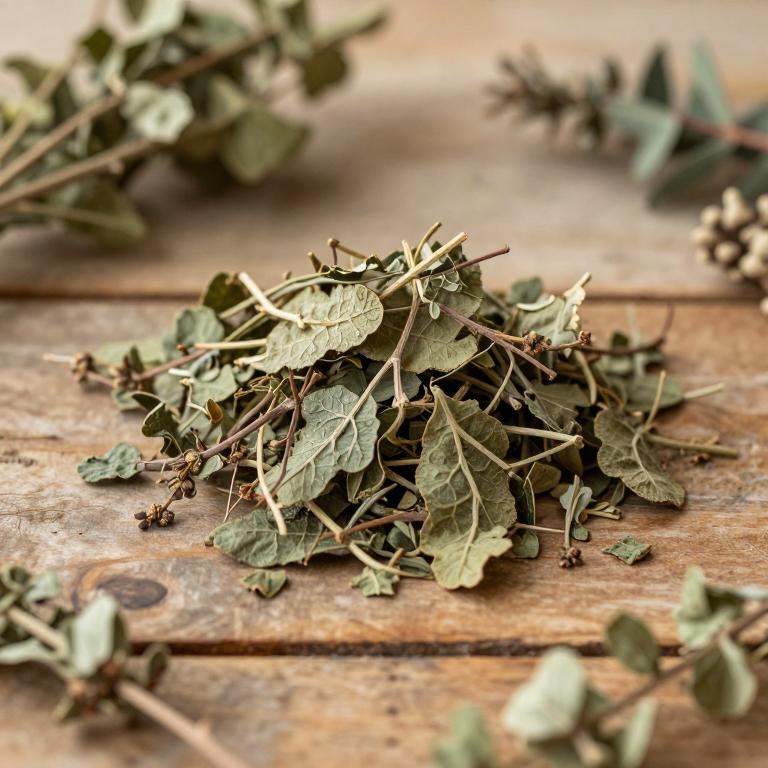
Black Wild Grape, scientifically known as Cissus cornifolia, is a versatile climbing vine native to various regions. Renowned for its medicinal properties, it is traditionally used to treat ailments ranging from skin inflammations to digestive issues. This resilient plant offers valuable bioactive compounds, making it a significant subject in ethnobotany.
Names and Synonyms
Common Names
- Black Wild Grape
- Ivy Grape
- Ivy Grape Cissus
- Mopane Grape
- ivy-grape
Scientific Names
Accepted name
Cissus cornifoliaSynonyms
- Vitis cornifolia
- Cissus volkensii
- Cissus lonicerifolia
Sources: Wikidata, Catalogue of Life
Taxonomical Classification
This plant belongs to the kingdom Plantae and is classified within the phylum Streptophyta and the class Equisetopsida. Following its placement in the subclass Magnoliidae and order Vitales, it is categorized under the family Vitaceae. Finally, its specific taxonomic identity is defined by the genus Cissus.
| Rank | Classification |
|---|---|
| Kingdom | Plantae |
| Phylum | Streptophyta |
| Class | Equisetopsida |
| Subclass | Magnoliidae |
| Order | Vitales |
| Family | Vitaceae |
| Genus | Cissus |
Sources: The World Checklist of Vascular Plants (WCVP)
Distribution
This plant, known as Cissus cornifolia, exhibits a specific distribution pattern across the West Tropical Africa region. Its presence has been documented in several key nations, including Benin and Burkina Faso. Additionally, the species can be found thriving within the borders of Ghana. The geographical range further extends into the territory of Guinea. Finally, the distribution includes the coastal landscapes of Ivory Coast.
| Region | Area |
|---|---|
| West Tropical Africa | Benin |
| West Tropical Africa | Burkina |
| West Tropical Africa | Ghana |
| West Tropical Africa | Guinea |
| West Tropical Africa | Ivory Coast |
| West Tropical Africa | Nigeria |
| West Tropical Africa | Togo |
| West-Central Tropical Africa | Central African Republic |
| West-Central Tropical Africa | Cameroon |
| West-Central Tropical Africa | Gabon |
Sources: The World Checklist of Vascular Plants (WCVP)
Botanical Identification
Ecology
The ecology of Cissus cornifolia is characterized by its adaptation to specific altitudinal gradients, primarily thriving within an elevational range that spans from a minimum of 300 m AMSL to a maximum of 1250 m AMSL. This distribution suggests that the species is well-suited to subtropical or tropical montane environments, occupying ecological niches ranging from lowland foothills to mid-elevation slopes. Within this vertical range, the plant's survival and reproductive success are closely tied to the varying climatic conditions, moisture availability, and light intensities found across these different elevations.
- Elevational range max:
- 1250 m AMSL
- Elevational range min:
- 300 m AMSL
Life history
The life history of Cissus cornifolia is characterized by its status as a perennial organism, allowing it to persist through multiple growing seasons. In terms of its structural growth strategy and positioning within ecological niches, the plant is classified as a phanerophyte, specifically exhibiting life forms categorized under both phanerophyte and nanophanerophyte designations. This life history pattern ensures a sustained presence in its habitat, utilizing its specialized growth form to maintain its reproductive and vegetative structures over an extended period.
- Life form :
- phanerophyte
- Lifecycle :
- perennial
Morphology
The morphology of Cissus cornifolia is characterized by a woody, shrub-like growth form that functions as an obligatory climber. This plant typically reaches a mean height of 2 meters, though it can attain a maximum height of up to 3 meters. It is a terrestrial species, rather than aquatic or epiphytic, and operates as an independent organism without parasitic tendencies.
- Aquatic :
- terrestrial
- Climber :
- obligatory
- Epiphyte :
- terrestrial
- Growth form :
- shrub
- Parasite :
- independent
- Plant height max:
- 3 m
- Plant height mean:
- 2 m
- Woodiness :
- woody
Physiology
The physiology of Cissus cornifolia is characterized by its metabolic processes and nutrient acquisition strategies, which are primarily driven by its growth habit and environmental adaptations. In terms of its interaction with soil nutrients, the plant does not function as a nitrogen fixer; it lacks the symbiotic relationship with nitrogen-fixing bacteria, such as Rhizobium, that would allow it to convert atmospheric nitrogen into a usable form. Consequently, its nitrogen uptake is entirely dependent on the availability of nitrates or ammonium within the soil substrate. The plant's physiological efficiency is further defined by its photosynthetic pathways and its ability to manage water through specialized tissue structures, facilitating its survival in varied light intensities. Its metabolic regulation focuses on maintaining cellular homeostasis and managing resource allocation to support its climbing or spreading structural growth.
- Nitrogen fixer :
- no
Sources: Global Inventory of Floras and Traits (GIFT)
Plant Parts
Cissus cornifolia has 2 reported plant parts identified across 2 scientific publications and several other databases that are studied for medicinal purposes. The most consistently reported plant part include leaf, rhizome.
| Plant part | Supporting sources | Consensus |
|---|---|---|
| Leaf | 1 supporting sources | ★☆☆☆☆ |
| Rhizome | 1 supporting sources | ★☆☆☆☆ |
Leaf
- Pakistan journal of pharmaceutical sciences
Rhizome
- Pharmacognosy research
Activities
Cissus cornifolia has 1 reported activities identified across 2 scientific publications and several other databases. The most consistently reported activities include Antimicrobial.
| Activity | Supporting sources | Consensus |
|---|---|---|
| Antimicrobial | 1 supporting sources | ★☆☆☆☆ |
Antimicrobial
- Pharmacognosy research
Conditions
Cissus cornifolia has 3 reported investigations on conditions identified across 2 scientific publications and several other databases. The most consistently reported conditions include Candida albicans, Salmonella typhi, Staphylococcus aureus.
| Condition | Supporting sources | Consensus |
|---|---|---|
| Candida albicans | 1 supporting sources | ★☆☆☆☆ |
| Salmonella typhi | 1 supporting sources | ★☆☆☆☆ |
| Staphylococcus aureus | 1 supporting sources | ★☆☆☆☆ |
Candida albicans
- Pharmacognosy research
Salmonella typhi
- Pharmacognosy research
Staphylococcus aureus
- Pharmacognosy research
Preparations
Cissus cornifolia has 2 reported preparations identified across 2 scientific publications and several other databases. The most consistently reported preparations include acetone extracts of the rhizome, methanol leaf extract.
| Preparation | Supporting sources | Consensus |
|---|---|---|
| Acetone extracts of the rhizome | 1 supporting sources | ★☆☆☆☆ |
| Methanol leaf extract | 1 supporting sources | ★☆☆☆☆ |
Acetone extracts of the rhizome
- Pharmacognosy research
Methanol leaf extract
- Pakistan journal of pharmaceutical sciences