marsh thistle
Cirsium palustre · Accepted scientific name
Scientific literature: Very Sparse (8 studies) · ★☆☆☆☆
Marsh thistle, scientifically known as Cirsium palustre, is a perennial herb found in damp, marshy habitats. Historically utilized in traditional medicine, it possesses diuretic and anti-inflammatory properties. While primarily noted for its ecological role, its bioactive compounds offer intriguing potential for supporting digestive health and managing systemic inflammation.
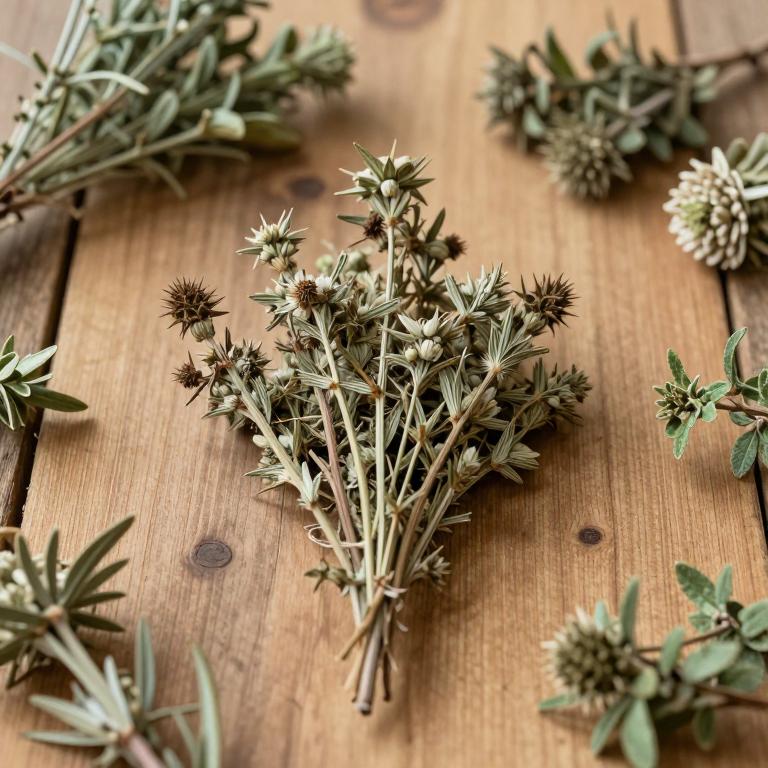
Names and Synonyms
Common Names
- Marsh Thistle
- European marsh thistle
- European swamp thistle
Scientific Names
Accepted name
Cirsium palustreSynonyms
- Polyacantha palustris
- Polycantha palustris
- Cnicus palustris
- Onotrophe palustris
- Cirsium palustre var. mitius
- Cirsium palustre var. cristatus
- Cirsium palustriforme
- Cirsium palatinum
- Cirsium laciniatum
- Cirsium chailletii
- Carduus laciniatus
- Carduus palustris
- Carduus chailletii
- Cirsium kochianum
- Cirsium lacteum
- Cirsium palustre var. putatum
- Cirsium palustre var. torfaceum
- Cirsium palustre var. spinosissimum
- Cirsium palustre var. pallidum
- Cynara palustris
- Serratula palustris
Regional and Traditional Names
German:
- Sumpf-Kratzdistel
- Sumpfkratzdistel
- Sumpf-Kratzdistel
French:
- Cirse des marais
- cirse des marais
- chardon des marais
- cirse des marais
Sources: Wikidata, Catalogue of Life
Taxonomical Classification
This plant belongs to the kingdom Plantae and is classified under the phylum Streptophyta within the class Equisetopsida. As a member of the subclass Magnoliidae and the order Asterales, it is further nested within the family Asteraceae. Specifically, it is identified by the genus Cirsium, which characterizes its botanical lineage.
| Rank | Classification |
|---|---|
| Kingdom | Plantae |
| Phylum | Streptophyta |
| Class | Equisetopsida |
| Subclass | Magnoliidae |
| Order | Asterales |
| Family | Asteraceae |
| Genus | Cirsium |
Sources: The World Checklist of Vascular Plants (WCVP)
Distribution
This plant exhibits a specific geographical range primarily concentrated within the northern regions of Europe. Its presence is well-documented throughout Northern Europe, including the territories of Denmark and Finland. The species can also be found inhabiting the coastal landscapes of the Faroe Islands. Furthermore, its distribution extends to the islands of Great Britain and Ireland. These locations highlight the plant's preference for the temperate and northern climates of the European continent.
| Region | Area |
|---|---|
| Northern Europe | Denmark |
| Northern Europe | Finland |
| Northern Europe | Føroyar |
| Northern Europe | Great Britain |
| Northern Europe | Ireland |
| Northern Europe | Norway |
| Northern Europe | Sweden |
| Middle Europe | Austria |
| Middle Europe | Belgium |
| Middle Europe | Czechia-Slovakia |
Sources: The World Checklist of Vascular Plants (WCVP)
Botanical Identification
Ecology
The ecology of Cirsium palustre is characterized by its ability to thrive in a diverse range of moisture-rich environments, showing a particular preference for habitats that maintain consistent hydration. It is commonly found colonizing wet meadows, marshes, and swamps, where the soil remains damp or saturated. Beyond these aquatic-adjacent zones, the species extends its ecological range into forest clearings, shrubberies, and even more open steppe landscapes, provided there is sufficient moisture availability. This versatility allows it to occupy various successional stages of vegetation, from dense, shaded shrubby areas to the sunnier, more exposed stretches of damp grasslands.
- Habitat :
- forest, meadows: wet, shrubberies, steppe, swamps
Life history
The life history of Cirsium palustre is characterized by a biennial lifecycle, typically completing its development over a two-year period. As a hemicryptophyte, its perennating buds are located at the soil surface, protected by leaf litter or the substrate during dormant periods. In terms of its foliage, the plant exhibits evergreen characteristics, maintaining its vegetative structures through various seasonal shifts.
- Deciduousness :
- evergreen
- Life form :
- hemicryptophyte
- Lifecycle :
- biennial
Morphology
The morphology of Cirsium palustre is characterized by its growth form as a non-woody herb and forb. It is a self-supporting plant that does not function as a climber, liana, or vine, and it maintains an independent existence rather than acting as a parasite. As a terrestrial species, it is not aquatic or epiphytic. The plant's stature varies in height, with a minimum measurement of 0.6 m, a mean height of approximately 0.825 m, and a maximum potential height reaching up to 2 m.
- Aquatic :
- terrestrial
- Climber :
- self-supporting
- Epiphyte :
- terrestrial
- Growth form :
- herb
- Growth form :
- forb
- Parasite :
- independent
- Plant height max:
- 2 m
- Plant height mean:
- 0.825 m
- Plant height min:
- 0.6 m
- Woodiness :
- non-woody
Physiology
The physiology of Cirsium palustre is characterized by a C3 photosynthetic pathway, indicating its reliance on the standard carbon fixation process typical of many temperate herbaceous plants. It is a non-carnivorous species and does not function as a nitrogen fixer, relying instead on soil nutrient availability for its metabolic requirements. The plant's foliage exhibits specific morphological and structural dimensions, with leaf lengths reaching a maximum of 35 cm and a consistent leaf width maintained at 15 cm (representing both the mean and the minimum/maximum values). Structurally, the plant possesses a mean Specific Leaf Area (SLA) of 181.02 cm²/g, which reflects its leaf density and the efficiency of its light interception strategies within its habitat.
- Carnivory :
- non-carnivorous
- Leaf length max:
- 35 cm
- Leaf width mean:
- 15 cm
- Nitrogen fixer :
- no
- Photosynthetic pathway :
- C3
- Specific Leaf Area (SLA) mean:
- 181.02 cm²/g
Reproduction
The reproduction of Cirsium palustre is characterized by a sexual process through bisexual flowers, although asexual reproduction is noted as absent. The plant follows a monocarpic life cycle. The flowering period is extensive, beginning in April and concluding in September. Pollination is a biotic process primarily mediated by insects, with a specific emphasis on bees. While self-fertilization is present, the plant relies on these animal vectors for successful reproduction. Following fertilization, the plant produces fruits categorized as achenes, which are indehiscent in nature. These fruits typically measure approximately 0.3 cm in length and 0.1 cm in width. Each fruit is highly prolific, containing more than 1,000 seeds. The seeds themselves are quite small, with a mean mass of 0.00159866666666667 g, ranging from a minimum of 0.00157 g to a maximum of 0.002 g. Dispersal is achieved through an anemochorous syndrome, meaning the seeds are dispersed by the wind.
- Dehiscence :
- indehiscent
- Dispersal syndrome :
- anemochorous
- Flowering time :
- Apr
- Flowering time :
- Sep
- Fruit length mean:
- 0.3 cm
- Fruit type :
- achene
- Fruit width mean:
- 0.1 cm
- Monocarpy :
- monocarp
- Pollination syndrome :
- insect
- Pollination syndrome :
- bee
- Pollination syndrome :
- biotic
- Reproduction asexual :
- absent
- Reproduction sexual :
- bisexual
- Seed mass max:
- 0.002 g
- Seed mass mean:
- 0.00159866666666667 g
- Seed mass min:
- 0.00157 g
- Seeds_per_fruit :
- >1000
- Self fertilization :
- present
Sources: Global Inventory of Floras and Traits (GIFT)
Plant Parts
Cirsium palustre has 1 reported plant parts identified across 1 scientific publications and several other databases that are studied for medicinal purposes. The most consistently reported plant part include root.
| Plant part | Supporting sources | Consensus |
|---|---|---|
| Root | 1 supporting sources | ★☆☆☆☆ |
Root
- Natural product research
Chemicals
Cirsium palustre has 2 reported phytochemicals identified across 1 scientific publications and several other databases. The most consistently reported chemicals include Sodium picolinate, Tannins.
| Chemical | Supporting sources | Consensus |
|---|---|---|
| Sodium picolinate | 1 supporting sources | ★☆☆☆☆ |
| Tannins | 1 supporting sources | ★☆☆☆☆ |
Sodium picolinate
- Natural product research
Tannins
- Natural product research
Activities
Cirsium palustre has 1 reported activities identified across 1 scientific publications and several other databases. The most consistently reported activities include Cytotoxic.
| Activity | Supporting sources | Consensus |
|---|---|---|
| Cytotoxic | 1 supporting sources | ★☆☆☆☆ |
Cytotoxic
- Natural product research
Conditions
Cirsium palustre has 3 reported investigations on conditions identified across 1 scientific publications and several other databases. The most consistently reported conditions include Bacillus subtilis, Pseudomonas aeruginosa, Staphylococcus aureus.
| Condition | Supporting sources | Consensus |
|---|---|---|
| Bacillus subtilis | 1 supporting sources | ★☆☆☆☆ |
| Pseudomonas aeruginosa | 1 supporting sources | ★☆☆☆☆ |
| Staphylococcus aureus | 1 supporting sources | ★☆☆☆☆ |
Bacillus subtilis
- Natural product research
Pseudomonas aeruginosa
- Natural product research
Staphylococcus aureus
- Natural product research
Preparations
Cirsium palustre has 2 reported preparations identified across 1 scientific publications and several other databases. The most consistently reported preparations include extracts, polyolefinic compound from roots.
| Preparation | Supporting sources | Consensus |
|---|---|---|
| Extracts | 1 supporting sources | ★☆☆☆☆ |
| Polyolefinic compound from roots | 1 supporting sources | ★☆☆☆☆ |
Extracts
- Natural product research
Polyolefinic compound from roots
- Natural product research