Queen Anne's thistle
Cirsium canum · Accepted scientific name
Scientific literature: Very Sparse (18 studies) · ★☆☆☆☆
Queen Anne's thistle, scientifically known as Cirsium canum, is a resilient perennial herb native to the American Southwest. Characterized by its striking purple flower heads and silvery, woolly foliage, this plant holds significance in traditional ethnobotany. It serves as a vital nectar source for pollinators within arid ecosystems.
- Family
- Asteraceae
- Native range
- Europe
- Parts used
- Not available
- Common names
- Queen Anne'S Thistle
- Scientific synonyms
- Cirsium Chium · Carduus Chius · 4 more
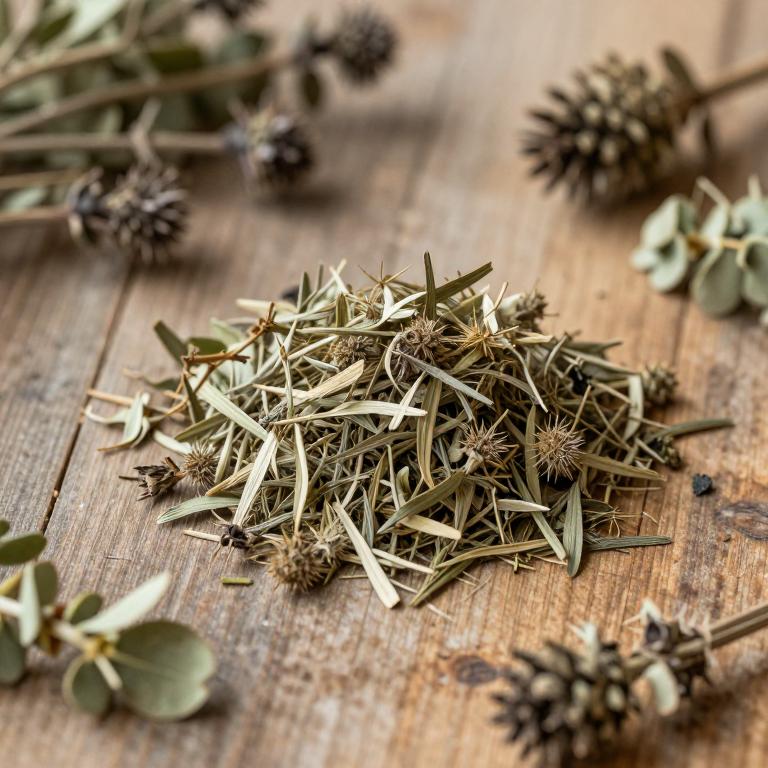
Names and Synonyms
Common Names
- Queen Anne's thistle
Scientific Names
Accepted name
Cirsium canumSynonyms
- Cirsium chium
- Carduus chius
- Carduus canus
- Cirsium biebersteinii
- Cirsium pseudopannonicum
- Cnicus canus
Regional and Traditional Names
Spanish:
- Cirsium louisii
- Cirsium pseudopannonicum
- Carduus canus
- Cirsium biebersteinii
- Cirsium canum subsp. subtymphaeum
- Cirsium canum var. subtymphaeum
- Cnicus canus
German:
- Graue Kratzdistel
- Graue Kratzdistel
French:
- Cirse cendre
- Cirse blanc
- Cirse cendré
- Cirse grisâtre
Sources: Wikidata, Catalogue of Life
Taxonomical Classification
This plant belongs to the kingdom Plantae and is classified within the phylum Streptophyta and class Equisetopsida. As a member of the subclass Magnoliidae and order Asterales, it falls under the family Asteraceae. Specifically, it is identified by the genus Cirsium as the species Cirsium canum.
| Rank | Classification |
|---|---|
| Kingdom | Plantae |
| Phylum | Streptophyta |
| Class | Equisetopsida |
| Subclass | Magnoliidae |
| Order | Asterales |
| Family | Asteraceae |
| Genus | Cirsium |
Sources: The World Checklist of Vascular Plants (WCVP)
Distribution
This plant exhibits a specific distribution across several regions of the European continent. In Northern Europe, its presence can be documented within the borders of Sweden. Moving into Middle Europe, it is found inhabiting various landscapes across Germany and Austria. The species also extends its range through the territories of Czechia and Slovakia. Finally, its geographical footprint reaches into the central region of Hungary.
| Region | Area |
|---|---|
| Northern Europe | Sweden |
| Middle Europe | Austria |
| Middle Europe | Czechia-Slovakia |
| Middle Europe | Germany |
| Middle Europe | Hungary |
| Middle Europe | Poland |
| Middle Europe | Switzerland |
| Southwestern Europe | France |
| Southeastern Europe | Bulgaria |
| Southeastern Europe | Italy |
Sources: The World Checklist of Vascular Plants (WCVP)
Botanical Identification
Ecology
The ecology of Cirsium canum is defined by its ability to thrive across diverse and varied landscapes, exhibiting significant adaptability to different moisture regimes and vegetation structures. This species is commonly found inhabiting forest margins and open meadows, where it can integrate into both wet and relatively dry environments. Its distribution extends from moisture-rich meadowlands to the more arid conditions characteristic of steppe ecosystems, demonstrating a broad ecological tolerance for varying soil hydration levels and sunlight availability within these distinct habitats.
- Habitat :
- forest, meadows: wet, steppe
Life history
The life history of Cirsium canum is characterized by a perennial lifecycle, allowing the plant to persist through multiple growing seasons. As a hemicryptophyte, its perennuating buds are located at or just below the soil surface, protected by leaf litter or ground debris during dormant periods. Furthermore, the species exhibits a deciduous nature, shedding its foliage annually as part of its seasonal cycle.
- Deciduousness :
- deciduous
- Life form :
- hemicryptophyte
- Lifecycle :
- perennial
Morphology
The morphology of Cirsium canum is characterized by its growth form as a non-woody herb, specifically categorized as a forb. This plant is a self-supporting, terrestrial species that functions as an independent organism, showing no parasitic tendencies. In terms of stature, it exhibits significant variability in height, ranging from a minimum of 0.3 m to a maximum of 1.2 m, with an average plant height of approximately 0.45 m.
- Aquatic :
- terrestrial
- Climber :
- self-supporting
- Growth form :
- herb
- Growth form :
- forb
- Parasite :
- independent
- Plant height max:
- 1.2 m
- Plant height mean:
- 0.45 m
- Plant height min:
- 0.3 m
- Woodiness :
- non-woody
Physiology
The physiology of Cirsium canum is characterized by a metabolic framework centered around the C3 photosynthetic pathway, a trait typical of many members of the Asteraceae family. In this pathway, the initial fixation of atmospheric carbon dioxide is catalyzed by the enzyme RuBisCO, which attaches $CO_2$ to ribulose-1,5-bisphosphate to form 3-phosphoglycerate. This process occurs within the mesophyll cells, where light-dependent reactions in the chloroplasts generate the necessary ATP and NADPH to drive the subsequent Calvin cycle. Because it utilizes the C3 pathway rather than C4 or CAM mechanisms, the plant's carbon assimilation efficiency is highly sensitive to environmental variables such as light intensity, temperature, and water availability. Under conditions of high photorespiration, the plant must balance stomatal conductance to facilitate gas exchange while minimizing transpirational water loss, a physiological necessity for maintaining metabolic homeostasis in its native habitats.
- Photosynthetic pathway :
- C3
Reproduction
The reproduction of Cirsium canum is characterized by a specific phenological window and specialized biological mechanisms. The flowering period typically begins in July and concludes in August. During this time, the plant utilizes a biotic pollination syndrome, specifically relying on insects to facilitate the transfer of pollen. While the plant is capable of self-fertilization, its reproductive success is supported by these insect interactions. Following successful fertilization, the plant produces seeds with a mean mass of approximately 0.001955 g. The dispersal of these seeds follows an anemochorous syndrome, meaning they are primarily dispersed by the wind.
- Dispersal syndrome :
- anemochorous
- Flowering time :
- Jul
- Flowering time :
- Aug
- Pollination syndrome :
- insect
- Pollination syndrome :
- biotic
- Seed mass mean:
- 0.001955 g
- Self fertilization :
- present
Sources: Global Inventory of Floras and Traits (GIFT)
Chemicals
Cirsium canum has 16 reported phytochemicals identified across 0 scientific publications and several other databases. The most consistently reported chemicals include Apigenin 7-glucoside, CHLOROGENIC ACID, Linarin, Luteolin-7-glucoside, SYRINGIC ACID.
| Chemical | Supporting sources | Consensus |
|---|---|---|
| Apigenin 7-glucoside | 1 supporting sources | ★☆☆☆☆ |
| CHLOROGENIC ACID | 1 supporting sources | ★☆☆☆☆ |
| Linarin | 1 supporting sources | ★☆☆☆☆ |
| Luteolin-7-glucoside | 1 supporting sources | ★☆☆☆☆ |
| SYRINGIC ACID | 1 supporting sources | ★☆☆☆☆ |
| TRANS-CINNAMIC ACID | 1 supporting sources | ★☆☆☆☆ |
| Vanillic acid | 1 supporting sources | ★☆☆☆☆ |
| apigenin | 1 supporting sources | ★☆☆☆☆ |
| caffeic acid | 1 supporting sources | ★☆☆☆☆ |
| kaempferol | 1 supporting sources | ★☆☆☆☆ |
Apigenin 7-glucoside
- Natural product research
CHLOROGENIC ACID
- Natural product research
Linarin
- Natural product research
Luteolin-7-glucoside
- Natural product research
SYRINGIC ACID
- Natural product research
TRANS-CINNAMIC ACID
- Natural product research
Vanillic acid
- Natural product research
apigenin
- Natural product research
caffeic acid
- Natural product research
kaempferol
- Natural product research
Conditions
Cirsium canum has 2 reported investigations on conditions identified across 0 scientific publications and several other databases. The most consistently reported conditions include Bacillus subtilis, Gram-positive bacteria.
| Condition | Supporting sources | Consensus |
|---|---|---|
| Bacillus subtilis | 1 supporting sources | ★☆☆☆☆ |
| Gram-positive bacteria | 1 supporting sources | ★☆☆☆☆ |
Bacillus subtilis
- Natural product research
Gram-positive bacteria
- Natural product research