Cirsium arvense var. arvense
Cirsium arvense var. arvense · Accepted scientific name
Scientific literature: Very Sparse (22 studies) · ★☆☆☆☆
, scientifically known as Cirsium arvense var. arvense, is a resilient perennial herb belonging to the Asteraceae family. Commonly called creeping thistle, this plant is distinguished by its prickly foliage and pinkish-purple flower heads. Traditionally, it has been utilized in various folk medicines for its potential therapeutic properties.
- Family
- Asteraceae
- Native range
- Europe
- Parts used
- Not available
- Common names
- Not available
- Scientific synonyms
- Cephalonoplos Ochrolepidium · Cephalonoplos Setosa · 52 more
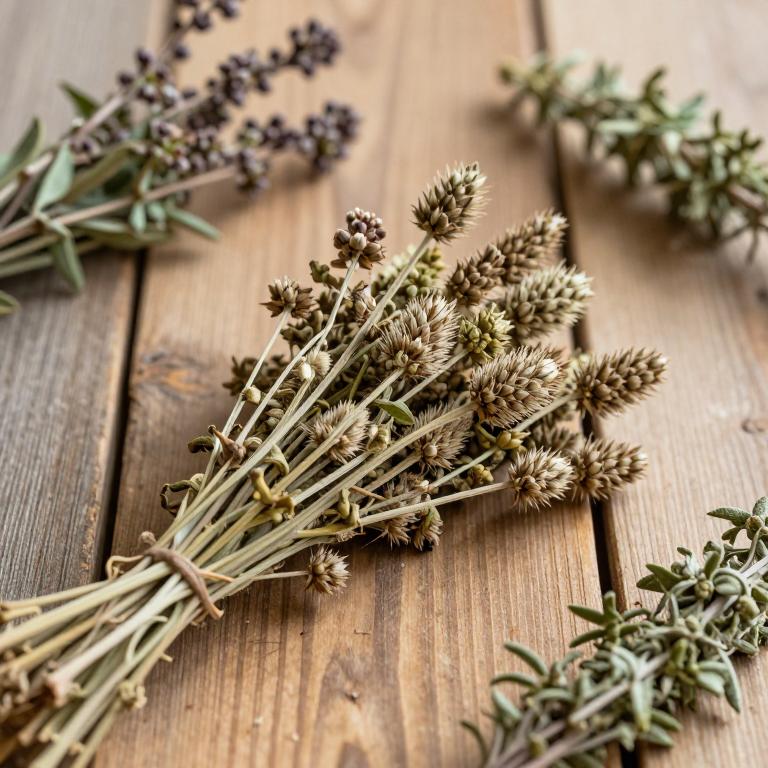
Names and Synonyms
Scientific Names
Accepted name
Cirsium arvense var. arvenseSynonyms
- Cephalonoplos ochrolepidium
- Cephalonoplos setosa
- Breea setosa
- Cirsium arvense f. albiflorum
- Cirsium setosum var. mite
- Cirsium arvense var. setosum
- Cirsium arvense var. subalatum
- Cnicus arvensis var. setosus
- Saussurea pungens
- Breea dioica
- Breea ochrolepidia
- Breea praealta
- Carduus arvensis var. setosus
- Cirsium arvense var. decurrens
- Cirsium arvense var. discolor
- Cirsium arvense var. ferox
- Cirsium arvense var. malhoi
- Cirsium arvense var. maritimum
- Cirsium arvense var. spinosissimum
- Cirsium arvense var. tomentosum
- Cnicus arvensis subsp. microstylon
- Aplotaxis pungens
- Carduus haemorrhoidalis
- Cirsium praealtum
- Cirsium rubricaule
- Cirsium ruthenicum
- Serratula lanata
- Cirsium halophilum
- Ixine arvensis
- Serratula campestris
- Serratula complanata
- Cirsium ochrolepidium
- Serratula setosa
- Cirsium setosum
- Cirsium arvense var. mite
- Cirsium albicans
- Cirsium laevigatum
- Cirsium albiflorum
- Cirsium arvense subsp. setosum
- Cnicus ruthenicus
- Cirsium arvense var. horridum
- Cirsium macrostylon
- Cirsium sordidum
- Cnicus setosus
- Cirsium neglectum
- Cirsium setosum var. subalatum
- Cirsium arvense f. rubricaule
- Cirsium mutatum
- Cnicus macrostylus
- Cnicus arvensis f. albiflorus
- Cirsium argenteum
- Cirsium argunense
- Cirsium dioicum
- Cirsium stocksii
Sources: Wikidata, Catalogue of Life
Taxonomical Classification
This plant belongs to the kingdom Plantae within the phylum Streptophyta and the class Equisetopsida. It is further classified under the subclass Magnoliidae and the order Asterales. Finally, it is a member of the family Asteraceae and falls under the genus Cirsium.
| Rank | Classification |
|---|---|
| Kingdom | Plantae |
| Phylum | Streptophyta |
| Class | Equisetopsida |
| Subclass | Magnoliidae |
| Order | Asterales |
| Family | Asteraceae |
| Genus | Cirsium |
Sources: The World Checklist of Vascular Plants (WCVP)
Distribution
This plant is found across several regions within Northern Europe. Its documented distribution includes the territories of Denmark and Finland. It also grows within the islands of Føroyar and Iceland. Additionally, the species can be located throughout Great Britain. These specific areas highlight its presence across diverse Northern European landscapes.
| Region | Area |
|---|---|
| Northern Europe | Denmark |
| Northern Europe | Finland |
| Northern Europe | Føroyar |
| Northern Europe | Great Britain |
| Northern Europe | Iceland |
| Northern Europe | Ireland |
| Northern Europe | Norway |
| Northern Europe | Sweden |
| Middle Europe | Austria |
| Middle Europe | Belgium |
Sources: The World Checklist of Vascular Plants (WCVP)
Chemicals
Cirsium arvense var. arvense has 17 reported phytochemicals identified across 0 scientific publications and several other databases. The most consistently reported chemicals include 2,4-Di-tert-butylphenol, Calycosin-7-O-beta-D-glucoside, FLAVONE, Flavonoids, Glycosides.
| Chemical | Supporting sources | Consensus |
|---|---|---|
| 2,4-Di-tert-butylphenol | 1 supporting sources | ★☆☆☆☆ |
| Calycosin-7-O-beta-D-glucoside | 1 supporting sources | ★☆☆☆☆ |
| FLAVONE | 1 supporting sources | ★☆☆☆☆ |
| Flavonoids | 1 supporting sources | ★☆☆☆☆ |
| Glycosides | 1 supporting sources | ★☆☆☆☆ |
| Linarin | 1 supporting sources | ★☆☆☆☆ |
| Lycoperodine-1 | 1 supporting sources | ★☆☆☆☆ |
| Sterols | 1 supporting sources | ★☆☆☆☆ |
| Tiliroside | 1 supporting sources | ★☆☆☆☆ |
| Triterpenes | 1 supporting sources | ★☆☆☆☆ |
2,4-Di-tert-butylphenol
- Journal of chromatography. B, Analytical technologies in the biomedical and life sciences
Calycosin-7-O-beta-D-glucoside
- Journal of chromatography. B, Analytical technologies in the biomedical and life sciences
FLAVONE
- Journal of chromatography. B, Analytical technologies in the biomedical and life sciences
Flavonoids
- Mitochondrial DNA. Part B, Resources
Glycosides
- Mitochondrial DNA. Part B, Resources
Linarin
- Phytochemical analysis : PCA
Lycoperodine-1
- Yao xue xue bao = Acta pharmaceutica Sinica
Sterols
- Mitochondrial DNA. Part B, Resources
Tiliroside
- Journal of chromatography. B, Analytical technologies in the biomedical and life sciences
Triterpenes
- Mitochondrial DNA. Part B, Resources
Preparations
Cirsium arvense var. arvense has 4 reported preparations identified across 0 scientific publications and several other databases. The most consistently reported preparations include bioactive extract, commercial Cirsium products, petroleum ether-soluble extract, thistle extract.
| Preparation | Supporting sources | Consensus |
|---|---|---|
| Bioactive extract | 1 supporting sources | ★☆☆☆☆ |
| Commercial cirsium products | 1 supporting sources | ★☆☆☆☆ |
| Petroleum ether-soluble extract | 1 supporting sources | ★☆☆☆☆ |
| Thistle extract | 1 supporting sources | ★☆☆☆☆ |
Bioactive extract
- Pharmaceutics
Commercial cirsium products
- Analytical biochemistry
Petroleum ether-soluble extract
- Chinese journal of natural medicines
Thistle extract
- Pharmaceutics