Cinnamosma madagascariensis
Cinnamosma madagascariensis · Accepted scientific name
Scientific literature: Very Sparse (12 studies) · ★☆☆☆☆
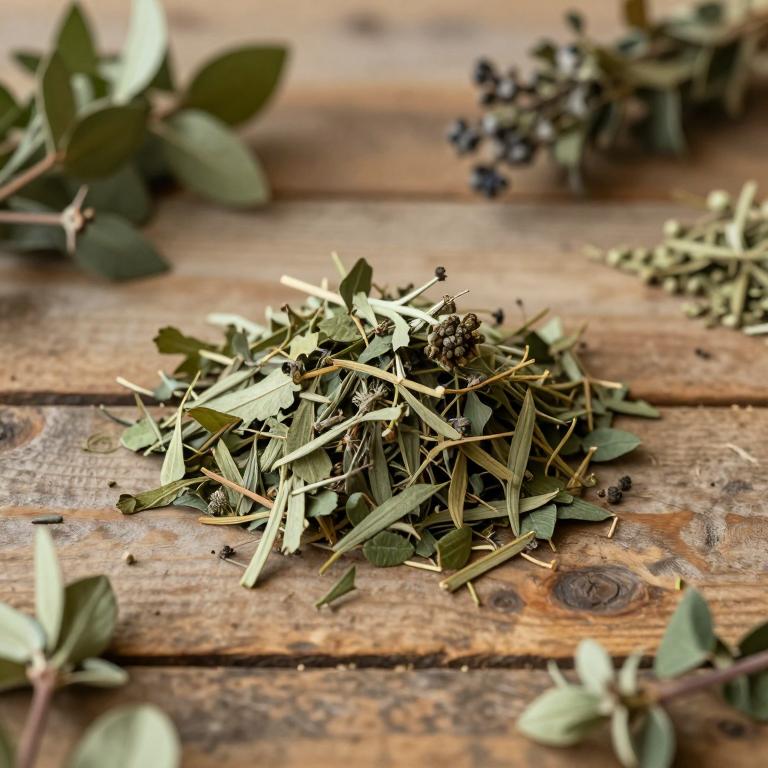
, scientifically known as Cinnamosmum madagascariensis, is a unique medicinal shrub endemic to Madagascar. Renowned for its aromatic properties, this plant is deeply integrated into traditional healing practices. It is primarily utilized for its potent bioactive compounds, which offer significant therapeutic potential in treating various ailments and inflammation.
- Family
- Canellaceae
- Native range
- Africa
- Parts used
- Not available
- Common names
- Not available
- Scientific synonyms
- Not available
Names and Synonyms
Scientific Names
Accepted name
Cinnamosma madagascariensisRegional and Traditional Names
French:
- Saro
Sources: Wikidata, Catalogue of Life
Taxonomical Classification
This plant belongs to the kingdom Plantae and the phylum Streptophyta, falling under the class Equisetopsida and subclass Magnoliidae. Within the order Canellales, it is classified under the family Canellaceae. Finally, it is identified by the genus Cinnamosmma, specifically as the species Cinnamosmma madagascariensis.
| Rank | Classification |
|---|---|
| Kingdom | Plantae |
| Phylum | Streptophyta |
| Class | Equisetopsida |
| Subclass | Magnoliidae |
| Order | Canellales |
| Family | Canellaceae |
| Genus | Cinnamosma |
Sources: The World Checklist of Vascular Plants (WCVP)
Distribution
This plant is characterized by a very specific and limited geographical range. It is found exclusively within the Western Indian Ocean region. More specifically, its natural habitat is restricted to the island of Madagascar. Due to this localized presence, it is considered an endemic species to the area. Understanding this distribution is essential for the conservation of its unique ecosystem.
| Region | Area |
|---|---|
| Western Indian Ocean | Madagascar |
Sources: The World Checklist of Vascular Plants (WCVP)
Botanical Identification
Life history
The life history of Cinnamosmum madagascariense is characterized by its classification as a phanerophyte, a growth form where the permanent buds are elevated well above the ground surface on woody stems. Within this category, the plant exhibits specific morphological nuances, functioning as both a phanerophyte and a nanophanerophyte, indicating that while it maintains elevated reproductive and vegetative structures, its overall stature may be relatively small or shrub-like compared to larger forest trees. This life strategy allows the species to persist through seasonal changes by protecting its vital buds on aerial branches, ensuring continuous growth and survival within its native Madagascar habitats.
- Life form :
- phanerophyte
Morphology
The morphology of Cinnamosma madagascariensis is characterized by a robust growth form, specifically categorized as a tree. This woody species exhibits a self-supporting structure, functioning as an independent organism rather than a parasite or an epiphyte, as it maintains a terrestrial existence. Unlike climbing forms such as lianas or vines, it does not rely on other structures for support, instead utilizing its woody tissue to maintain an upright, self-supporting habit. Its ecological niche is strictly terrestrial, distinguishing it from aquatic or semiaquatic species.
- Aquatic :
- terrestrial
- Climber :
- self-supporting
- Epiphyte :
- terrestrial
- Growth form :
- tree
- Parasite :
- independent
- Woodiness :
- woody
Reproduction
The reproduction of Cinnamosmum madagascariensis is characterized by the development of fruits that exhibit a distinct morphological state, ranging from dry to fleshy in texture. Within these fruits, the production of seeds is highly consistent, as evidenced by a uniform seed volume. Specifically, the seed volume remains constant with a minimum, maximum, and mean value of 310 mm³, indicating a highly stabilized reproductive output per seed unit.
- Fruit dryness :
- fleshy
- Seed volume max:
- 310 mm³
Sources: Global Inventory of Floras and Traits (GIFT)
Chemicals
Cinnamosma madagascariensis has 12 reported phytochemicals identified across 0 scientific publications and several other databases. The most consistently reported chemicals include Capsicodendrin, Cinnamodial, D-mannitol, Lignoceric acid, Pereniporin B.
| Chemical | Supporting sources | Consensus |
|---|---|---|
| Capsicodendrin | 1 supporting sources | ★☆☆☆☆ |
| Cinnamodial | 1 supporting sources | ★☆☆☆☆ |
| D-mannitol | 1 supporting sources | ★☆☆☆☆ |
| Lignoceric acid | 1 supporting sources | ★☆☆☆☆ |
| Pereniporin B | 1 supporting sources | ★☆☆☆☆ |
| Polygodial | 1 supporting sources | ★☆☆☆☆ |
| STIGMASTEROL | 1 supporting sources | ★☆☆☆☆ |
| Sitosterol | 1 supporting sources | ★☆☆☆☆ |
| Ugandensolide | 1 supporting sources | ★☆☆☆☆ |
| cinnamadin | 1 supporting sources | ★☆☆☆☆ |
Capsicodendrin
- Journal of natural products
Cinnamodial
- Journal of natural products
D-mannitol
- Journal of natural products
Lignoceric acid
- Journal of natural products
Pereniporin B
- Journal of natural products
Polygodial
- Journal of natural products
STIGMASTEROL
- Journal of natural products
Sitosterol
- Journal of natural products
Ugandensolide
- Journal of natural products
cinnamadin
- Journal of natural products