cinnamon plant
Cinnamomum kotoense · Accepted scientific name
Scientific literature: Very Sparse (16 studies) · ★☆☆☆☆
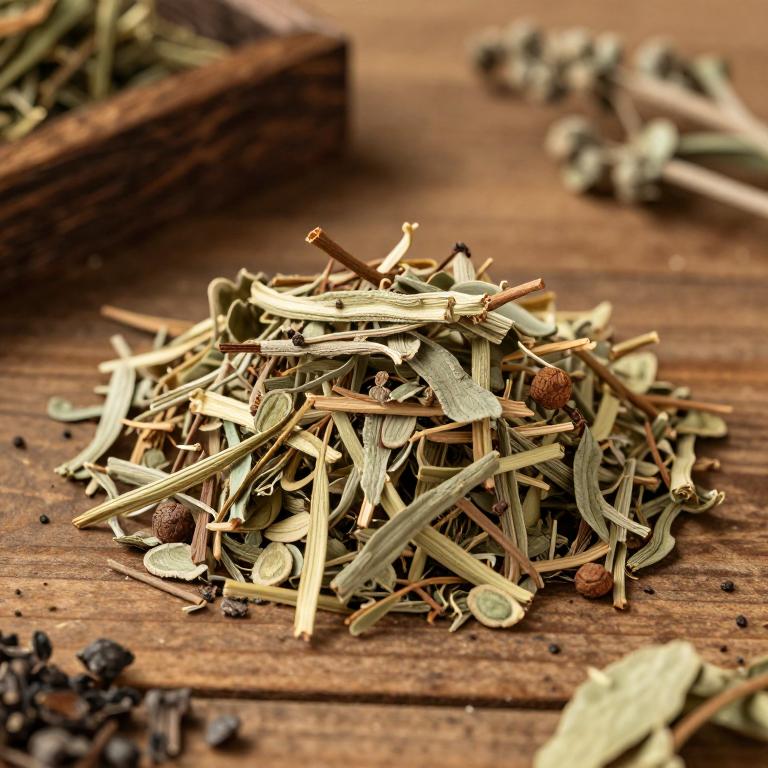
Cinnamon plant, scientifically known as Cinnamomum kotoense, is a rare and distinguished medicinal species native to specific tropical regions. Renowned for its aromatic bark and potent bioactive compounds, this plant offers significant therapeutic potential, particularly in traditional practices for its antioxidant, antimicrobial, and anti-inflammatory properties in holistic wellness.
- Family
- Lauraceae
- Native range
- Asia-Temperate
- Parts used
- Leaf · Stem
- Common names
- Cinnamon Plant
- Scientific synonyms
- Not available
Names and Synonyms
Common Names
- cinnamon plant
Scientific Names
Accepted name
Cinnamomum kotoenseSources: Wikidata, Catalogue of Life
Taxonomical Classification
This plant belongs to the kingdom Plantae and the phylum Streptophyta, falling under the class Equisetopsida and subclass Magnoliidae. Within the order Laurales and the family Lauraceae, it is classified under the genus Cinnamomum.
| Rank | Classification |
|---|---|
| Kingdom | Plantae |
| Phylum | Streptophyta |
| Class | Equisetopsida |
| Subclass | Magnoliidae |
| Order | Laurales |
| Family | Lauraceae |
| Genus | Cinnamomum |
Sources: The World Checklist of Vascular Plants (WCVP)
Distribution
This plant is characterized by a very specific and limited geographical range. It is found exclusively within the region of Eastern Asia. Within this vast territory, its distribution is confined specifically to the island of Taiwan. Because of this restricted habitat, the species is considered an endemic plant of the area. Consequently, its natural presence is entirely dependent on the unique environmental conditions of the Taiwanese landscape.
| Region | Area |
|---|---|
| Eastern Asia | Taiwan |
Sources: The World Checklist of Vascular Plants (WCVP)
Botanical Identification
Life history
The life history of Cinnamomum kotoense is characterized by its status as a perennial species, allowing it to maintain its presence in its natural habitat over many years. As an evergreen plant, it retains its foliage throughout the year, ensuring continuous photosynthetic activity and providing a stable structure within its ecosystem. This combination of a long-lived lifecycle and persistent greenery enables the plant to establish a consistent ecological niche, contributing to the structural complexity of the environments it inhabits.
- Deciduousness :
- evergreen
- Lifecycle :
- perennial
Morphology
The morphology of Cinnamomum kotoense is characterized by a robust, woody growth form, specifically identifying it as a tree. This species exhibits a significant stature, reaching an average plant height of approximately 15 m. In terms of its structural habit, the plant is classified as a self-supporting tree, maintaining its upright posture without the need for climbing mechanisms.
- Climber :
- self-supporting
- Growth form :
- tree
- Plant height mean:
- 15 m
- Woodiness :
- woody
Physiology
The physiology of Cinnamomum kotoense is characterized by specific vegetative dimensions that define its foliar structure and photosynthetic capacity. The leaf morphology exhibits a controlled range of development, with mean leaf lengths measuring approximately 9.5 cm, though they can fluctuate from a minimum of 8 cm to a maximum of 11 cm. Complementing this longitudinal growth is a consistent lateral expansion, where the leaf width maintains a mean of 4.75 cm. This width varies within a narrow physiological margin, ranging from a minimum of 4 cm to a maximum of 5.5 cm. These precise morphological parameters suggest a specialized adaptation in leaf surface area, which plays a critical role in the plant's metabolic efficiency and its ability to manage gas exchange and light interception within its natural habitat.
- Leaf length max:
- 11 cm
- Leaf length mean:
- 9.5 cm
- Leaf length min:
- 8 cm
- Leaf width max:
- 5.5 cm
- Leaf width mean:
- 4.75 cm
- Leaf width min:
- 4 cm
Reproduction
The reproduction of Cinnamomum kotoense culminates in the development of characteristic fruits that exhibit highly consistent morphological dimensions. The fruiting bodies are characterized by a uniform size, with the fruit length measuring a mean of 1.4 cm, a value that also represents both the minimum and maximum recorded lengths. Similarly, the fruit width maintains a strictly consistent measurement of 1 cm, which serves as the mean, minimum, and maximum width for the species. This lack of variance in both length and width indicates a highly stabilized reproductive output in terms of fruit morphology.
- Fruit length max:
- 1.4 cm
- Fruit width max:
- 1 cm
Sources: Global Inventory of Floras and Traits (GIFT)
Plant Parts
Cinnamomum kotoense has 2 reported plant parts identified across 2 scientific publications and several other databases that are studied for medicinal purposes. The most consistently reported plant part include leaf, stem.
| Plant part | Supporting sources | Consensus |
|---|---|---|
| Leaf | 1 supporting sources | ★☆☆☆☆ |
| Stem | 1 supporting sources | ★☆☆☆☆ |
Leaf
- Journal of natural products
Stem
- Journal of natural products
Chemicals
Cinnamomum kotoense has 11 reported phytochemicals identified across 2 scientific publications and several other databases. The most consistently reported chemicals include 2-acetyl-5-dodecylfuran, Isokotomolide A, Isoobtusilactone A, Kotodiol, Kotolactone A.
| Chemical | Supporting sources | Consensus |
|---|---|---|
| 2-acetyl-5-dodecylfuran | 1 supporting sources | ★☆☆☆☆ |
| Isokotomolide A | 1 supporting sources | ★☆☆☆☆ |
| Isoobtusilactone A | 1 supporting sources | ★☆☆☆☆ |
| Kotodiol | 1 supporting sources | ★☆☆☆☆ |
| Kotolactone A | 1 supporting sources | ★☆☆☆☆ |
| Kotolactone B | 1 supporting sources | ★☆☆☆☆ |
| Kotomolide A | 1 supporting sources | ★☆☆☆☆ |
| Kotomolide B | 1 supporting sources | ★☆☆☆☆ |
| Lincomolide B | 1 supporting sources | ★☆☆☆☆ |
| SECOKOTOMOLIDE A | 1 supporting sources | ★☆☆☆☆ |
2-acetyl-5-dodecylfuran
- Journal of natural products
Isokotomolide A
- Journal of natural products
Isoobtusilactone A
- Journal of natural products
Kotodiol
- Journal of natural products
Kotolactone A
- Journal of natural products
Kotolactone B
- Journal of natural products
Kotomolide A
- Journal of natural products
Kotomolide B
- Journal of natural products
Lincomolide B
- Journal of natural products
SECOKOTOMOLIDE A
- Journal of natural products
Activities
Cinnamomum kotoense has 1 reported activities identified across 2 scientific publications and several other databases. The most consistently reported activities include Antitubercular.
| Activity | Supporting sources | Consensus |
|---|---|---|
| Antitubercular | 1 supporting sources | ★☆☆☆☆ |
Antitubercular
- Journal of natural products
Preparations
Cinnamomum kotoense has 2 reported preparations identified across 2 scientific publications and several other databases. The most consistently reported preparations include leaves, stem wood.
| Preparation | Supporting sources | Consensus |
|---|---|---|
| Leaves | 1 supporting sources | ★☆☆☆☆ |
| Stem wood | 1 supporting sources | ★☆☆☆☆ |
Leaves
- Journal of natural products
Stem wood
- Journal of natural products