Cinchona Bark
Cinchona · Accepted scientific name
Scientific literature: Very Sparse (38 studies) · ★☆☆☆☆
Cinchona Bark, scientifically known as Cinchona, is a legendary medicinal plant native to the tropical Andes. Renowned for containing quinine, it has historically served as a vital treatment for malaria. This potent botanical resource remains a cornerstone in pharmacology, bridging ancient traditional healing with modern life-saving antimalarial medicine.
- Family
- Rubiaceae
- Native range
- Africa
- Parts used
- Stem
- Common names
- Cinchona Bark · Fever Tree · 6 more
- Scientific synonyms
- Quinquina · Kinkina
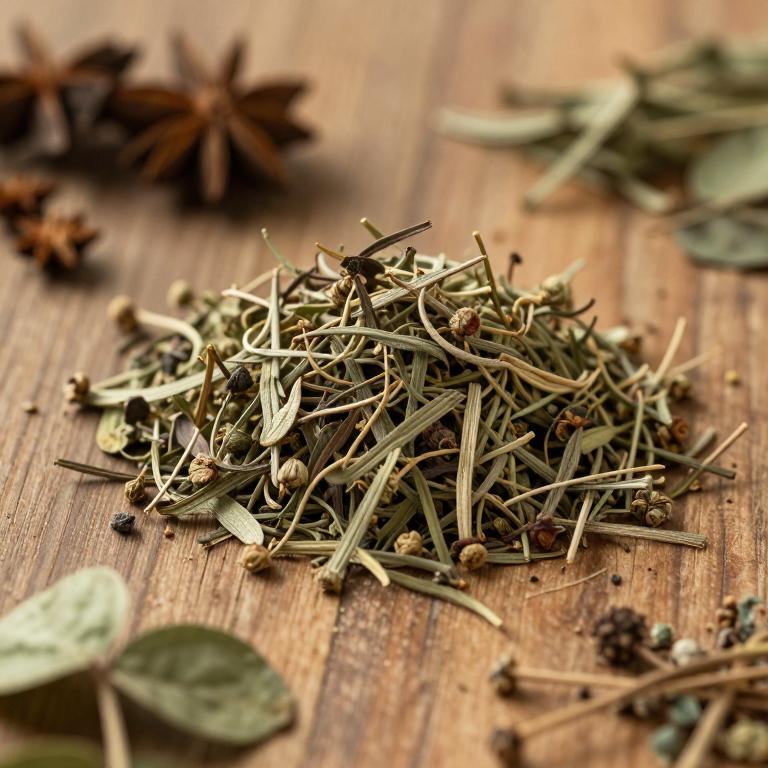
Names and Synonyms
Common Names
- Cinchona Bark
- Fever Tree
- Jesuit’s bark
- Quinine Tree
- Quinine Trees
- Red Quinine
- Yellow Quinine
- Quinine
Scientific Names
Accepted name
CinchonaSynonyms
- Quinquina
- Kinkina
Regional and Traditional Names
Spanish:
- Quinos
German:
- Chinarindenbäume
- Chinarindenbaum
- Chinarinde
- Königschina
- Cinchona succirubra
- Chinarindenbäume
Sources: Wikidata, Catalogue of Life
Taxonomical Classification
This plant belongs to the kingdom Plantae and the phylum Streptophyta, falling under the class Equisetopsida and subclass Magnoliidae. It is specifically classified within the order Gentianaales and the family Rubiaceae. Finally, it is identified by its genus, Cinchona.
| Rank | Classification |
|---|---|
| Kingdom | Plantae |
| Phylum | Streptophyta |
| Class | Equisetopsida |
| Subclass | Magnoliidae |
| Order | Gentianales |
| Family | Rubiaceae |
| Genus | Cinchona |
Sources: The World Checklist of Vascular Plants (WCVP)
Distribution
This plant exhibits a diverse geographical distribution spanning several continents and oceanic regions. In West Tropical Africa, its presence is noted within the borders of Guinea. Moving toward West-Central Tropical Africa, it can be found around the Gulf of Guinea Islands and throughout the DR Congo. The species also extends into the Middle Atlantic Ocean, specifically on the island of St. Helena. Finally, its range reaches the Indian Subcontinent, where it is located in India.
| Region | Area |
|---|---|
| West Tropical Africa | Guinea |
| West-Central Tropical Africa | Gulf of Guinea Is. |
| West-Central Tropical Africa | DR Congo |
| Middle Atlantic Ocean | St.Helena |
| Indian Subcontinent | India |
| Malesia | Sulawesi |
| South-Central Pacific | Society Is. |
| Northwestern Pacific | Caroline Is. |
| North-Central Pacific | Hawaii |
| Mexico | Mexico Southeast |
Sources: The World Checklist of Vascular Plants (WCVP)
Plant Parts
Cinchona has 1 reported plant parts identified across 1 scientific publications and several other databases that are studied for medicinal purposes. The most consistently reported plant part include stem.
| Plant part | Supporting sources | Consensus |
|---|---|---|
| Stem | 1 supporting sources | ★☆☆☆☆ |
Stem
- Planta medica
Chemicals
Cinchona has 3 reported phytochemicals identified across 1 scientific publications and several other databases. The most consistently reported chemicals include Quinine, quinidine, warfarin.
| Chemical | Supporting sources | Consensus |
|---|---|---|
| Quinine | 9 supporting sources | ★★★★☆ |
| quinidine | 1 supporting sources | ★☆☆☆☆ |
| warfarin | 1 supporting sources | ★☆☆☆☆ |
Quinine
- The journal of the Royal College of Physicians of Edinburgh
- Advances in parasitology
- Advances in biochemical engineering/biotechnology
- Parassitologia
- Scientific reports
View 4 additional sources
- Evidence-based complementary and alternative medicine : eCAM
- Yakugaku zasshi : Journal of the Pharmaceutical Society of Japan
- Die Pharmazie
- The Journal of organic chemistry
quinidine
- The Journal of organic chemistry
warfarin
- Annali italiani di medicina interna : organo ufficiale della Societa italiana di medicina interna
Activities
Cinchona has 2 reported activities identified across 1 scientific publications and several other databases. The most consistently reported activities include Antimalarial, Antifungal.
| Activity | Supporting sources | Consensus |
|---|---|---|
| Antimalarial | 2 supporting sources | ★☆☆☆☆ |
| Antifungal | 1 supporting sources | ★☆☆☆☆ |
Antimalarial
- Parassitologia
- Evidence-based complementary and alternative medicine : eCAM
Antifungal
- Scientific reports
Conditions
Cinchona has 8 reported investigations on conditions identified across 1 scientific publications and several other databases. The most consistently reported conditions include malaria, Malaria, cholera, hysteria, leukemia.
| Condition | Supporting sources | Consensus |
|---|---|---|
| Malaria | 7 supporting sources | ★★★★☆ |
| Malaria | 2 supporting sources | ★☆☆☆☆ |
| Cholera | 1 supporting sources | ★☆☆☆☆ |
| Hysteria | 1 supporting sources | ★☆☆☆☆ |
| Leukemia | 1 supporting sources | ★☆☆☆☆ |
| Mania | 1 supporting sources | ★☆☆☆☆ |
| Melancholia | 1 supporting sources | ★☆☆☆☆ |
| Psychiatric diseases | 1 supporting sources | ★☆☆☆☆ |
Malaria
- The journal of the Royal College of Physicians of Edinburgh
- Advances in parasitology
- Parassitologia
- Frontiers in pharmacology
- Revista de la Sociedad Venezolana de Historia de la Medicina
View 2 additional sources
- Yakugaku zasshi : Journal of the Pharmaceutical Society of Japan
- Die Pharmazie
Malaria
- Evidence-based complementary and alternative medicine : eCAM
- Mini reviews in medicinal chemistry
Cholera
- Revista de la Sociedad Venezolana de Historia de la Medicina
Hysteria
- Die Pharmazie
Leukemia
- Journal of biochemical and molecular toxicology
Mania
- Die Pharmazie
Melancholia
- Die Pharmazie
Psychiatric diseases
- Die Pharmazie
Preparations
Cinchona has 2 reported preparations identified across 1 scientific publications and several other databases. The most consistently reported preparations include bark, quinine.
| Preparation | Supporting sources | Consensus |
|---|---|---|
| Bark | 1 supporting sources | ★☆☆☆☆ |
| Quinine | 1 supporting sources | ★☆☆☆☆ |
Bark
- Die Pharmazie
Quinine
- Advances in biochemical engineering/biotechnology