Flower of the Andes
Chuquiraga jussieui · Accepted scientific name
Scientific literature: Very Sparse (6 studies) · ★☆☆☆☆
Flower of the Andes, scientifically known as Chuquiraga jussieui, is a resilient shrub endemic to the high-altitude paramo ecosystems. Renowned for its striking orange blooms, this sacred plant holds significant medicinal value in traditional Andean healing, frequently used to treat respiratory ailments, kidney issues, and to boost overall immunity.
- Family
- Asteraceae
- Native range
- Southern America
- Parts used
- Not available
- Common names
- Flower Of The Andes · Candle Spear
- Scientific synonyms
- Chuquiraga Insignis Var. Microphylla · Chuquiraga Peruviana · 12 more
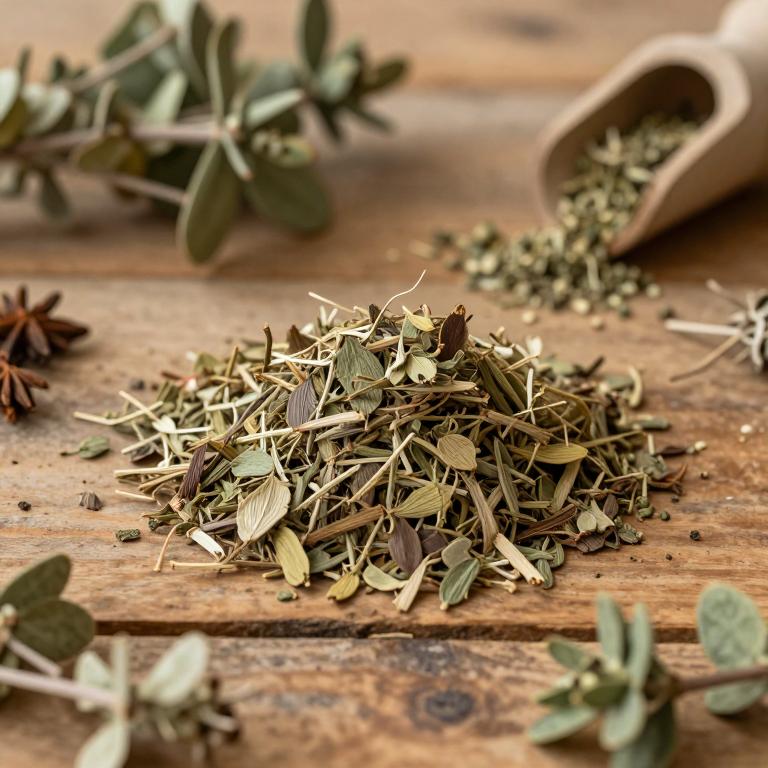
Names and Synonyms
Common Names
- Flower of the Andes
- candle spear
Scientific Names
Accepted name
Chuquiraga jussieuiSynonyms
- Chuquiraga insignis var. microphylla
- Chuquiraga peruviana
- Chuquiraga fruticosa
- Chuquiraga lancifolia
- Johannia insignis
- Chuquiraga microphylla
- Johannia lancifolia
- Chuquiraga insignis
- Chuquiraga insignis var. lancifolia
- Chuquiraga jussieui var. lancifolia
- Chuquiraga pseudoruscifolia
- Joannesia insignis
- Johannia microphylla
- Lychnophora vanisschoti
Regional and Traditional Names
Spanish:
- Chuquiragua
- Flor del caminante
- Flor de los Andes
- Chuquirahua
- Chuquiraga insignis
- Chuquiraga lancifolia
- Chuquiraga microphylla
- Chuquiraga peruviana
- Chuquiraga pseudoruscifolia
- Johannia insignis
- Lychnophora van-isschoti
- Lychnophora van isschoti
- chuquiragua
- chuquirahua
Sources: Wikidata, Catalogue of Life
Taxonomical Classification
This plant belongs to the kingdom Plantae within the phylum Streptophyta and the class Equisetopsida. It is further classified under the subclass Magnoliidae and the order Asterales. Finally, it is a member of the family Asteraceae and is specifically identified by the genus Chuquiraga.
| Rank | Classification |
|---|---|
| Kingdom | Plantae |
| Phylum | Streptophyta |
| Class | Equisetopsida |
| Subclass | Magnoliidae |
| Order | Asterales |
| Family | Asteraceae |
| Genus | Chuquiraga |
Sources: The World Checklist of Vascular Plants (WCVP)
Distribution
This plant is widely distributed across the high-altitude regions of Western South America. It can be found growing within the mountainous landscapes of Colombia and Ecuador. Its presence extends further south into the diverse terrains of Peru. Additionally, the species occupies specific ecological niches located in Bolivia. Together, these locations define the primary geographical range of this medicinal species.
| Region | Area |
|---|---|
| Western South America | Bolivia |
| Western South America | Colombia |
| Western South America | Ecuador |
| Western South America | Peru |
Sources: The World Checklist of Vascular Plants (WCVP)
Botanical Identification
Ecology
The ecology of Chuquiraga jussieui is defined by its specialized adaptation to the high-altitude environments of the Andean páramos. This species thrives within a specific vertical niche, maintaining an elevational range that begins at 3000 m AMSL and extends up to a maximum of 3750 m AMSL. Occupying these alpine tundra ecosystems, the plant is adapted to survive the intense solar radiation, significant diurnal temperature fluctuations, and high levels of moisture characteristic of these high-elevation tropical mountains. Its distribution within this specific altitudinal band allows it to play a vital role in the high-altitude landscape, contributing to the stability and biological complexity of the páramo habitat.
- Elevational range max:
- 3750 m AMSL
- Elevational range min:
- 3000 m AMSL
Morphology
The morphology of Chuquiraga jussieui is characterized by its growth form as a woody shrub, exhibiting a robust and self-supporting structure. As a terrestrial species, it does not exhibit aquatic or semiaquatic tendencies, nor does it function as an epiphyte or a climber; rather, it maintains an independent existence without the need for lianas, vines, or parasitic relationships. Its development is strictly non-epiphytic, rooting firmly in the soil as a terrestrial organism, and its physical constitution is defined by its woody nature, which provides the necessary stability for its shrubby habit.
- Aquatic :
- terrestrial
- Climber :
- self-supporting
- Epiphyte :
- terrestrial
- Growth form :
- shrub
- Parasite :
- independent
- Woodiness :
- woody
Sources: Global Inventory of Floras and Traits (GIFT)
Chemicals
Chuquiraga jussieui has 3 reported phytochemicals identified across 0 scientific publications and several other databases. The most consistently reported chemicals include Carotenoids, Flavonoids, vitamin C.
| Chemical | Supporting sources | Consensus |
|---|---|---|
| Carotenoids | 1 supporting sources | ★☆☆☆☆ |
| Flavonoids | 1 supporting sources | ★☆☆☆☆ |
| vitamin C | 1 supporting sources | ★☆☆☆☆ |
Carotenoids
- Natural product research
Flavonoids
- Natural product research
vitamin C
- Natural product research