vetiver
Chrysopogon zizanioides · Accepted scientific name
Scientific literature: Very Extensive (384 studies) · ★★★★★
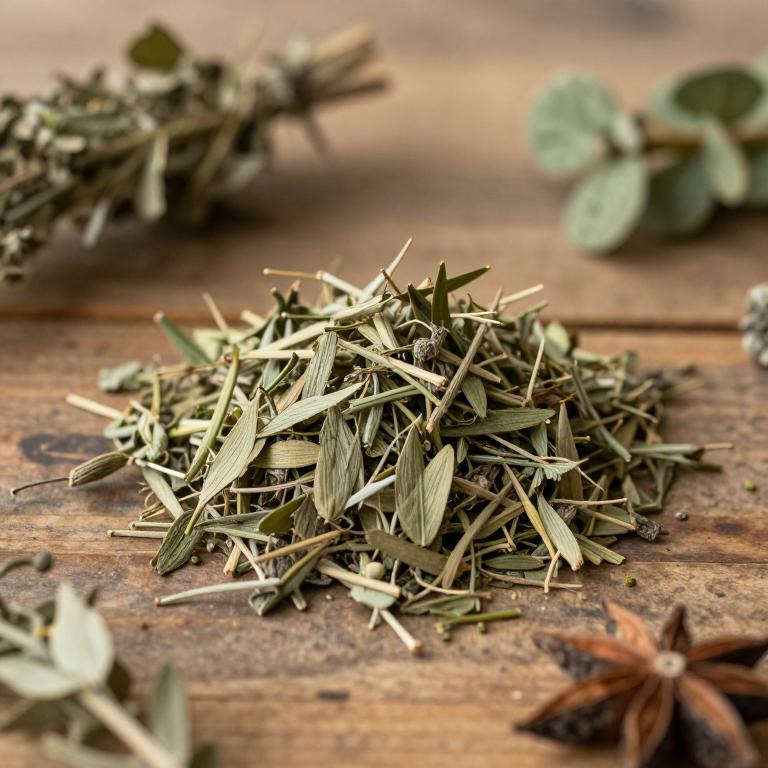
Vetiver, scientifically known as Chrysopogon zizanioides, is a perennial grass celebrated for its profound medicinal and ecological properties. Renowned for its aromatic roots, it is widely utilized in traditional medicine to soothe the nervous system, reduce inflammation, and promote relaxation, making it a versatile staple in holistic wellness.
Names and Synonyms
Common Names
- Khuskhus Vetiver
- cuscus grass
- khus-khus
- khus-khus grass
- vetiver
- vetiver grass
Scientific Names
Accepted name
Chrysopogon zizanioidesSynonyms
- Anatherum muricatum
- Andropogon zizanioides
- Vetiveria odoratissima
- Vetiveria zizanioides var. tonkinensis
- Phalaris zizanioides
- Holcus zizanioides
- Sorghum zizanioides
- Vetiveria odorata
- Chamaeraphis muricata
- Rhaphis zizanioides
- Andropogon muricatus
- Vetiveria zizanioides
- Vetiveria muricata
- Vetiveria arundinacea
- Anatherum zizanioides
Regional and Traditional Names
Spanish:
- Vetiveria zizanioides
- Andropogon muricatum
- Vetiveria odoratissima
- Andropogon muricatus
- Agrostis verticillata
- Vetiver
- Anatherum zizanioides
- Vetiveria odorata
- Pachuli
- Andropogon zizanioides
- Anatherum muricatum
- Phalaris zizanioides
- Andropogon squarrosus
- Vetiveria arundinacea
- Sorghum zizanioides
- Andropogon festucoides
- zacate violeta
- Pasto vetiver
German:
- Vetiver
- Vetiveria zizanioides
- Vetiveröl
- Vetiver-Öl
- Vetyver
- Vetivergras
French:
- chiendent odorant
- vétiver
Sources: Wikidata, Catalogue of Life
Taxonomical Classification
This plant belongs to the kingdom Plantae within the phylum Streptophyta and the class Equisetopsida. It is further classified under the subclass Magnoliidae and the order Poales. Finally, it is a member of the family Poaceae within the genus Chrysopogon.
| Rank | Classification |
|---|---|
| Kingdom | Plantae |
| Phylum | Streptophyta |
| Class | Equisetopsida |
| Subclass | Magnoliidae |
| Order | Poales |
| Family | Poaceae |
| Genus | Chrysopogon |
Sources: The World Checklist of Vascular Plants (WCVP)
Distribution
This plant exhibits a specific geographical distribution concentrated within the tropical regions of the African continent. In West Tropical Africa, its presence is documented across several countries including Ghana, Liberia, and Sierra Leone. It is also found within the West Tropical Africa zone in Togo. Furthermore, the species extends its range into West-Central Tropical Africa. Specifically, its occurrence in this central region is noted in Cameroon.
| Region | Area |
|---|---|
| West Tropical Africa | Ghana |
| West Tropical Africa | Liberia |
| West Tropical Africa | Sierra Leone |
| West Tropical Africa | Togo |
| West-Central Tropical Africa | Cameroon |
| West-Central Tropical Africa | Congo |
| West-Central Tropical Africa | Gabon |
| West-Central Tropical Africa | DR Congo |
| South Tropical Africa | Zambia |
| South Tropical Africa | Zimbabwe |
Sources: The World Checklist of Vascular Plants (WCVP)
Botanical Identification
Ecology
The ecology of Chrysopogon zizanioides is characterized by its remarkable adaptability to various landscapes, particularly within anthropogenic areas (Área Antrópica) where human activity has modified the natural environment. This species demonstrates a broad vertical distribution, thriving across a significant altitudinal gradient that spans from sea level (0 m AMSL) up to an elevation of 2000 m AMSL. This wide elevational range allows the plant to colonize diverse climatic zones, making it resilient to varying temperature and moisture regimes often found in disturbed or human-managed habitats.
- Elevational range max:
- 2000 m AMSL
- Elevational range min:
- 0 m AMSL
- Habitat :
- Área Antrópica
Life history
The life history of Chrysopogon zizanioides is characterized by its classification as a perennial plant, allowing it to persist through multiple growing seasons. As a hemicryptophyte, its perennuating buds are located at the soil surface, protected by leaf litter or organic matter, which facilitates its robust survival strategy. This species maintains an evergreen status, retaining its foliage throughout the year rather than undergoing a deciduous phase. These combined biological traits enable the plant to establish a stable and long-lasting presence in its habitat.
- Deciduousness :
- evergreen
- Life form :
- hemicryptophyte
- Lifecycle :
- perennial
Morphology
The morphology of Chrysopogon zizanioides is characterized by a graminoid growth form, functioning as a non-woody herb that is entirely independent and lacks parasitic tendencies. As a terrestrial species, it does not exhibit epiphytic behavior and is not aquatic or semiaquatic in nature. The plant is self-supporting rather than being a climber, liana, or vine, and it reaches an average plant height of approximately 1.95 m.
- Aquatic :
- terrestrial
- Climber :
- self-supporting
- Epiphyte :
- terrestrial
- Growth form :
- herb
- Growth form :
- graminoid
- Parasite :
- independent
- Plant height mean:
- 1.95 m
- Woodiness :
- non-woody
Physiology
The physiology of Chrysopogon zizanioides is characterized by a C3 photosynthetic pathway, which dictates its carbon fixation processes and metabolic efficiency in varying light environments. Unlike succulent species, this plant does not exhibit succulence, meaning it lacks specialized thickened tissues for significant water storage and relies instead on its extensive, deep-reaching root system to manage moisture uptake and drought tolerance. Furthermore, it does not function as a nitrogen fixer, as it lacks the symbiotic relationship with nitrogen-fixing bacteria required to convert atmospheric nitrogen into usable forms, instead relying on the available nitrogen levels within the soil substrate to support its growth and development.
- Nitrogen fixer :
- no
- Photosynthetic pathway :
- C3
- Succulence :
- no
Sources: Global Inventory of Floras and Traits (GIFT)
Plant Parts
Chrysopogon zizanioides has 2 reported plant parts identified across 9 scientific publications and several other databases that are studied for medicinal purposes. The most consistently reported plant part include root, leaf.
| Plant part | Supporting sources | Consensus |
|---|---|---|
| Root | 8 supporting sources | ★★★★☆ |
| Leaf | 1 supporting sources | ★☆☆☆☆ |
Root
- Environmental science and pollution research international
- Journal of ethnopharmacology
- Journal of Ayurveda and integrative medicine
- Indian journal of microbiology
- Molecules (Basel, Switzerland)
View 3 additional sources
- International journal of microbiology
- Biomolecules
- Microbial pathogenesis
Leaf
- Plants (Basel, Switzerland)
Chemicals
Chrysopogon zizanioides has 98 reported phytochemicals identified across 9 scientific publications and several other databases. The most consistently reported chemicals include CALCIUM, Flavonoids, Isokhusenic acid, Khusimol, Saponins.
| Chemical | Supporting sources | Consensus |
|---|---|---|
| CALCIUM | 2 supporting sources | ★☆☆☆☆ |
| Flavonoids | 2 supporting sources | ★☆☆☆☆ |
| Isokhusenic acid | 2 supporting sources | ★☆☆☆☆ |
| Khusimol | 2 supporting sources | ★☆☆☆☆ |
| Saponins | 2 supporting sources | ★☆☆☆☆ |
| Sesquiterpenes | 2 supporting sources | ★☆☆☆☆ |
| (+)-Khusitene | 1 supporting sources | ★☆☆☆☆ |
| 1,8-Cineole | 1 supporting sources | ★☆☆☆☆ |
| 3,5,6-TRICHLORO-2-PYRIDINOL | 1 supporting sources | ★☆☆☆☆ |
| ALPHA-PINENE | 1 supporting sources | ★☆☆☆☆ |
CALCIUM
- Dr. Duke
- Environmental science and pollution research international
Flavonoids
- Journal of ethnopharmacology
- Saudi journal of biological sciences
Isokhusenic acid
- Dr. Duke
- Journal of food biochemistry
Khusimol
- Plants (Basel, Switzerland)
- Chemical biology & drug design
Saponins
- Saudi journal of biological sciences
- Canadian journal of physiology and pharmacology
Sesquiterpenes
- Journal of ethnopharmacology
- Microbial pathogenesis
(+)-Khusitene
- Dr. Duke
1,8-Cineole
- Dr. Duke
3,5,6-TRICHLORO-2-PYRIDINOL
- Journal of hazardous materials
ALPHA-PINENE
- Dr. Duke
Activities
Chrysopogon zizanioides has 233 reported activities identified across 9 scientific publications and several other databases. The most consistently reported activities include Antioxidant, Anticancer, Antimicrobial, Analgesic, Antibacterial.
| Activity | Supporting sources | Consensus |
|---|---|---|
| Antioxidant | 5 supporting sources | ★★★☆☆ |
| Anticancer | 4 supporting sources | ★★☆☆☆ |
| Antimicrobial | 3 supporting sources | ★★☆☆☆ |
| Analgesic | 2 supporting sources | ★☆☆☆☆ |
| Antibacterial | 2 supporting sources | ★☆☆☆☆ |
| Antidiabetic | 2 supporting sources | ★☆☆☆☆ |
| Antihypertensive | 2 supporting sources | ★☆☆☆☆ |
| Antispasmodic | 2 supporting sources | ★☆☆☆☆ |
| Antiviral | 2 supporting sources | ★☆☆☆☆ |
| Cytotoxic | 2 supporting sources | ★☆☆☆☆ |
Antioxidant
- Dr. Duke
- Plants (Basel, Switzerland)
- Saudi journal of biological sciences
- Biomolecules
- Turkish journal of chemistry
Anticancer
- Dr. Duke
- Plants (Basel, Switzerland)
- Saudi journal of biological sciences
- Biomolecules
Antimicrobial
- Plants (Basel, Switzerland)
- Biomolecules
- Turkish journal of chemistry
Analgesic
- Dr. Duke
- Biomolecules
Antibacterial
- Dr. Duke
- Saudi journal of biological sciences
Antidiabetic
- Dr. Duke
- Biomolecules
Antihypertensive
- Dr. Duke
- Canadian journal of physiology and pharmacology
Antispasmodic
- Dr. Duke
- Canadian journal of physiology and pharmacology
Antiviral
- Dr. Duke
- Cell biochemistry and biophysics
Cytotoxic
- Dr. Duke
- Saudi journal of biological sciences
Conditions
Chrysopogon zizanioides has 14 reported investigations on conditions identified across 9 scientific publications and several other databases. The most consistently reported conditions include inflammation, Candida albicans, Enterococcus faecalis, cancer, colorectal cancer.
| Condition | Supporting sources | Consensus |
|---|---|---|
| Inflammation | 2 supporting sources | ★☆☆☆☆ |
| Candida albicans | 1 supporting sources | ★☆☆☆☆ |
| Enterococcus faecalis | 1 supporting sources | ★☆☆☆☆ |
| Cancer | 1 supporting sources | ★☆☆☆☆ |
| Colorectal cancer | 1 supporting sources | ★☆☆☆☆ |
| Fungus | 1 supporting sources | ★☆☆☆☆ |
| Injury | 1 supporting sources | ★☆☆☆☆ |
| Lung cancer | 1 supporting sources | ★☆☆☆☆ |
| Oral cancer | 1 supporting sources | ★☆☆☆☆ |
| Oxidative stress | 1 supporting sources | ★☆☆☆☆ |
Inflammation
- Environmental science and pollution research international
- Biomolecules
Candida albicans
- International journal of biological macromolecules
Enterococcus faecalis
- Journal of conservative dentistry : JCD
Cancer
- Biomolecules
Colorectal cancer
- Plants (Basel, Switzerland)
Fungus
- Turkish journal of chemistry
Injury
- Environmental science and pollution research international
Lung cancer
- Plants (Basel, Switzerland)
Oral cancer
- Molecules (Basel, Switzerland)
Oxidative stress
- Environmental science and pollution research international
Preparations
Chrysopogon zizanioides has 13 reported preparations identified across 9 scientific publications and several other databases. The most consistently reported preparations include extract, aqueous-methanolic crude extract, crude extract, essential oil, essential oils.
| Preparation | Supporting sources | Consensus |
|---|---|---|
| Extract | 3 supporting sources | ★★☆☆☆ |
| Aqueous-methanolic crude extract | 1 supporting sources | ★☆☆☆☆ |
| Crude extract | 1 supporting sources | ★☆☆☆☆ |
| Essential oil | 1 supporting sources | ★☆☆☆☆ |
| Essential oils | 1 supporting sources | ★☆☆☆☆ |
| Ethanolic extract of roots | 1 supporting sources | ★☆☆☆☆ |
| Hydroalcoholic extract | 1 supporting sources | ★☆☆☆☆ |
| Leaves | 1 supporting sources | ★☆☆☆☆ |
| Oil | 1 supporting sources | ★☆☆☆☆ |
| Polyherbal extract | 1 supporting sources | ★☆☆☆☆ |
Extract
- Phytotherapy research : PTR
- Journal of Ayurveda and integrative medicine
- Chemistry & biodiversity
Aqueous-methanolic crude extract
- Canadian journal of physiology and pharmacology
Crude extract
- Phytotherapy research : PTR
Essential oil
- Journal of conservative dentistry : JCD
Essential oils
- Biomolecules
Ethanolic extract of roots
- Molecules (Basel, Switzerland)
Hydroalcoholic extract
- Journal of Ayurveda and integrative medicine
Leaves
- Plants (Basel, Switzerland)
Oil
- Chemistry & biodiversity
Polyherbal extract
- Saudi journal of biological sciences