Chrysopogon nigritanus
Chrysopogon nigritanus · Accepted scientific name
Scientific literature: Very Sparse (3 studies) · ★☆☆☆☆
, scientifically known as Chrysopogon nigritanus, is a remarkable medicinal plant valued for its diverse therapeutic properties. Renowned in traditional medicine, this species is frequently utilized to treat various ailments due to its rich bioactive compounds. Understanding its phytochemical profile is essential for exploring its potential in modern pharmacology.
- Family
- Poaceae
- Native range
- Africa
- Parts used
- Not available
- Common names
- Not available
- Scientific synonyms
- Andropogon Zizanioides Var. Nigritanus · Mandelorna Insignis · 5 more
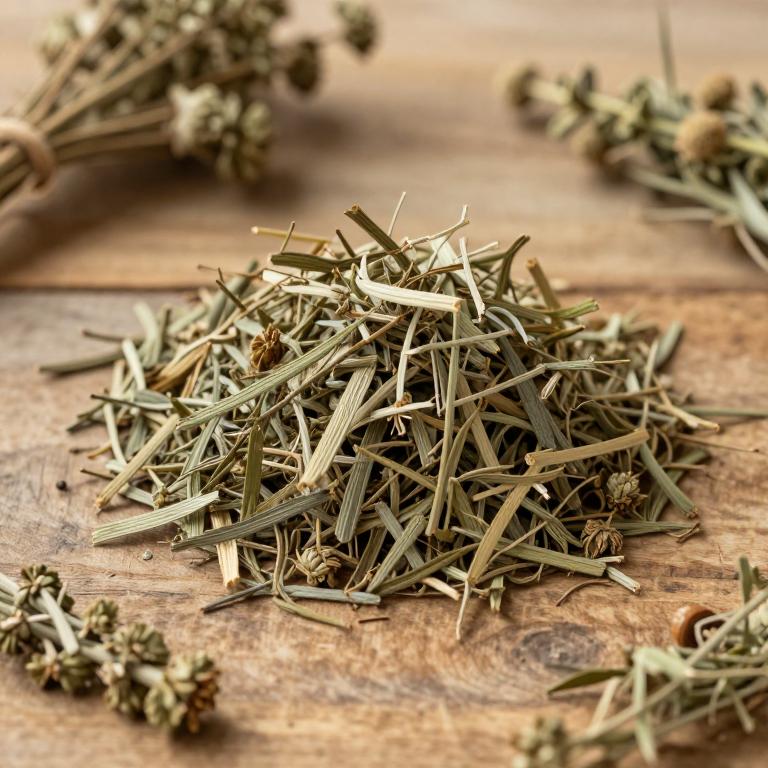
Names and Synonyms
Scientific Names
Accepted name
Chrysopogon nigritanusSynonyms
- Andropogon zizanioides var. nigritanus
- Mandelorna insignis
- Vetiveria nigritana
- Andropogon squarrosus var. nigritanus
- Vetiveria zizanioides var. nigritana
- Chrysopogon zizanioides var. nigritana
- Andropogon nigritanus
Sources: Wikidata, Catalogue of Life
Taxonomical Classification
This plant belongs to the kingdom Plantae and is classified under the phylum Streptophyta within the class Equisetopsida. As a member of the subclass Magnoliidae and the order Poales, it is situated in the family Poaceae. Specifically, it is identified by the genus Chrysopogon and the species Chrysopogon nigritaanus.
| Rank | Classification |
|---|---|
| Kingdom | Plantae |
| Phylum | Streptophyta |
| Class | Equisetopsida |
| Subclass | Magnoliidae |
| Order | Poales |
| Family | Poaceae |
| Genus | Chrysopogon |
Sources: The World Checklist of Vascular Plants (WCVP)
Distribution
This plant, Chrysopogon nigritanus, exhibits a specific distribution pattern across the West Tropical Africa region. It can be found growing within the borders of Benin, where it contributes to the local medicinal flora. The species is also documented in Burkina, extending its presence further into the West African landscape. Furthermore, its geographical range includes the coastal and inland areas of Gambia and Ghana. Finally, the plant's distribution continues westward into the territory of Guinea-Bissau.
| Region | Area |
|---|---|
| West Tropical Africa | Benin |
| West Tropical Africa | Burkina |
| West Tropical Africa | Gambia |
| West Tropical Africa | Ghana |
| West Tropical Africa | Guinea-Bissau |
| West Tropical Africa | Guinea |
| West Tropical Africa | Ivory Coast |
| West Tropical Africa | Mali |
| West Tropical Africa | Mauritania |
| West Tropical Africa | Nigeria |
Sources: The World Checklist of Vascular Plants (WCVP)
Botanical Identification
Life history
The life history of Chrysopogon nigritanus is characterized by a perennial lifecycle, allowing the plant to persist through multiple growing seasons. In terms of its morphological growth strategy, the species functions as a hemicryptophyte, meaning its perennial buds are located at or just below the soil surface, protected by leaf litter or substrate. This hemicryptophytic life form enables the plant to endure varying environmental conditions by maintaining its regenerative structures close to the ground level throughout its developmental stages.
- Life form :
- hemicryptophyte
- Lifecycle :
- perennial
Morphology
The morphology of Chrysopogon nigritanus is characterized by a graminoid growth form, functioning primarily as a non-woody herb. This plant exhibits a self-supporting structure, lacking the climbing mechanisms of a liana or vine, and it operates as an independent organism rather than a parasite. In terms of its ecological habit, it is categorized as terrestrial, though it may exhibit variations across aquatic, semiaquatic, and terrestrial environments. The plant maintains a stature that typically ranges from a minimum height of 1.2 m to a maximum height of 2.4 m.
- Aquatic :
- terrestrial
- Climber :
- self-supporting
- Epiphyte :
- terrestrial
- Growth form :
- herb
- Growth form :
- graminoid
- Parasite :
- independent
- Plant height max:
- 2.4 m
- Plant height min:
- 1.2 m
- Woodiness :
- non-woody
Physiology
The physiology of Chrysopogon nigritanus is fundamentally characterized by its highly efficient C4 photosynthetic pathway, a specialized metabolic adaptation that distinguishes it from C3 plants. By utilizing the C4 pathway, the plant employs a spatial separation of carbon fixation processes, where initial CO2 fixation occurs in the mesophyll cells via phosphoenolpyruvate carboxylase (PEPC), followed by the decarboxylation of four-carbon acids within the bundle sheath cells. This mechanism allows for a concentrated stream of CO2 around the enzyme Rubisco, effectively minimizing photorespiration and maximizing carbon assimilation rates even under conditions of high light intensity, elevated temperatures, and limited water availability. This physiological efficiency enables the plant to maintain high photosynthetic rates and optimize water-use efficiency, contributing to its robust growth and survival in arid or seasonally dry environments.
- Photosynthetic pathway :
- C4
Reproduction
The reproduction of Chrysopogon nigritanus is characterized by the production of small, lightweight seeds that facilitate dispersal. Quantitative analysis of the seed morphology reveals a highly consistent mass across specimens, with a calculated mean seed mass of 0.001485 g. The variation within the population is minimal, as evidenced by a maximum seed mass of 0.00163 g and a minimum seed mass of 0.00134 g. This narrow range in seed weight suggests a stabilized reproductive strategy optimized for efficient distribution within its ecological niche.
- Seed mass max:
- 0.00163 g
- Seed mass mean:
- 0.001485 g
- Seed mass min:
- 0.00134 g
Sources: Global Inventory of Floras and Traits (GIFT)
Activities
Chrysopogon nigritanus has 3 reported activities identified across 0 scientific publications and several other databases. The most consistently reported activities include Antimicrobial, Antioxidant, Hemolytic.
| Activity | Supporting sources | Consensus |
|---|---|---|
| Antimicrobial | 1 supporting sources | ★☆☆☆☆ |
| Antioxidant | 1 supporting sources | ★☆☆☆☆ |
| Hemolytic | 1 supporting sources | ★☆☆☆☆ |
Antimicrobial
- Pharmacognosy research
Antioxidant
- Pharmacognosy research
Hemolytic
- Pharmacognosy research