Wild Jasmine
Chrysojasminum fruticans · Accepted scientific name
Scientific literature: Very Sparse (2 studies) · ★☆☆☆☆
Wild Jasmine, scientifically known as Chrysojasminum fruticans, is a resilient shrub celebrated for its fragrant blooms and therapeutic potential. Found in diverse tropical landscapes, this botanical treasure is traditionally utilized in herbal medicine to address various ailments, offering unique phytochemical properties that continue to intrigue modern scientific research and wellness.
- Family
- Oleaceae
- Native range
- Europe
- Parts used
- Not available
- Common names
- Wild Jasmine · Mediterranean Yellow Jasmine
- Scientific synonyms
- Jasminum Fruticans Var. Syriacum · Jasminum Fruticans Var. Mariae · 7 more
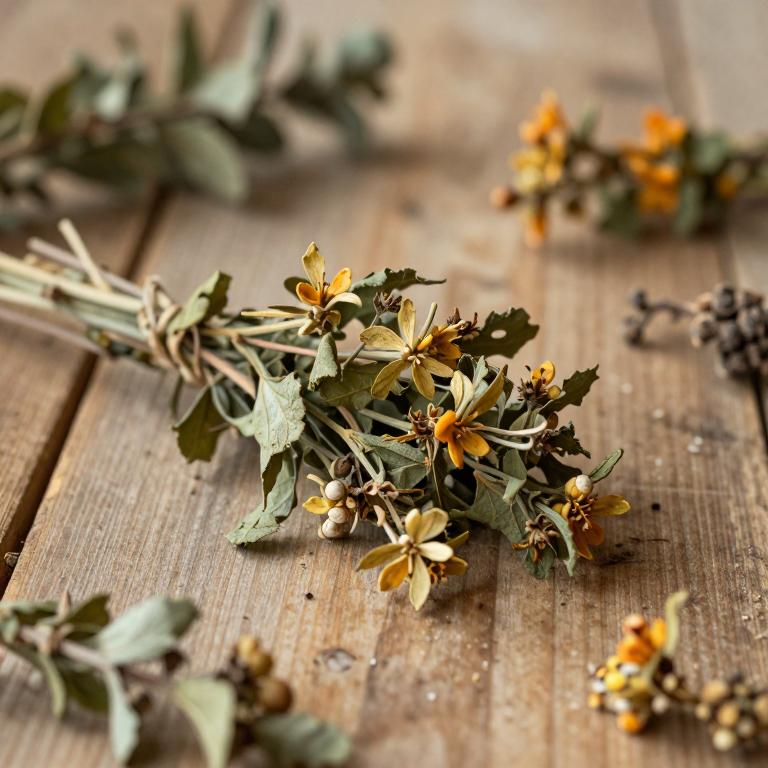
Names and Synonyms
Common Names
- Wild Jasmine
- Mediterranean Yellow Jasmine
Scientific Names
Accepted name
Chrysojasminum fruticansSynonyms
- Jasminum fruticans var. syriacum
- Jasminum fruticans var. mariae
- Jasminum fruticans subsp. mariae
- Jasminum fruticans var. simplicifolium
- Jasminum fruticans var. speciosum
- Jasminum fruticans
- Jasminum syriacum
- Jasminum luteum
- Jasminum mariae
Regional and Traditional Names
Spanish:
- jazmín amarillo
German:
- Strauch-Jasmin
French:
- Jasmin d'été
- Jasmin en buisson
- Jasmin jaune
- Jasmin ligneux
Sources: Wikidata, Catalogue of Life
Taxonomical Classification
This plant belongs to the kingdom Plantae and is classified within the phylum Streptophyta and the class Equisetopsida. It is further categorized under the subclass Magnoliidae and the order Lamiales. Finally, it is a member of the family Oleaceae and is identified by the genus Chrysojasminum.
| Rank | Classification |
|---|---|
| Kingdom | Plantae |
| Phylum | Streptophyta |
| Class | Equisetopsida |
| Subclass | Magnoliidae |
| Order | Lamiales |
| Family | Oleaceae |
| Genus | Chrysojasminum |
Sources: The World Checklist of Vascular Plants (WCVP)
Distribution
This plant exhibits a diverse geographical distribution across several regions of the European continent. In Middle Europe, it can be found growing in countries such as Belgium and Hungary. Moving toward the Mediterranean, its presence extends into Southwestern Europe. Specifically, it inhabits the islands of the Baleares as well as the mainland territory of France. Additionally, the species is documented to grow within the borders of Portugal.
| Region | Area |
|---|---|
| Middle Europe | Belgium |
| Middle Europe | Hungary |
| Southwestern Europe | Baleares |
| Southwestern Europe | France |
| Southwestern Europe | Portugal |
| Southwestern Europe | Spain |
| Southeastern Europe | Albania |
| Southeastern Europe | Bulgaria |
| Southeastern Europe | Greece |
| Southeastern Europe | Italy |
Sources: The World Checklist of Vascular Plants (WCVP)
Botanical Identification
Ecology
The ecology of Chrysojasminum fruticans is characterized by its preference for specific vegetational structures, primarily thriving within forest ecosystems and dense shrubberies. Within these habitats, the species occupies niches where it can integrate into the complex layering of woody vegetation, benefiting from the structural diversity provided by both established forest canopies and the transitional zones of shrublands. By inhabiting these environments, the plant engages with the specific microclimates and soil compositions typical of forest floors and thicket formations, which support its growth patterns and ecological role within these botanical communities.
- Habitat :
- forest, shrubberies
Life history
The life history of Chrysojasminum fruticans is characterized by its status as a perennial organism, meaning it persists through multiple growing seasons rather than completing its cycle in a single year. In terms of its structural growth strategies, the species exhibits diverse life forms depending on environmental conditions and developmental stages, manifesting as both a phanerophyte, where its conducting organs are elevated above the ground, and a nanophanerophyte, indicating a more compact growth habit with stems held close to the soil surface.
- Life form :
- nanophanerophyte
- Life form :
- phanerophyte
- Lifecycle :
- perennial
Morphology
The morphology of Chrysojasminum fruticans is characterized by its growth form as a woody shrub, maintaining a self-supporting structure rather than acting as a climber or liana. The plant typically reaches a height ranging from a minimum of 1 meter to a maximum of 1.5 meters. It is classified as a terrestrial species, showing no aquatic or semiaquatic tendencies, and it functions as an independent organism without being a parasite or an epiphyte.
- Aquatic :
- terrestrial
- Climber :
- self-supporting
- Epiphyte :
- terrestrial
- Growth form :
- shrub
- Parasite :
- independent
- Plant height max:
- 1.5 m
- Plant height min:
- 1 m
- Woodiness :
- woody
Physiology
The physiology of Chrysojasminum fruticans is primarily characterized by its utilization of the C3 photosynthetic pathway, a metabolic process where carbon dioxide is fixed directly into a three-carbon compound during the initial stage of the Calvin cycle. As a C3 plant, its physiological efficiency is highly dependent on ambient environmental conditions, particularly temperature and water availability, as it relies on the enzyme RuBisCO to facilitate carbon fixation. Under conditions of high light intensity or significant thermal stress, the plant may experience increased rates of photorespiration, a process where RuBisCO reacts with oxygen instead of carbon dioxide, potentially reducing net photosynthetic productivity. To mitigate such stressors, the plant employs various physiological adaptations to manage transpiration and maintain turgor pressure, ensuring that its metabolic functions remain stable within its specific ecological niche.
- Photosynthetic pathway :
- C3
Reproduction
The reproduction of Chrysojasminum fruticans is characterized by a specific flowering period that typically begins in June and concludes in July. The plant produces fruit classified as a drupe, which is characterized by a fleshy texture and remains indehiscent. These fruits possess an average length of 0.73 cm and an average width of 0.69 cm. Within these fruits, the seeds exhibit a consistent volume of 27 mm³, with both the minimum and maximum recorded values being equal to this mean. The seed mass is notable, with a recorded mean of 0.0541 g, although the mass ranges up to a maximum of 0.1165 g. The dispersal of the plant's offspring follows a zoochorous syndrome, relying on animals for the distribution of its seeds.
- Dehiscence :
- indehiscent
- Dispersal syndrome :
- zoochorous
- Flowering time :
- Jun
- Flowering time :
- Jul
- Fruit dryness :
- fleshy
- Fruit length mean:
- 0.73 cm
- Fruit type :
- drupe
- Fruit width mean:
- 0.69 cm
- Seed mass max:
- 0.1165 g
- Seed mass mean:
- 0.0541 g
- Seed volume max:
- 27 mm³
Sources: Global Inventory of Floras and Traits (GIFT)
Activities
Chrysojasminum fruticans has 2 reported activities identified across 0 scientific publications and several other databases. The most consistently reported activities include Antioxidant, Cytotoxic.
| Activity | Supporting sources | Consensus |
|---|---|---|
| Antioxidant | 1 supporting sources | ★☆☆☆☆ |
| Cytotoxic | 1 supporting sources | ★☆☆☆☆ |
Antioxidant
- Molecules (Basel, Switzerland)
Cytotoxic
- Molecules (Basel, Switzerland)
Preparations
Chrysojasminum fruticans has 2 reported preparations identified across 0 scientific publications and several other databases. The most consistently reported preparations include Methanol extracts, ethanolic and aqueous extracts.
| Preparation | Supporting sources | Consensus |
|---|---|---|
| Methanol extracts | 1 supporting sources | ★☆☆☆☆ |
| Ethanolic and aqueous extracts | 1 supporting sources | ★☆☆☆☆ |
Methanol extracts
- Molecules (Basel, Switzerland)
Ethanolic and aqueous extracts
- Journal of ethnopharmacology