Florist's daisy
Chrysanthemum · Accepted scientific name
Scientific literature: Sparse (70 studies) · ★★☆☆☆
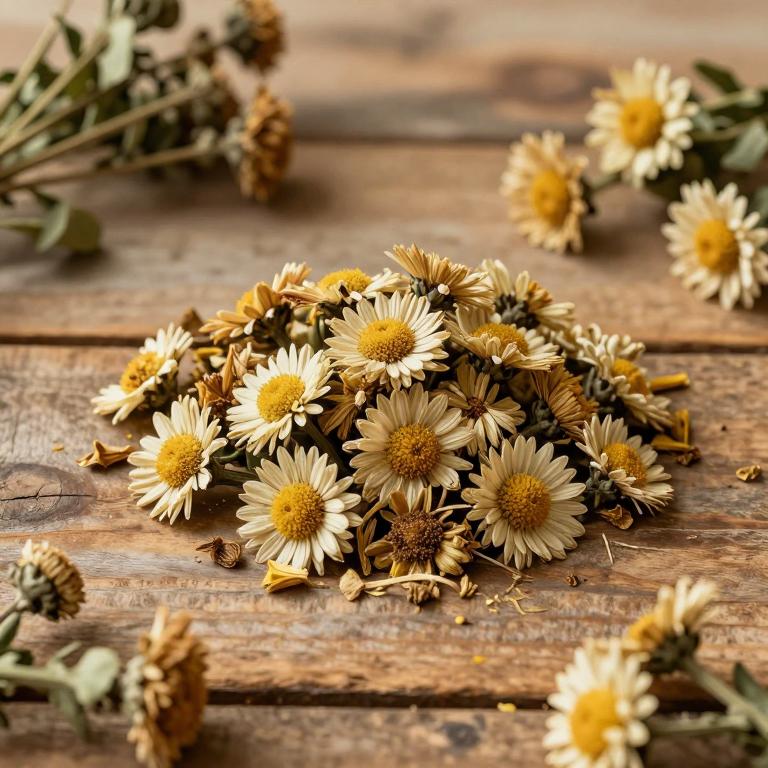
Florist's daisy, scientifically known as Chrysanthemum, is a versatile medicinal plant celebrated for its therapeutic properties. Rich in essential oils and bioactive compounds, it is traditionally used to soothe inflammation, relieve respiratory ailments, and reduce stress. Beyond its ornamental beauty, this resilient herb offers profound benefits for holistic wellness.
Names and Synonyms
Common Names
- daisy
- chrysanthemums
- mums
Scientific Names
Accepted name
ChrysanthemumSynonyms
- Hulteniella
- Dendranthema
- Arctanthemum
Regional and Traditional Names
Spanish:
- crisantemo
- Crisantemos
German:
- Chrysanthemen
Sources: Wikidata, Catalogue of Life
Taxonomical Classification
This plant belongs to the kingdom Plantae and the phylum Streptophyta, falling under the class Equisetopsida and subclass Magnoliidae. Within the order Asterales, it is classified under the family Asteraceae. Finally, it is identified by the genus Chrysanthemum.
| Rank | Classification |
|---|---|
| Kingdom | Plantae |
| Phylum | Streptophyta |
| Class | Equisetopsida |
| Subclass | Magnoliidae |
| Order | Asterales |
| Family | Asteraceae |
| Genus | Chrysanthemum |
Sources: The World Checklist of Vascular Plants (WCVP)
Distribution
This plant exhibits a diverse presence across several regions of the European continent. In Middle Europe, it can be found growing within the territories of Germany and Poland. Its distribution also extends to the Czechia-Slovakia region within the same central zone. Moving toward Southwestern Europe, the species is established in France. Finally, the plant is also documented inhabiting the Baleares islands.
| Region | Area |
|---|---|
| Middle Europe | Czechia-Slovakia |
| Middle Europe | Germany |
| Middle Europe | Poland |
| Southwestern Europe | Baleares |
| Southwestern Europe | France |
| Southwestern Europe | Portugal |
| Southeastern Europe | Bulgaria |
| Southeastern Europe | Italy |
| Southeastern Europe | Romania |
| Eastern Europe | Central European Russia |
Sources: The World Checklist of Vascular Plants (WCVP)
Plant Parts
Chrysanthemum has 2 reported plant parts identified across 8 scientific publications and several other databases that are studied for medicinal purposes. The most consistently reported plant part include flower, seed.
| Plant part | Supporting sources | Consensus |
|---|---|---|
| Flower | 7 supporting sources | ★★★★☆ |
| Seed | 1 supporting sources | ★☆☆☆☆ |
Flower
- BMC genomics
- Journal of photochemistry and photobiology. B, Biology
- RSC advances
- Foods (Basel, Switzerland)
- Heliyon
View 2 additional sources
- Analytical and bioanalytical chemistry
- Pharmacological research
Seed
- Analytical and bioanalytical chemistry
Chemicals
Chrysanthemum has 23 reported phytochemicals identified across 8 scientific publications and several other databases. The most consistently reported chemicals include Linarin, Anthocyanins, CHLOROGENIC ACID, CHLOROPHYLL B, Carbendazim.
| Chemical | Supporting sources | Consensus |
|---|---|---|
| Linarin | 2 supporting sources | ★☆☆☆☆ |
| Anthocyanins | 1 supporting sources | ★☆☆☆☆ |
| CHLOROGENIC ACID | 1 supporting sources | ★☆☆☆☆ |
| CHLOROPHYLL B | 1 supporting sources | ★☆☆☆☆ |
| Carbendazim | 1 supporting sources | ★☆☆☆☆ |
| Carotenoids | 1 supporting sources | ★☆☆☆☆ |
| Cyanidin 3-glucoside | 1 supporting sources | ★☆☆☆☆ |
| Eupatilin | 1 supporting sources | ★☆☆☆☆ |
| Isorhamnetin | 1 supporting sources | ★☆☆☆☆ |
| Isorhoifolin | 1 supporting sources | ★☆☆☆☆ |
Linarin
- Plant physiology
- Fitoterapia
Anthocyanins
- Photochemistry and photobiology
CHLOROGENIC ACID
- Antioxidants (Basel, Switzerland)
CHLOROPHYLL B
- Photochemistry and photobiology
Carbendazim
- Analytical and bioanalytical chemistry
Carotenoids
- Photochemistry and photobiology
Cyanidin 3-glucoside
- Antioxidants (Basel, Switzerland)
Eupatilin
- Antioxidants (Basel, Switzerland)
Isorhamnetin
- Heliyon
Isorhoifolin
- Plant physiology
Activities
Chrysanthemum has 6 reported activities identified across 8 scientific publications and several other databases. The most consistently reported activities include Antioxidant, Anticancer, Antimicrobial, Hepatoprotective, Nephroprotective.
| Activity | Supporting sources | Consensus |
|---|---|---|
| Antioxidant | 4 supporting sources | ★★☆☆☆ |
| Anticancer | 2 supporting sources | ★☆☆☆☆ |
| Antimicrobial | 1 supporting sources | ★☆☆☆☆ |
| Hepatoprotective | 1 supporting sources | ★☆☆☆☆ |
| Nephroprotective | 1 supporting sources | ★☆☆☆☆ |
| Neuroprotective | 1 supporting sources | ★☆☆☆☆ |
Antioxidant
- Molecules (Basel, Switzerland)
- Antioxidants (Basel, Switzerland)
- Heliyon
- Fitoterapia
Anticancer
- Heliyon
- Fitoterapia
Antimicrobial
- Heliyon
Hepatoprotective
- Heliyon
Nephroprotective
- Heliyon
Neuroprotective
- Fitoterapia
Conditions
Chrysanthemum has 16 reported investigations on conditions identified across 8 scientific publications and several other databases. The most consistently reported conditions include antioxidant, inflammatory bowel disease, Alzheimer's disease, acute kidney injury, anti-allergic.
| Condition | Supporting sources | Consensus |
|---|---|---|
| Antioxidant | 2 supporting sources | ★☆☆☆☆ |
| Inflammatory bowel disease | 2 supporting sources | ★☆☆☆☆ |
| Alzheimer's disease | 1 supporting sources | ★☆☆☆☆ |
| Acute kidney injury | 1 supporting sources | ★☆☆☆☆ |
| Anti-allergic | 1 supporting sources | ★☆☆☆☆ |
| Brain cancers | 1 supporting sources | ★☆☆☆☆ |
| Diabetes complications | 1 supporting sources | ★☆☆☆☆ |
| Hyperuricemia | 1 supporting sources | ★☆☆☆☆ |
| Infectious diseases | 1 supporting sources | ★☆☆☆☆ |
| Ischemic stroke | 1 supporting sources | ★☆☆☆☆ |
Antioxidant
- Antioxidants (Basel, Switzerland)
- Heliyon
Inflammatory bowel disease
- Molecules (Basel, Switzerland)
- Fitoterapia
Alzheimer's disease
- Fitoterapia
Acute kidney injury
- Fitoterapia
Anti-allergic
- Heliyon
Brain cancers
- Fitoterapia
Diabetes complications
- BMC complementary and alternative medicine
Hyperuricemia
- Fitoterapia
Infectious diseases
- Fitoterapia
Ischemic stroke
- Fitoterapia
Preparations
Chrysanthemum has 10 reported preparations identified across 8 scientific publications and several other databases. The most consistently reported preparations include Chrysanthemum extracts, chrysanthemum water extract, complex polysaccharide, infusions, medicinal herb.
| Preparation | Supporting sources | Consensus |
|---|---|---|
| Chrysanthemum extracts | 1 supporting sources | ★☆☆☆☆ |
| Chrysanthemum water extract | 1 supporting sources | ★☆☆☆☆ |
| Complex polysaccharide | 1 supporting sources | ★☆☆☆☆ |
| Infusions | 1 supporting sources | ★☆☆☆☆ |
| Medicinal herb | 1 supporting sources | ★☆☆☆☆ |
| Organic chrysanthemum extracts | 1 supporting sources | ★☆☆☆☆ |
| Organic extracts from the petals of five chrysanthemum cultivars | 1 supporting sources | ★☆☆☆☆ |
| Tea | 1 supporting sources | ★☆☆☆☆ |
| Teas | 1 supporting sources | ★☆☆☆☆ |
| Water extracts | 1 supporting sources | ★☆☆☆☆ |
Chrysanthemum extracts
- Antioxidants (Basel, Switzerland)
Chrysanthemum water extract
- Journal of ethnopharmacology
Complex polysaccharide
- International journal of biological macromolecules
Infusions
- Molecules (Basel, Switzerland)
Medicinal herb
- Molecular horticulture
Organic chrysanthemum extracts
- Antioxidants (Basel, Switzerland)
Organic extracts from the petals of five chrysanthemum cultivars
- Antioxidants (Basel, Switzerland)
Tea
- Molecular horticulture
Teas
- Molecules (Basel, Switzerland)
Water extracts
- Chemistry & biodiversity