Chrysanthemum rhombifolium
Chrysanthemum rhombifolium · Accepted scientific name
Scientific literature: Very Sparse (9 studies) · ★☆☆☆☆
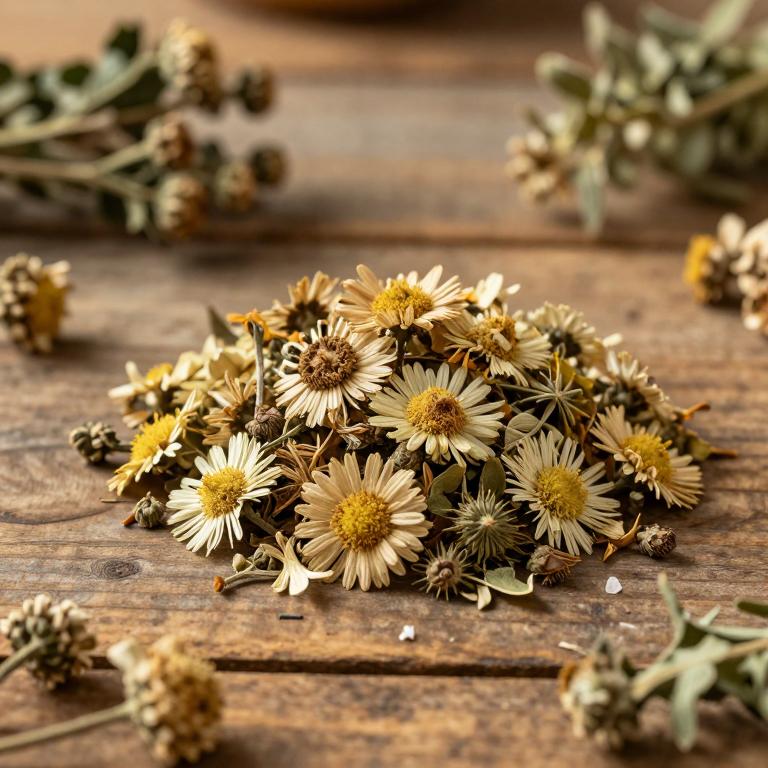
scientifically known as Chrysanthemum rhombifoliuim, is a distinctive medicinal herb valued for its unique therapeutic properties. Characterized by its specific leaf shape, this plant belongs to the Asteraceae family. It is widely studied for its potential bioactive compounds, offering traditional and modern applications in various holistic healing practices.
- Family
- Asteraceae
- Native range
- Asia-Temperate
- Parts used
- Not available
- Common names
- Not available
- Scientific synonyms
- Dendranthema Rhombifolium
Names and Synonyms
Scientific Names
Accepted name
Chrysanthemum rhombifoliumSynonyms
- Dendranthema rhombifolium
Sources: Wikidata
Taxonomical Classification
This plant, Chrysanthemum rhombifolium, belongs to the kingdom Plantae and the phylum Streptophyta. It is classified within the class Equisetopsida and the subclass Magnoliidae, falling under the order Asterales. Finally, it is a member of the family Asteraceae and the genus Chrysanthemum.
| Rank | Classification |
|---|---|
| Kingdom | Plantae |
| Phylum | Streptophyta |
| Class | Equisetopsida |
| Subclass | Magnoliidae |
| Order | Asterales |
| Family | Asteraceae |
| Genus | Chrysanthemum |
Sources: The World Checklist of Vascular Plants (WCVP)
Distribution
This plant is characterized by a specific and localized geographical range. Within the vast territory of China, its presence is primarily concentrated in the South-Central region. This particular area provides the unique environmental conditions necessary for its growth and survival. Consequently, its natural habitat is restricted to these specific southern-central provinces. Understanding this distribution is essential for researchers studying its native ecology.
| Region | Area |
|---|---|
| China | China South-Central |
Sources: The World Checklist of Vascular Plants (WCVP)
Chemicals
Chrysanthemum rhombifolium has 9 reported phytochemicals identified across 0 scientific publications and several other databases. The most consistently reported chemicals include 3,4-Dihydroxyphenylacetic acid, Chrysoeriol, Genkwanin, Kaempferol 3-O-gentiobioside, Linarin.
| Chemical | Supporting sources | Consensus |
|---|---|---|
| 3,4-Dihydroxyphenylacetic acid | 1 supporting sources | ★☆☆☆☆ |
| Chrysoeriol | 1 supporting sources | ★☆☆☆☆ |
| Genkwanin | 1 supporting sources | ★☆☆☆☆ |
| Kaempferol 3-O-gentiobioside | 1 supporting sources | ★☆☆☆☆ |
| Linarin | 1 supporting sources | ★☆☆☆☆ |
| Narcissoside | 1 supporting sources | ★☆☆☆☆ |
| Trigonelline | 1 supporting sources | ★☆☆☆☆ |
| acacetin | 1 supporting sources | ★☆☆☆☆ |
| diosmin | 1 supporting sources | ★☆☆☆☆ |
3,4-Dihydroxyphenylacetic acid
- Phytochemical analysis : PCA
Chrysoeriol
- Phytochemical analysis : PCA
Genkwanin
- Phytochemical analysis : PCA
Kaempferol 3-O-gentiobioside
- Phytochemical analysis : PCA
Linarin
- Phytochemical analysis : PCA
Narcissoside
- Phytochemical analysis : PCA
Trigonelline
- Phytochemical analysis : PCA
acacetin
- Phytochemical analysis : PCA
diosmin
- Phytochemical analysis : PCA