Chrysanthemum nankingense
Chrysanthemum nankingense · Accepted scientific name
Scientific literature: Very Sparse (6 studies) · ★☆☆☆☆
, scientifically known as Chrysanthemum nankingense, is a versatile medicinal herb valued in traditional practices. Renowned for its cooling properties, this plant is frequently used to alleviate inflammation, soothe fevers, and support digestive health. Its unique botanical profile offers significant therapeutic potential for holistic wellness and natural healing.
- Family
- Asteraceae
- Native range
- Asia-Temperate
- Parts used
- Flower
- Common names
- Not available
- Scientific synonyms
- Dendranthema Nankingense · Chrysanthemum Indicum Var. Edule · 1 more
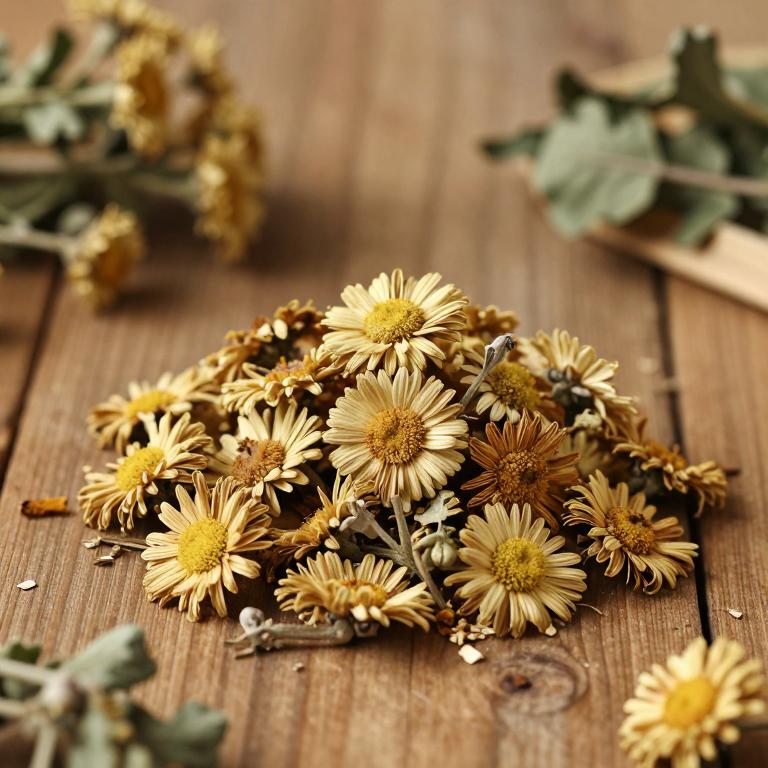
Names and Synonyms
Scientific Names
Accepted name
Chrysanthemum nankingenseSynonyms
- Dendranthema nankingense
- Chrysanthemum indicum var. edule
- Dendranthema indicum var. edule
Sources: Wikidata
Taxonomical Classification
This plant belongs to the kingdom Plantae and the phylum Streptophyta, placing it within the class Equisetopsida and subclass Magnoliidae. It is further classified under the order Asterales and the family Asteraceae. Ultimately, its taxonomic identity is defined by the genus Chrysanthemum, specifically the species Chrysanthemum nankingense.
| Rank | Classification |
|---|---|
| Kingdom | Plantae |
| Phylum | Streptophyta |
| Class | Equisetopsida |
| Subclass | Magnoliidae |
| Order | Asterales |
| Family | Asteraceae |
| Genus | Chrysanthemum |
Sources: The World Checklist of Vascular Plants (WCVP)
Distribution
This plant is native to specific regions within the country of China. Its primary geographical presence can be found throughout China North-Central. Additionally, the species is distributed across China Southeast. These distinct areas represent the main habitats where the plant grows naturally. Consequently, its range is concentrated within these particular Chinese territories.
| Region | Area |
|---|---|
| China | China North-Central |
| China | China Southeast |
Sources: The World Checklist of Vascular Plants (WCVP)
Plant Parts
Chrysanthemum nankingense has 1 reported plant parts identified across 1 scientific publications and several other databases that are studied for medicinal purposes. The most consistently reported plant part include flower.
| Plant part | Supporting sources | Consensus |
|---|---|---|
| Flower | 1 supporting sources | ★☆☆☆☆ |
Flower
- Zhong yao cai = Zhongyaocai = Journal of Chinese medicinal materials
Chemicals
Chrysanthemum nankingense has 2 reported phytochemicals identified across 1 scientific publications and several other databases. The most consistently reported chemicals include Amorpha-4,11-diene, Flavonoids.
| Chemical | Supporting sources | Consensus |
|---|---|---|
| Amorpha-4,11-diene | 1 supporting sources | ★☆☆☆☆ |
| Flavonoids | 1 supporting sources | ★☆☆☆☆ |
Amorpha-4,11-diene
- Chinese medicine
Flavonoids
- Genes
Conditions
Chrysanthemum nankingense has 2 reported investigations on conditions identified across 1 scientific publications and several other databases. The most consistently reported conditions include CdCl2, drought.
| Condition | Supporting sources | Consensus |
|---|---|---|
| Cdcl2 | 1 supporting sources | ★☆☆☆☆ |
| Drought | 1 supporting sources | ★☆☆☆☆ |
Cdcl2
- Frontiers in plant science
Drought
- Frontiers in plant science
Preparations
Chrysanthemum nankingense has 1 reported preparations identified across 1 scientific publications and several other databases. The most consistently reported preparations include flowers.
| Preparation | Supporting sources | Consensus |
|---|---|---|
| Flowers | 1 supporting sources | ★☆☆☆☆ |
Flowers
- Zhong yao cai = Zhongyaocai = Journal of Chinese medicinal materials