Chrysanthellum americanum
Chrysanthellum americanum · Accepted scientific name
Scientific literature: Very Sparse (10 studies) · ★☆☆☆☆
, scientifically known as Chrysanthellum americanum, is a medicinal herb native to the Americas. Traditionally used in folk medicine, this plant is renowned for its potent anti-inflammatory and antioxidant properties. It is frequently employed to treat respiratory ailments, support digestive health, and bolster the immune system through its bioactive compounds.
- Family
- Asteraceae
- Native range
- Africa
- Parts used
- Not available
- Common names
- Not available
- Scientific synonyms
- Chrysanthellina Gracilis · Chrysanthellina Swartzii · 6 more
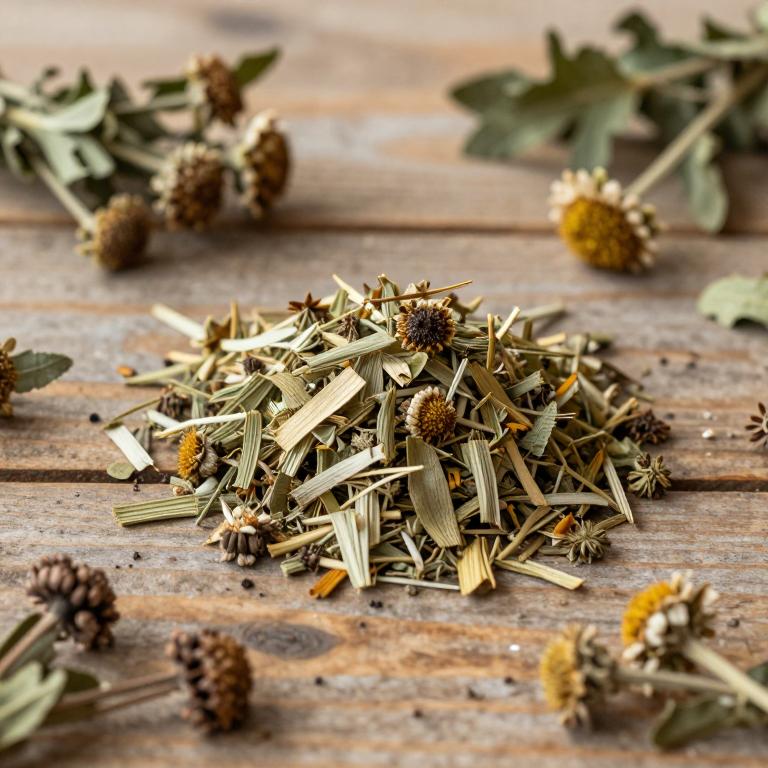
Names and Synonyms
Scientific Names
Accepted name
Chrysanthellum americanumSynonyms
- Chrysanthellina gracilis
- Chrysanthellina swartzii
- Chrysanthellum swartzii
- Sebastiania heterophylla
- Collaea procumbens
- Verbesina mutica
- Bidens apiifolia
- Chrysanthellina fasciculata
Sources: Wikidata, Catalogue of Life
Taxonomical Classification
This plant belongs to the kingdom Plantae and the phylum Streptophyta, falling under the class Equisetopsida and subclass Magnoliidae. It is further classified within the order Asterales and the family Asteraceae. Ultimately, it is identified by the genus Chrysanthellum and the specific species name americanum.
| Rank | Classification |
|---|---|
| Kingdom | Plantae |
| Phylum | Streptophyta |
| Class | Equisetopsida |
| Subclass | Magnoliidae |
| Order | Asterales |
| Family | Asteraceae |
| Genus | Chrysanthellum |
Sources: The World Checklist of Vascular Plants (WCVP)
Distribution
This plant exhibits a broad distribution across several key regions within the African continent. In West Tropical Africa, its presence is specifically noted in the countries of Mali and Senegal. Moving toward the center of the continent, it can be found throughout West-Central Tropical Africa, including Cameroon and the Congo. The species also extends its reach into the southern regions of the continent. Specifically, its geographical range includes the nation of Mozambique located in South Tropical Africa.
| Region | Area |
|---|---|
| West Tropical Africa | Mali |
| West Tropical Africa | Senegal |
| West-Central Tropical Africa | Cameroon |
| West-Central Tropical Africa | Congo |
| South Tropical Africa | Mozambique |
| Indian Subcontinent | India |
| Mexico | Mexico Southwest |
| Mexico | Mexico Southeast |
| Central America | Costa Rica |
| Central America | El Salvador |
Sources: The World Checklist of Vascular Plants (WCVP)
Botanical Identification
Ecology
The ecology of Chrysanthellum americanum is characterized by a broad altitudinal distribution that allows it to inhabit diverse montane and lowland environments. This species is capable of thriving across a wide vertical gradient, ranging from sea level up to an elevation of 1900 m AMSL. This expansive elevational range suggests an adaptability to varying temperature regimes, atmospheric pressures, and moisture levels found throughout different topographical layers. By occupying habitats from 0 to 1900 m AMSL, the plant can establish itself in a variety of ecological niches, facilitating its presence in multiple landscape types within its natural range.
- Elevational range max:
- 1900 m AMSL
- Elevational range min:
- 0 m AMSL
Life history
The life history of Chrysanthellum americanum is characterized by its classification as an annual plant, meaning it completes its entire biological cycle—from germination and vegetative growth to flowering and seed production—within a single growing season. As an annual species, its life cycle is driven by seasonal environmental cues, typically germinating in response to favorable moisture and temperature conditions in tropical or subtropical climates. Throughout its short lifespan, the plant undergoes rapid development to establish its structure before dedicating significant energy to reproductive efforts. Following the maturation of its inflorescences, the plant produces seeds that serve as the primary mechanism for dispersal and survival. Once these seeds are released, the individual plant dies, leaving the next generation to emerge from the soil when the subsequent seasonal cycle begins.
- Lifecycle :
- annual
Morphology
The morphology of Chrysanthellum americanum is characterized by a growth form categorized as a herb or forb, exhibiting a non-woody structure. It functions as a terrestrial plant rather than an epiphyte, maintaining its position on the ground. In terms of its climbing habit, the species is described as self-supporting, acting as a facultative or self-supporting liana or vine rather than an obligatory climber. The plant reaches a maximum height of approximately 0.3048 meters.
- Climber :
- self-supporting
- Epiphyte :
- terrestrial
- Growth form :
- herb
- Plant height max:
- 0.304803706 m
- Woodiness :
- non-woody
Sources: Global Inventory of Floras and Traits (GIFT)
Chemicals
Chrysanthellum americanum has 3 reported phytochemicals identified across 0 scientific publications and several other databases. The most consistently reported chemicals include Flavonoid, Flavonoids, SAPONIN.
| Chemical | Supporting sources | Consensus |
|---|---|---|
| Flavonoid | 1 supporting sources | ★☆☆☆☆ |
| Flavonoids | 1 supporting sources | ★☆☆☆☆ |
| SAPONIN | 1 supporting sources | ★☆☆☆☆ |
Flavonoid
- Oxidative medicine and cellular longevity
Flavonoids
- Foods (Basel, Switzerland)
SAPONIN
- Oxidative medicine and cellular longevity
Activities
Chrysanthellum americanum has 3 reported activities identified across 0 scientific publications and several other databases. The most consistently reported activities include Antihypertensive, Antioxidant, Anxiolytic.
| Activity | Supporting sources | Consensus |
|---|---|---|
| Antihypertensive | 1 supporting sources | ★☆☆☆☆ |
| Antioxidant | 1 supporting sources | ★☆☆☆☆ |
| Anxiolytic | 1 supporting sources | ★☆☆☆☆ |
Antihypertensive
- Foods (Basel, Switzerland)
Antioxidant
- Foods (Basel, Switzerland)
Anxiolytic
- Oxidative medicine and cellular longevity
Conditions
Chrysanthellum americanum has 4 reported investigations on conditions identified across 0 scientific publications and several other databases. The most consistently reported conditions include anxiety, depression, irritable bowel syndrome, mood disorders.
| Condition | Supporting sources | Consensus |
|---|---|---|
| Anxiety | 1 supporting sources | ★☆☆☆☆ |
| Depression | 1 supporting sources | ★☆☆☆☆ |
| Irritable bowel syndrome | 1 supporting sources | ★☆☆☆☆ |
| Mood disorders | 1 supporting sources | ★☆☆☆☆ |
Anxiety
- Oxidative medicine and cellular longevity
Depression
- Oxidative medicine and cellular longevity
Irritable bowel syndrome
- Oxidative medicine and cellular longevity
Mood disorders
- Oxidative medicine and cellular longevity
Preparations
Chrysanthellum americanum has 1 reported preparations identified across 0 scientific publications and several other databases. The most consistently reported preparations include polyphenolic extract.
| Preparation | Supporting sources | Consensus |
|---|---|---|
| Polyphenolic extract | 1 supporting sources | ★☆☆☆☆ |
Polyphenolic extract
- Oxidative medicine and cellular longevity