Chrysactinia mexicana
Chrysactinia mexicana · Accepted scientific name
Scientific literature: Very Sparse (12 studies) · ★☆☆☆☆
, scientifically known as Chrysactinia mexicana, is a remarkable medicinal plant valued for its diverse therapeutic properties. Often utilized in traditional healing practices, this species contains bioactive compounds believed to offer antioxidant and anti-inflammatory benefits. Understanding its phytochemical profile is essential for exploring its potential in modern pharmacological applications.
- Family
- Asteraceae
- Native range
- Northern America
- Parts used
- Not available
- Common names
- Not available
- Scientific synonyms
- Pectis Taxifolia
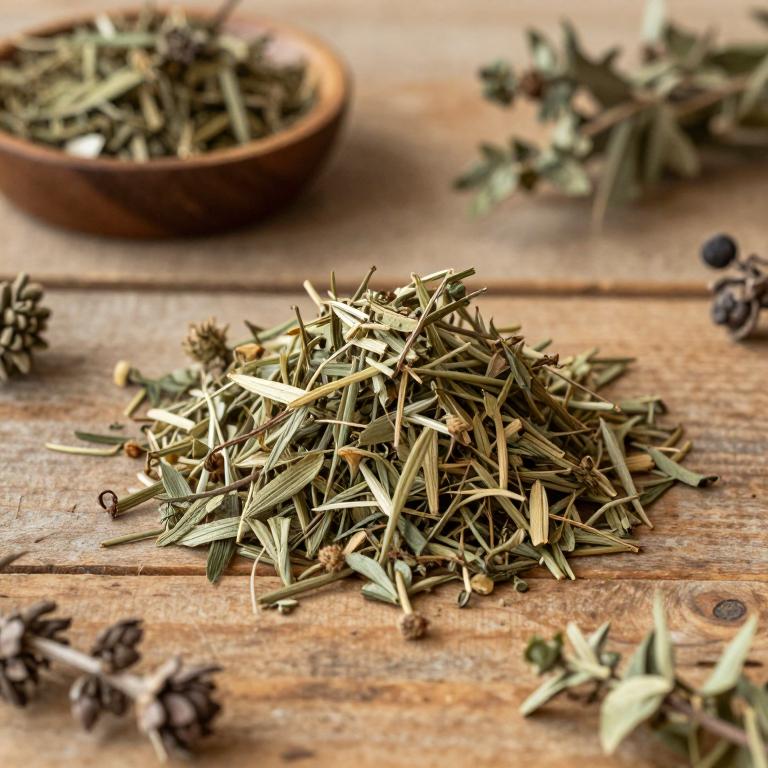
Names and Synonyms
Scientific Names
Accepted name
Chrysactinia mexicanaSynonyms
- Pectis taxifolia
Regional and Traditional Names
Spanish:
- Hierba de San Nicolás
Sources: Wikidata, Catalogue of Life
Taxonomical Classification
This plant belongs to the kingdom Plantae and is classified under the phylum Streptophyta within the class Equisetopsida. It falls under the subclass Magnoliidae and the order Asterales, specifically residing in the family Asteraceae. Finally, its taxonomic placement is completed within the genus Chrysactinia.
| Rank | Classification |
|---|---|
| Kingdom | Plantae |
| Phylum | Streptophyta |
| Class | Equisetopsida |
| Subclass | Magnoliidae |
| Order | Asterales |
| Family | Asteraceae |
| Genus | Chrysactinia |
Sources: The World Checklist of Vascular Plants (WCVP)
Distribution
This plant exhibits a diverse geographical distribution spanning across parts of the South-Central United States and multiple regions of Mexico. Within the United States, its presence is specifically documented in the states of New Mexico and Texas. Moving southward into Mexico, the species is widely distributed throughout Mexico Central. It also extends into the northeastern territories of the country. Additionally, the plant can be found inhabiting the coastal areas of the Mexico Gulf region.
| Region | Area |
|---|---|
| South-Central U.S.A. | New Mexico |
| South-Central U.S.A. | Texas |
| Mexico | Mexico Central |
| Mexico | Mexico Northeast |
| Mexico | Mexico Gulf |
| Mexico | Mexico Southwest |
Sources: The World Checklist of Vascular Plants (WCVP)
Botanical Identification
Life history
The life history of Chrysactinia mexicana is characterized by its status as a perennial species, meaning it possesses the biological capacity to persist through multiple growing seasons rather than completing its life cycle in a single year. As a perennial, the plant establishes a more stable presence within its ecosystem, often developing robust root systems that allow it to survive periods of dormancy or unfavorable environmental conditions. This extended lifespan enables the plant to engage in repeated reproductive cycles over several years, contributing to its long-term survival and ability to colonize its native habitats effectively.
- Lifecycle :
- perennial
Morphology
The morphology of Chrysactinia mexicana is characterized by a woody growth form, specifically manifesting as a shrub. As a terrestrial species, it does not exhibit aquatic or semiaquatic tendencies, nor does it function as an epiphyte. The plant is entirely independent, lacking any parasitic or obligatory epiphytic relationships. In terms of its structural habit, it is a self-supporting organism, functioning neither as a vine, liana, nor a climbing plant, but rather maintaining a stable, self-sustaining upright posture.
- Aquatic :
- terrestrial
- Climber :
- self-supporting
- Epiphyte :
- terrestrial
- Growth form :
- shrub
- Parasite :
- independent
- Woodiness :
- woody
Physiology
The physiology of Chrysactinia mexicana is primarily characterized by its utilization of the C3 photosynthetic pathway, a metabolic process wherein carbon dioxide is fixed directly into a three-carbon compound during the first stage of the Calvin cycle. Unlike plants employing C4 or CAM pathways to minimize photorespiration in arid environments, this species relies on the enzyme RuBisCO to facilitate initial carbon fixation, which typically necessitates higher stomatal conductance to maintain internal CO2 concentrations. This physiological framework implies that the plant's metabolic efficiency is closely tied to its ability to manage transpiration and water loss, as the C3 pathway is inherently more susceptible to the effects of high temperatures and limited water availability. Consequently, its physiological performance is heavily influenced by environmental factors such as light intensity, ambient temperature, and moisture levels, which dictate the rate of gas exchange and the overall efficiency of carbohydrate synthesis.
- Photosynthetic pathway :
- C3
Reproduction
The reproduction of Chrysactinia mexicana is characterized by the production of specialized seeds that exhibit a highly consistent and minute physical profile. The seed mass of this species is remarkably small, with an observed mean value of 0.00045 g. Throughout the reproductive cycle, the individual seed mass remains within a very narrow range, fluctuating between a minimum of 0.0004 g and a maximum of 0.0005 g. This uniformity in seed weight suggests a highly regulated developmental process during seed maturation, ensuring that the reproductive units are distributed with consistent energetic investment.
- Seed mass max:
- 5e-04 g
- Seed mass mean:
- 0.00045 g
- Seed mass min:
- 4e-04 g
Sources: Global Inventory of Floras and Traits (GIFT)
Chemicals
Chrysactinia mexicana has 3 reported phytochemicals identified across 0 scientific publications and several other databases. The most consistently reported chemicals include Flavonoids, Glycosides, glucose.
| Chemical | Supporting sources | Consensus |
|---|---|---|
| Flavonoids | 1 supporting sources | ★☆☆☆☆ |
| Glycosides | 1 supporting sources | ★☆☆☆☆ |
| glucose | 1 supporting sources | ★☆☆☆☆ |
Flavonoids
- Journal of ethnopharmacology
Glycosides
- Journal of ethnopharmacology
glucose
- Cellular and molecular biology (Noisy-le-Grand, France)
Activities
Chrysactinia mexicana has 3 reported activities identified across 0 scientific publications and several other databases. The most consistently reported activities include Adaptogenic, Antispasmodic, Diuretic.
| Activity | Supporting sources | Consensus |
|---|---|---|
| Adaptogenic | 1 supporting sources | ★☆☆☆☆ |
| Antispasmodic | 1 supporting sources | ★☆☆☆☆ |
| Diuretic | 1 supporting sources | ★☆☆☆☆ |
Adaptogenic
- Journal of ethnopharmacology
Antispasmodic
- Journal of ethnopharmacology
Diuretic
- Journal of ethnopharmacology
Conditions
Chrysactinia mexicana has 6 reported investigations on conditions identified across 0 scientific publications and several other databases. The most consistently reported conditions include HeLa cells, depressive disorders, fever, herpes simplex virus, rheumatism.
| Condition | Supporting sources | Consensus |
|---|---|---|
| Hela cells | 1 supporting sources | ★☆☆☆☆ |
| Depressive disorders | 1 supporting sources | ★☆☆☆☆ |
| Fever | 1 supporting sources | ★☆☆☆☆ |
| Herpes simplex virus | 1 supporting sources | ★☆☆☆☆ |
| Rheumatism | 1 supporting sources | ★☆☆☆☆ |
| Tuberculosis | 1 supporting sources | ★☆☆☆☆ |
Hela cells
- Natural product research
Depressive disorders
- Journal of ethnopharmacology
Fever
- Journal of ethnopharmacology
Herpes simplex virus
- Natural product research
Rheumatism
- Journal of ethnopharmacology
Tuberculosis
- Anais da Academia Brasileira de Ciencias
Preparations
Chrysactinia mexicana has 2 reported preparations identified across 0 scientific publications and several other databases. The most consistently reported preparations include extracts, hydroalcoholic extract.
| Preparation | Supporting sources | Consensus |
|---|---|---|
| Extracts | 1 supporting sources | ★☆☆☆☆ |
| Hydroalcoholic extract | 1 supporting sources | ★☆☆☆☆ |
Extracts
- Cellular and molecular biology (Noisy-le-Grand, France)
Hydroalcoholic extract
- Cellular and molecular biology (Noisy-le-Grand, France)