East Indian satinwood
Chloroxylon swietenia · Accepted scientific name
Scientific literature: Very Sparse (17 studies) · ★☆☆☆☆
East Indian satinwood, scientifically known as Chloroxylon swietenia, is a precious medicinal tree valued in traditional Ayurvedic practices. Renowned for its versatile therapeutic properties, various parts of the plant are utilized to treat skin ailments, inflammation, and digestive issues. Its robust timber and bioactive compounds make it ethnobotanically significant.
- Family
- Rutaceae
- Native range
- Asia-Tropical
- Parts used
- Leaf · Stem
- Common names
- East Indian Satinwood · Ceylon Satinwood
- Scientific synonyms
- Swietenia Chloroxylon
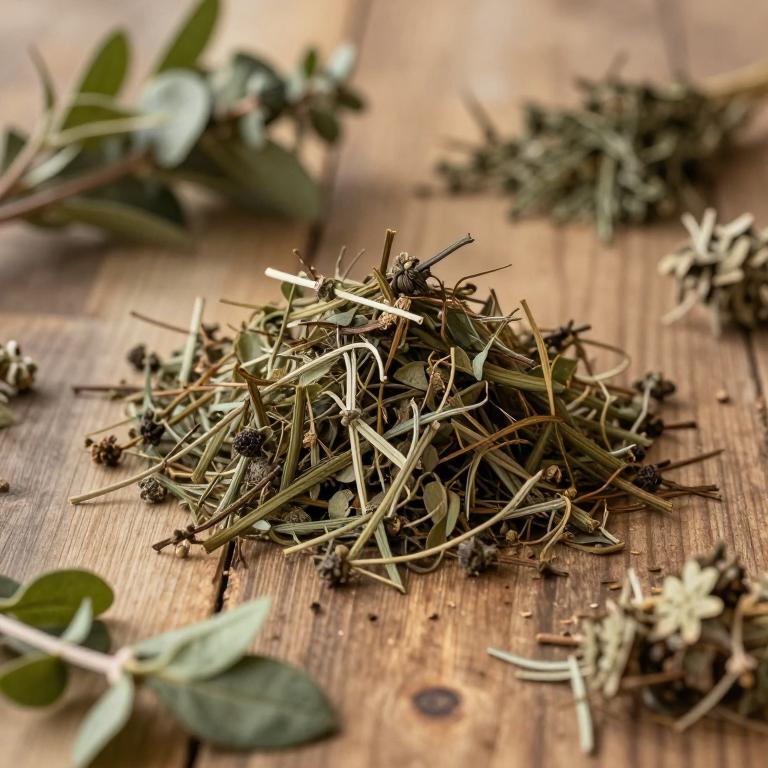
Names and Synonyms
Common Names
- East Indian Satinwood
- Ceylon satinwood
Scientific Names
Accepted name
Chloroxylon swieteniaSynonyms
- Swietenia chloroxylon
Sources: Wikidata, Catalogue of Life
Taxonomical Classification
This plant belongs to the kingdom Plantae and the phylum Streptophyta, falling under the class Equisetopsida and subclass Magnoliidae. Within the order Sapindales and the family Rutaceae, it is classified under the genus Chloroxylon. This specific taxonomic hierarchy identifies Chloroxylon swietenia as a member of a diverse group of flowering plants.
| Rank | Classification |
|---|---|
| Kingdom | Plantae |
| Phylum | Streptophyta |
| Class | Equisetopsida |
| Subclass | Magnoliidae |
| Order | Sapindales |
| Family | Rutaceae |
| Genus | Chloroxylon |
Sources: The World Checklist of Vascular Plants (WCVP)
Distribution
This plant, known scientifically as Chloroxylon swietenii, possesses a specific geographical range within the Asian continent. Its natural habitat is primarily concentrated within the Indian Subcontinent. Specifically, the species can be found growing natively across various regions of India. Additionally, its distribution extends across the waters to the island nation of Sri Lanka. These locations represent the core areas where the plant thrives in its natural environment.
| Region | Area |
|---|---|
| Indian Subcontinent | India |
| Indian Subcontinent | Sri Lanka |
Sources: The World Checklist of Vascular Plants (WCVP)
Botanical Identification
Life history
The life history of Chloroxylon swietenii is characterized by its status as a perennial species, allowing it to maintain a long-term presence within its tropical ecosystem. As a deciduous plant, it undergoes seasonal changes where it sheds its foliage, typically in response to dry periods, to conserve moisture and regulate its metabolic processes. This lifecycle involves a robust growth period followed by a dormant phase, ensuring its survival through varying environmental conditions over many years.
- Deciduousness :
- deciduous
- Lifecycle :
- perennial
Morphology
The morphology of Chloroxylon swietenii is characterized by a robust growth form, specifically identified as a tree. This woody plant reaches a significant stature, with a mean plant height of approximately 18 meters. In terms of its structural support and habit, it is classified as a self-supporting organism rather than a climber, distinguishing it from lianas or vines. Its physical structure is consistently woody, providing the necessary stability for its substantial vertical development.
- Climber :
- self-supporting
- Growth form :
- tree
- Plant height mean:
- 18 m
- Woodiness :
- woody
Physiology
The physiology of Chloroxylon swietenii is characterized by a metabolic framework consistent with many tropical woody species, specifically utilizing the C3 photosynthetic pathway for carbon fixation. This process involves the direct fixation of atmospheric carbon dioxide through the enzyme Rubisco within the mesophyll cells, rather than employing the specialized mechanisms found in C4 or CAM plants. Furthermore, the plant does not function as a nitrogen fixer, meaning it lacks the specialized symbiotic relationships with diazotrophic bacteria required to convert atmospheric nitrogen into bioavailable forms, and instead relies on the uptake of nitrates and ammonium from the soil to support its growth and nutritional requirements.
- Nitrogen fixer :
- no
- Photosynthetic pathway :
- C3
Reproduction
The reproduction of Chloroxylon swietenioides is primarily driven by the production of seeds contained within woody, dehiscent capsules. These seeds exhibit specific morphological variations in weight, characterized by a mean seed mass of 0.01884 g. Within the population, there is a measurable range of seed sizes, with the smallest recorded seeds having a mass of 0.01268 g and the largest reaching a maximum mass of 0.025 g. This distribution of seed mass reflects the energetic investment and reproductive potential inherent in its dispersal mechanism, ensuring the propagation of the species through these lightweight units.
- Seed mass max:
- 0.025 g
- Seed mass mean:
- 0.01884 g
- Seed mass min:
- 0.01268 g
Sources: Global Inventory of Floras and Traits (GIFT)
Plant Parts
Chloroxylon swietenia has 2 reported plant parts identified across 3 scientific publications and several other databases that are studied for medicinal purposes. The most consistently reported plant part include leaf, stem.
| Plant part | Supporting sources | Consensus |
|---|---|---|
| Leaf | 2 supporting sources | ★☆☆☆☆ |
| Stem | 1 supporting sources | ★☆☆☆☆ |
Leaf
- Biomedical chromatography : BMC
- Saudi journal of biological sciences
Stem
- Saudi journal of biological sciences
Chemicals
Chloroxylon swietenia has 11 reported phytochemicals identified across 3 scientific publications and several other databases. The most consistently reported chemicals include Chalepensin, Chalepin, Flavonoid, Flavonoids, Gallic acid.
| Chemical | Supporting sources | Consensus |
|---|---|---|
| Chalepensin | 1 supporting sources | ★☆☆☆☆ |
| Chalepin | 1 supporting sources | ★☆☆☆☆ |
| Flavonoid | 1 supporting sources | ★☆☆☆☆ |
| Flavonoids | 1 supporting sources | ★☆☆☆☆ |
| Gallic acid | 1 supporting sources | ★☆☆☆☆ |
| Isopimpinellin | 1 supporting sources | ★☆☆☆☆ |
| Lupeol | 1 supporting sources | ★☆☆☆☆ |
| Saponins | 1 supporting sources | ★☆☆☆☆ |
| Tannins | 1 supporting sources | ★☆☆☆☆ |
| ferulic acid | 1 supporting sources | ★☆☆☆☆ |
Chalepensin
- Biomedical chromatography : BMC
Chalepin
- Biomedical chromatography : BMC
Flavonoid
- Saudi journal of biological sciences
Flavonoids
- Biomedical chromatography : BMC
Gallic acid
- Saudi journal of biological sciences
Isopimpinellin
- Biomedical chromatography : BMC
Lupeol
- Biomedical chromatography : BMC
Saponins
- Biomedical chromatography : BMC
Tannins
- Biomedical chromatography : BMC
ferulic acid
- Saudi journal of biological sciences
Conditions
Chloroxylon swietenia has 3 reported investigations on conditions identified across 3 scientific publications and several other databases. The most consistently reported conditions include MCF-7 cells, breast cancer, tumor.
| Condition | Supporting sources | Consensus |
|---|---|---|
| Mcf-7 cells | 1 supporting sources | ★☆☆☆☆ |
| Breast cancer | 1 supporting sources | ★☆☆☆☆ |
| Tumor | 1 supporting sources | ★☆☆☆☆ |
Mcf-7 cells
- Cancer reports (Hoboken, N.J.)
Breast cancer
- Cancer reports (Hoboken, N.J.)
Tumor
- Cancer reports (Hoboken, N.J.)
Preparations
Chloroxylon swietenia has 5 reported preparations identified across 3 scientific publications and several other databases. The most consistently reported preparations include Dried leaf powder, aqueous extract, methanol and acetone extracts, methanol extract, stem bark.
| Preparation | Supporting sources | Consensus |
|---|---|---|
| Dried leaf powder | 1 supporting sources | ★☆☆☆☆ |
| Aqueous extract | 1 supporting sources | ★☆☆☆☆ |
| Methanol and acetone extracts | 1 supporting sources | ★☆☆☆☆ |
| Methanol extract | 1 supporting sources | ★☆☆☆☆ |
| Stem bark | 1 supporting sources | ★☆☆☆☆ |
Dried leaf powder
- Biomedical chromatography : BMC
Aqueous extract
- Biomedical chromatography : BMC
Methanol and acetone extracts
- Biomedical chromatography : BMC
Methanol extract
- Biomedical chromatography : BMC
Stem bark
- Saudi journal of biological sciences