Chloranthus tianmushanensis
Chloranthus tianmushanensis · Accepted scientific name
Scientific literature: Very Sparse (3 studies) · ★☆☆☆☆
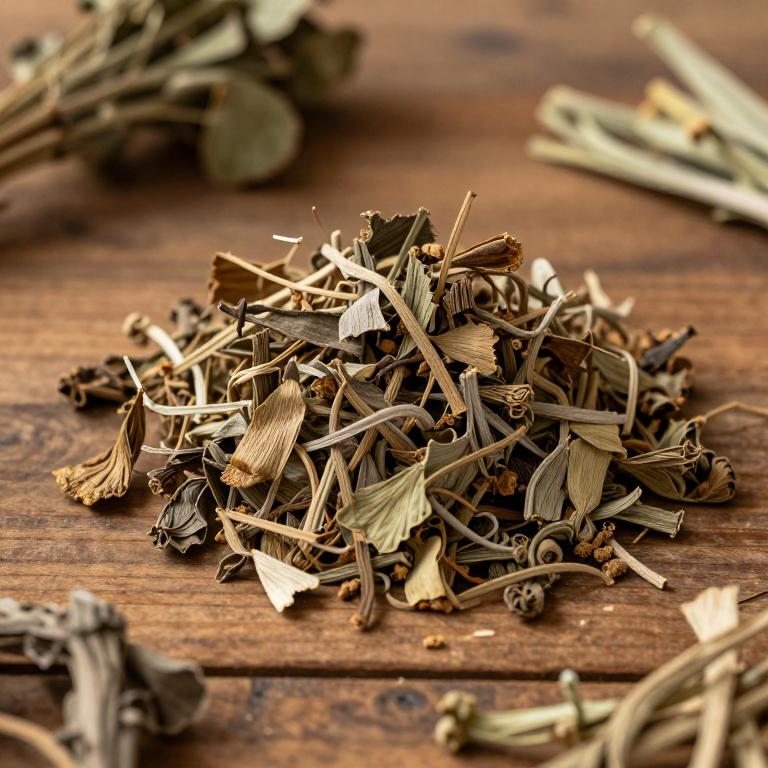
, scientifically known as Chloranthus tianmushanensis, is a rare medicinal herb native to the high-altitude forests of China. Renowned in traditional medicine, this plant is valued for its unique bioactive compounds. Research focuses on its potential therapeutic properties, particularly for its anti-inflammatory and antioxidant activities in holistic healing.
- Family
- Chloranthaceae
- Native range
- Asia-Temperate
- Parts used
- Leaf
- Common names
- Not available
- Scientific synonyms
- Not available
Names and Synonyms
Scientific Names
Accepted name
Chloranthus tianmushanensisSources: Wikidata, Catalogue of Life
Taxonomical Classification
This plant belongs to the kingdom Plantae and is classified within the phylum Streptophyta and the class Equisetopsida. Under the subclass Magnoliidae, it falls into the order Chloranthales and the family Chloranthaceae. Finally, it is specifically identified by the genus Chloranthus.
| Rank | Classification |
|---|---|
| Kingdom | Plantae |
| Phylum | Streptophyta |
| Class | Equisetopsida |
| Subclass | Magnoliidae |
| Order | Chloranthales |
| Family | Chloranthaceae |
| Genus | Chloranthus |
Sources: The World Checklist of Vascular Plants (WCVP)
Distribution
This plant is specifically native to the southeastern regions of China. Its geographical range is quite localized within this particular part of the country. Because it is restricted to China Southeast, it represents a specific element of the local flora in that area. Researchers studying its habitat focus primarily on the environmental conditions found in these southeastern provinces. Consequently, understanding its distribution is essential for the conservation efforts of this medicinal species.
| Region | Area |
|---|---|
| China | China Southeast |
Sources: The World Checklist of Vascular Plants (WCVP)
Botanical Identification
Ecology
The ecology of Chloranthus tianmushanensis is characterized by a highly specific altitudinal niche, as it is documented to occur within a precise elevational range. This species is found at a consistent altitude of 1050 m AMSL, with its minimum, mean, and maximum elevation values all converging at this specific point. This narrow elevational profile suggests a specialized adaptation to the particular environmental conditions, such as temperature, humidity, and atmospheric pressure, found at this specific height within its natural habitat.
- Elevational range max:
- 1050 m AMSL
Life history
The life history of Chloranthus tianmushanensis is characterized by its status as a perennial species, meaning it maintains its vegetative structures and continues to live through multiple growing seasons rather than completing its cycle in a single year. As a perennial herb, it establishes a persistent presence within its native ecological niche, often relying on stable understory conditions to support its long-term survival. Its developmental cycle involves recurring periods of seasonal growth, typically synchronized with local climatic patterns, allowing the plant to accumulate resources over several years to support reproductive efforts. This perennial nature enables the plant to endure periodic environmental fluctuations, ensuring its continuity within its specific habitat through repeated cycles of vegetative expansion and flowering.
- Lifecycle :
- perennial
Morphology
The morphology of Chloranthus tianmushanensis is characterized by its growth form as a non-woody herb. This self-supporting herb typically maintains a relatively low stature, with plant heights ranging from a minimum of 0.2 m to a maximum of 0.26 m, resulting in an average plant height of approximately 0.23 m.
- Climber :
- self-supporting
- Growth form :
- herb
- Plant height max:
- 0.26 m
- Plant height mean:
- 0.23 m
- Plant height min:
- 0.2 m
- Woodiness :
- non-woody
Physiology
The physiological structure of the foliage in Chloranthus tianmushanensis is characterized by specific morphological dimensions that define its photosynthetic surface area. The leaves exhibit a notable range in size, with a mean leaf length of 6.5 cm and a minimum length of 5 cm, reaching a maximum elongation of up to 8 cm. Complementing this longitudinal development, the leaf width fluctuates between a minimum of 3 cm and a maximum of 5.5 cm, maintaining an average width of 4.25 cm. These dimensional variations in the leaf blades contribute to the plant's overall vegetative capacity and its ability to manage light interception and gas exchange within its natural habitat.
- Leaf length max:
- 8 cm
- Leaf length mean:
- 6.5 cm
- Leaf length min:
- 5 cm
- Leaf width max:
- 5.5 cm
- Leaf width mean:
- 4.25 cm
- Leaf width min:
- 3 cm
Sources: Global Inventory of Floras and Traits (GIFT)
Plant Parts
Chloranthus tianmushanensis has 1 reported plant parts identified across 1 scientific publications and several other databases that are studied for medicinal purposes. The most consistently reported plant part include leaf.
| Plant part | Supporting sources | Consensus |
|---|---|---|
| Leaf | 1 supporting sources | ★☆☆☆☆ |
Leaf
- Journal of natural products
Chemicals
Chloranthus tianmushanensis has 2 reported phytochemicals identified across 1 scientific publications and several other databases. The most consistently reported chemicals include 8-O-methyltianmushanol, tianmushanol.
| Chemical | Supporting sources | Consensus |
|---|---|---|
| 8-O-methyltianmushanol | 1 supporting sources | ★☆☆☆☆ |
| tianmushanol | 1 supporting sources | ★☆☆☆☆ |
8-O-methyltianmushanol
- Journal of natural products
tianmushanol
- Journal of natural products