Chloranthus anhuiensis
Chloranthus anhuiensis · Accepted scientific name
Scientific literature: Very Sparse (7 studies) · ★☆☆☆☆
Chloranthus anhuiensis, scientifically known as Chloranthus anhuiensis, is a rare medicinal plant native to specific subtropical regions. Valued in traditional herbal practices, it possesses unique bioactive compounds. Researchers are increasingly exploring its potential pharmacological properties, particularly for its anti-inflammatory and antioxidant effects, highlighting its significance in ethnobotany.
- Family
- Chloranthaceae
- Native range
- Asia-Temperate
- Parts used
- Leaf
- Common names
- Not available
- Scientific synonyms
- Not available
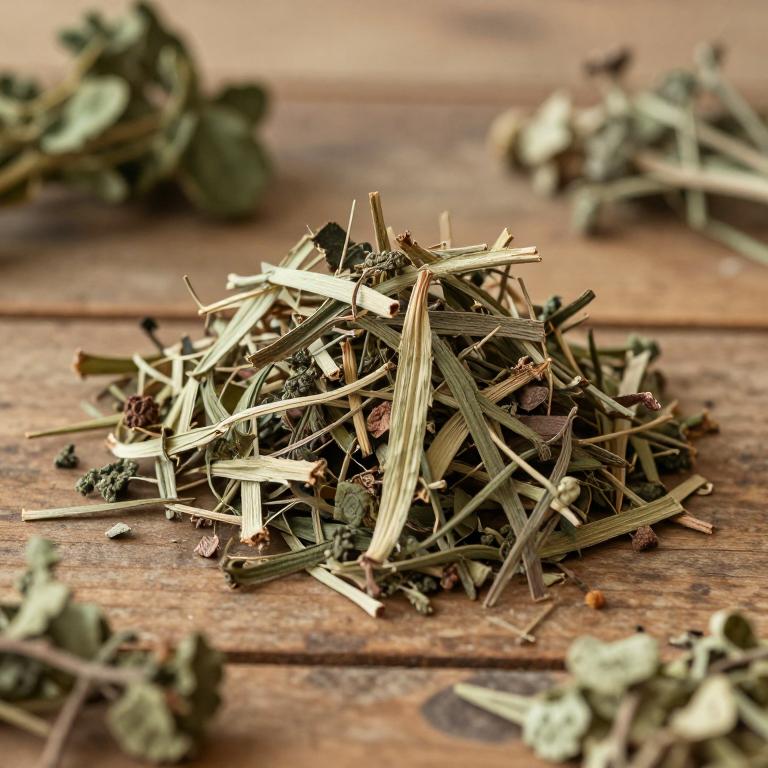
Names and Synonyms
Scientific Names
Accepted name
Chloranthus anhuiensisSources: Wikidata, Catalogue of Life
Taxonomical Classification
This plant belongs to the kingdom Plantae within the phylum Streptophyta and the class Equisetopsida. It is further classified under the subclass Magnoliidae, the order Chloranthales, and the family Chloranthaceae. Ultimately, it is identified by its genus, Chloranthus.
| Rank | Classification |
|---|---|
| Kingdom | Plantae |
| Phylum | Streptophyta |
| Class | Equisetopsida |
| Subclass | Magnoliidae |
| Order | Chloranthales |
| Family | Chloranthaceae |
| Genus | Chloranthus |
Sources: The World Checklist of Vascular Plants (WCVP)
Distribution
This plant is specifically native to a limited portion of East Asia. Its documented geographical distribution is restricted to the southeastern region of China. Within this territory, it thrives in the unique environmental conditions found in China Southeast. Because its range is so localized, it is considered an endemic species to this specific area. Consequently, understanding its habitat in these southeastern provinces is crucial for its conservation.
| Region | Area |
|---|---|
| China | China Southeast |
Sources: The World Checklist of Vascular Plants (WCVP)
Botanical Identification
Ecology
The ecology of Chloranthus anhuiensis is characterized by its specific distribution within montane environments, where it occupies a distinct altitudinal niche. This species is typically found thriving at moderate elevations, with a documented elevational range that spans from a minimum of 500 m AMSL to a maximum of 700 m AMSL. Within this vertical distribution, the plant reaches its optimal ecological equilibrium at a mean elevation of approximately 600 m AMSL, suggesting a preference for the specific temperature, humidity, and soil compositions characteristic of these mid-altitude subtropical or temperate forest zones.
- Elevational range max:
- 700 m AMSL
- Elevational range mean:
- 600 m AMSL
- Elevational range min:
- 500 m AMSL
Life history
The life history of Chloranthus anhuiensis is characterized by its status as a perennial species, allowing it to persist in its natural habitat through multiple growing seasons. As a perennial, the plant does not complete its life cycle within a single year or two but instead establishes long-term vegetative structures that support continuous or seasonal growth cycles. This enduring lifecycle enables the plant to invest energy into robust root systems and rhizomes, which facilitate survival during unfavorable environmental conditions and provide the necessary resources for repeated flowering and seed production over many years.
- Lifecycle :
- perennial
Morphology
The morphology of Chloranthus anhuiensis is characterized by its growth form as a non-woody herb. As a self-supporting plant, it does not exhibit climbing habits, maintaining a consistent herbaceous structure throughout its development. The plant typically reaches a height ranging from a minimum of 0.32 m to a maximum of 0.5 m, with an average plant height of approximately 0.41 m.
- Climber :
- self-supporting
- Growth form :
- herb
- Plant height max:
- 0.5 m
- Plant height mean:
- 0.41 m
- Plant height min:
- 0.32 m
- Woodiness :
- non-woody
Physiology
The physiological profile of Chloranthus anhuiensis is characterized by specific morphological dimensions of its foliage, which play a critical role in its photosynthetic capacity and environmental adaptation. The leaf architecture exhibits significant variability, with leaf lengths typically ranging from a minimum of 10 cm to a mean of 11.5 cm, reaching a maximum extent of 13 cm. Complementing this longitudinal growth, the leaf width demonstrates a corresponding range, with minimum widths measured at 4 cm, a mean width of 5.5 cm, and a maximum width of up to 7 cm. These quantitative traits define the surface area available for gas exchange and light interception, which are fundamental to the plant's metabolic processes and overall vigor.
- Leaf length max:
- 13 cm
- Leaf length mean:
- 11.5 cm
- Leaf length min:
- 10 cm
- Leaf width max:
- 7 cm
- Leaf width mean:
- 5.5 cm
- Leaf width min:
- 4 cm
Sources: Global Inventory of Floras and Traits (GIFT)
Plant Parts
Chloranthus anhuiensis has 1 reported plant parts identified across 1 scientific publications and several other databases that are studied for medicinal purposes. The most consistently reported plant part include leaf.
| Plant part | Supporting sources | Consensus |
|---|---|---|
| Leaf | 1 supporting sources | ★☆☆☆☆ |
Leaf
- Journal of natural products
Chemicals
Chloranthus anhuiensis has 2 reported phytochemicals identified across 1 scientific publications and several other databases. The most consistently reported chemicals include Anhuienoside A, Anhuienoside B.
| Chemical | Supporting sources | Consensus |
|---|---|---|
| Anhuienoside A | 1 supporting sources | ★☆☆☆☆ |
| Anhuienoside B | 1 supporting sources | ★☆☆☆☆ |
Anhuienoside A
- Journal of natural products
Anhuienoside B
- Journal of natural products
Activities
Chloranthus anhuiensis has 2 reported activities identified across 1 scientific publications and several other databases. The most consistently reported activities include Cytotoxic, Neuroprotective.
| Activity | Supporting sources | Consensus |
|---|---|---|
| Cytotoxic | 1 supporting sources | ★☆☆☆☆ |
| Neuroprotective | 1 supporting sources | ★☆☆☆☆ |
Cytotoxic
- Chemistry & biodiversity
Neuroprotective
- Chemistry & biodiversity
Conditions
Chloranthus anhuiensis has 1 reported investigations on conditions identified across 1 scientific publications and several other databases. The most consistently reported conditions include neurodegenerative diseases.
| Condition | Supporting sources | Consensus |
|---|---|---|
| Neurodegenerative diseases | 1 supporting sources | ★☆☆☆☆ |
Neurodegenerative diseases
- Journal of natural products
Preparations
Chloranthus anhuiensis has 2 reported preparations identified across 1 scientific publications and several other databases. The most consistently reported preparations include extract of whole plant, whole plants.
| Preparation | Supporting sources | Consensus |
|---|---|---|
| Extract of whole plant | 1 supporting sources | ★☆☆☆☆ |
| Whole plants | 1 supporting sources | ★☆☆☆☆ |
Extract of whole plant
- Chemistry & biodiversity
Whole plants
- Journal of natural products