Chimonanthus grammatus
Chimonanthus grammatus · Accepted scientific name
Scientific literature: Very Sparse (7 studies) · ★☆☆☆☆
scientifically known as Chimonantus grammatus, is a significant medicinal plant valued for its diverse therapeutic properties. Renowned in traditional herbal medicine, it is frequently utilized to treat various ailments, ranging from inflammatory conditions to digestive issues. Its unique phytochemical profile offers promising potential for modern pharmacological research and development.
- Family
- Calycanthaceae
- Native range
- Asia-Temperate
- Parts used
- Not available
- Common names
- Not available
- Scientific synonyms
- Not available
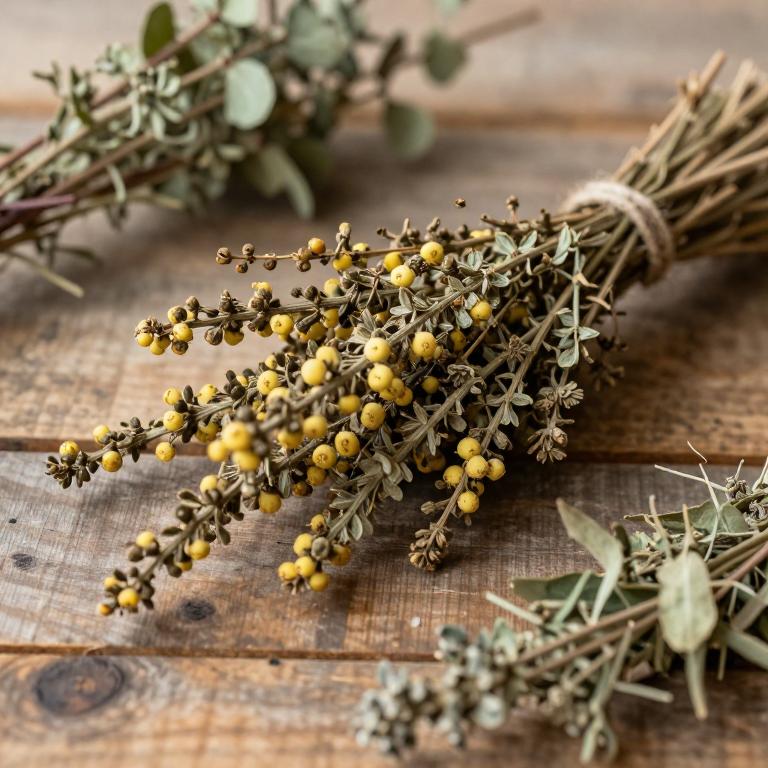
Names and Synonyms
Scientific Names
Accepted name
Chimonanthus grammatusSources: Wikidata, Catalogue of Life
Taxonomical Classification
This plant, Chimonanthes grammus, belongs to the kingdom Plantae and the phylum Streptophyta. Within the class Equisetopsida and subclass Magnoliidae, it is classified under the order Laurales and the family Calycanthaceae. Finally, it is situated within the genus Chimonanthes.
| Rank | Classification |
|---|---|
| Kingdom | Plantae |
| Phylum | Streptophyta |
| Class | Equisetopsida |
| Subclass | Magnoliidae |
| Order | Laurales |
| Family | Calycanthaceae |
| Genus | Chimonanthus |
Sources: The World Checklist of Vascular Plants (WCVP)
Distribution
This plant, known scientifically as Chimonanthus gramineus, possesses a specific and concentrated geographical range. Its natural habitat is primarily located within the southeastern regions of China. In this particular part of the country, the species thrives under appropriate environmental conditions. Because of this localized occurrence, the plant is considered characteristic of the southeastern Chinese landscape. Consequently, its distribution remains restricted to this specific geographic area.
| Region | Area |
|---|---|
| China | China Southeast |
Sources: The World Checklist of Vascular Plants (WCVP)
Botanical Identification
Life history
The life history of Chimonanthus grammatus is characterized by its distinct growth strategies and structural classifications, primarily functioning as a phanerophyte. As a phanerophyte, its perennating buds are located on aerial branches, allowing the plant to maintain its woody structure above the ground during unfavorable seasons. Depending on the specific environmental conditions and the developmental stage of the individual, its life form can also be described through the lens of a nanophanerophyte, indicating a smaller-scale woody growth pattern where the buds remain elevated but closer to the soil surface compared to larger woody species. This dual capacity for aerial bud protection ensures its survival through seasonal transitions, supporting its long-term perennial existence within its native habitat.
- Life form :
- nanophanerophyte
- Life form :
- phanerophyte
Morphology
The morphology of Chimonanthus gramineus is characterized by its distinct growth habit and structural composition. It functions as a self-supporting climber, utilizing its physical structure to ascend without the need for a host. The plant is an independent organism, meaning it does not function as a parasite, and it maintains a terrestrial existence rather than acting as an epiphyte. Additionally, the plant exhibits a woody nature, possessing a firm and lignified structural framework.
- Climber :
- self-supporting
- Epiphyte :
- terrestrial
- Parasite :
- independent
- Woodiness :
- woody
Sources: Global Inventory of Floras and Traits (GIFT)
Chemicals
Chimonanthus grammatus has 6 reported phytochemicals identified across 0 scientific publications and several other databases. The most consistently reported chemicals include Homalomenol C, Isofraxidin, Jasmonic acid, kaempferol, quercetin.
| Chemical | Supporting sources | Consensus |
|---|---|---|
| Homalomenol C | 1 supporting sources | ★☆☆☆☆ |
| Isofraxidin | 1 supporting sources | ★☆☆☆☆ |
| Jasmonic acid | 1 supporting sources | ★☆☆☆☆ |
| kaempferol | 1 supporting sources | ★☆☆☆☆ |
| quercetin | 1 supporting sources | ★☆☆☆☆ |
| quercitrin | 1 supporting sources | ★☆☆☆☆ |
Homalomenol C
- Frontiers in plant science
Isofraxidin
- Frontiers in plant science
Jasmonic acid
- Frontiers in plant science
kaempferol
- Frontiers in plant science
quercetin
- Frontiers in plant science
quercitrin
- Frontiers in plant science
Conditions
Chimonanthus grammatus has 1 reported investigations on conditions identified across 0 scientific publications and several other databases. The most consistently reported conditions include cold.
| Condition | Supporting sources | Consensus |
|---|---|---|
| Cold | 1 supporting sources | ★☆☆☆☆ |
Cold
- Frontiers in plant science
Preparations
Chimonanthus grammatus has 1 reported preparations identified across 0 scientific publications and several other databases. The most consistently reported preparations include plant extracts.
| Preparation | Supporting sources | Consensus |
|---|---|---|
| Plant extracts | 1 supporting sources | ★☆☆☆☆ |
Plant extracts
- Frontiers in plant science