fig-leaved goosefoot
Chenopodium ficifolium · Accepted scientific name
Scientific literature: Very Sparse (3 studies) · ★☆☆☆☆
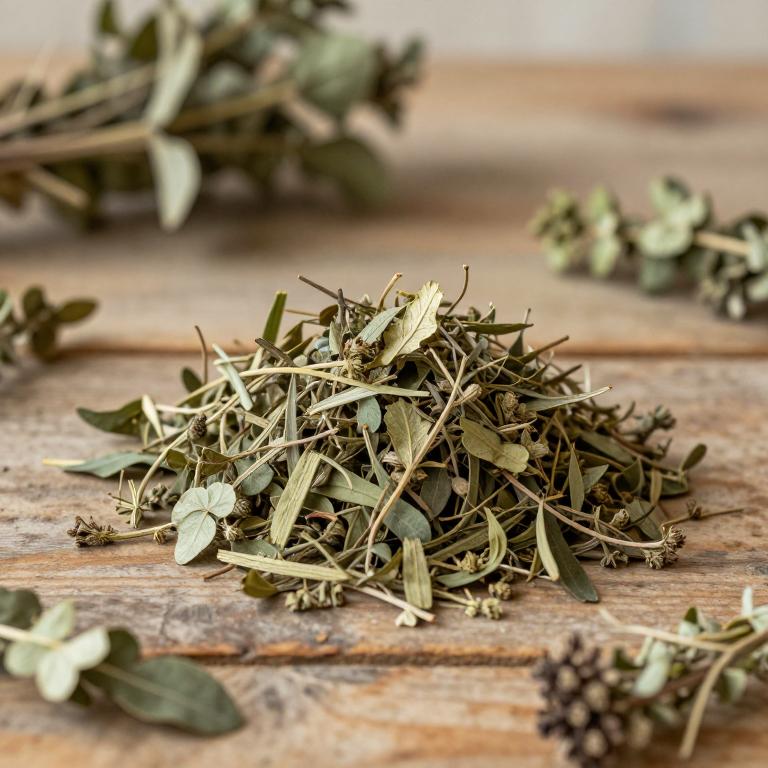
Fig-leaved goosefoot, scientifically known as Chenopodium ficifolium, is a versatile medicinal herb prized for its nutritional and therapeutic properties. Often found in diverse ecosystems, this plant offers significant health benefits, including antioxidant support and digestive aid. Understanding its botanical characteristics is essential for exploring its traditional healing potential.
Names and Synonyms
Common Names
- fig-leaved goosefoot
- fig-leaved lamb's-quarters
- fig-leaf goosefoot
- Small Goosefoot
- figleaf goosefoot
Scientific Names
Accepted name
Chenopodium ficifoliumSynonyms
- Chenopodium ficifolium subsp. blomianum
- Chenopodium album subsp. ficifolium
- Chenopodium album var. ficifolium
- Anserina ficifolia
- Chenopodium trilobum
- Chenopodium blomianum
- Chenopodium ficifolium var. albovenosum
- Chenopodium populifolium
- Chenopodium ficifolium var. indicola
- Chenopodium ficifolium f. rubescens
- Chenopodium ficifolium f. subcymosum
- Chenopodium ficifolium var. coronatum
- Chenopodium ficifolium var. erectum
- Chenopodium ficifolium var. rubescens
- Chenopodium ficifolium var. subcymosum
- Chenopodium filifolium
Regional and Traditional Names
Spanish:
- pie de cisne
German:
- Feigenblättriger Gänsefuß
- Anserina ficifolia
- Chenopodium blomianum
- Feigenblättriger Gänsefuss
- feigenblättriger Gänsefuß
- Feigenblättriger Gänsefuß (Unterart)
- Feigenblaettriger Gaensefuss
- Feigenblatt-Gänsefuß
French:
- chénopode à feuilles de figuier
- chénopode à feuilles de figuier
- Chenopode a feuilles de figuier
- Chénopode tardif
Sources: Wikidata, Catalogue of Life
Taxonomical Classification
This plant belongs to the kingdom Plantae within the phylum Streptophyta and is classified under the class Equisetopsida. Following the subclass Magnoliidae, it is ordered under Caryophyllales and placed in the family Amaranthaceae. Finally, it is identified by its specific genus, Chenopodium.
| Rank | Classification |
|---|---|
| Kingdom | Plantae |
| Phylum | Streptophyta |
| Class | Equisetopsida |
| Subclass | Magnoliidae |
| Order | Caryophyllales |
| Family | Amaranthaceae |
| Genus | Chenopodium |
Sources: The World Checklist of Vascular Plants (WCVP)
Distribution
This plant exhibits a specific geographical distribution across the northern regions of Europe. Within Northern Europe, its presence is documented in the country of Denmark. It can also be found spanning across the landscapes of Finland and Sweden. Furthermore, the species extends its range to include the islands of Great Britain and Ireland. Collectively, these locations define the primary northern territories where the plant is located.
| Region | Area |
|---|---|
| Northern Europe | Denmark |
| Northern Europe | Finland |
| Northern Europe | Great Britain |
| Northern Europe | Ireland |
| Northern Europe | Sweden |
| Middle Europe | Austria |
| Middle Europe | Belgium |
| Middle Europe | Czechia-Slovakia |
| Middle Europe | Germany |
| Middle Europe | Hungary |
Sources: The World Checklist of Vascular Plants (WCVP)
Botanical Identification
Ecology
The ecology of Chenopodium ficifolium is characterized by its ability to thrive across a broad altitudinal gradient, ranging from sea level (0 m AMSL) up to high-altitude environments reaching 2700 m AMSL. This species demonstrates significant adaptability to varied terrains, frequently colonizing disturbed or transitional landscapes. Its preferred habitats include open areas and roadsides, where it takes advantage of sunlight availability and the disturbed soil conditions typically found in these settings.
- Elevational range max:
- 2700 m AMSL
- Elevational range min:
- 0 m AMSL
- Habitat :
- open, roadside
Life history
The life history of Chenopodium ficoifolium is characterized by an annual lifecycle, meaning the plant completes its entire developmental process from germination to seed production within a single growing season. As a therophyte, it survives the unfavorable seasons primarily in the form of seeds, which remain dormant in the soil until conditions become suitable for rapid growth. This plant exhibits a deciduous nature, shedding its foliage as it reaches the end of its seasonal cycle. Its classification as a therophyte further defines its survival strategy, relying on a brief, vigorous vegetative period to maximize reproductive output before the onset of environmental stress.
- Deciduousness :
- deciduous
- Life form :
- therophyte
- Lifecycle :
- annual
Morphology
The morphology of Chenopodium ficifolium is characterized by its growth form as a non-woody herb and forb. It functions as a self-supporting plant rather than a climber or vine, and it exists as an independent organism without parasitic tendencies. The plant is terrestrial in nature, neither aquatic nor epiphytic. In terms of stature, it exhibits variable height depending on environmental conditions, typically ranging from a minimum of 0.2 m to a maximum of 0.9 m, with an average plant height of approximately 0.52 m.
- Aquatic :
- terrestrial
- Climber :
- self-supporting
- Epiphyte :
- terrestrial
- Growth form :
- herb
- Growth form :
- forb
- Parasite :
- independent
- Plant height max:
- 0.9 m
- Plant height mean:
- 0.52 m
- Plant height min:
- 0.2 m
- Woodiness :
- non-woody
Physiology
The physiology of Chenopodium ficoifolium is characterized by a C3 photosynthetic pathway, utilizing the standard Calvin cycle for carbon fixation rather than C4 or CAM mechanisms. As a non-carnivorous species, it relies entirely on its root system and soil nutrient uptake for mineral acquisition, lacking any specialized structures for capturing prey. Morphologically, the plant exhibits a mean leaf size of approximately 7.897 cm², which contributes to its overall light interception strategy. This leaf morphology is further quantified by a mean Specific Leaf Area (SLA) of 190.03 cm²/g, a metric that reflects the plant's leaf thickness and its efficiency in balancing carbon gain against metabolic maintenance costs.
- Carnivory :
- non-carnivorous
- Leaf size mean:
- 7.897 cm²
- Photosynthetic pathway :
- C3
- Specific Leaf Area (SLA) mean:
- 190.03 cm²/g
Reproduction
The reproduction of Chenopodium ficifolium is characterized by a sexual process involving bisexual flowers, with asexual reproduction being entirely absent. The flowering period typically begins in July and concludes in September. The plant utilizes an abiotic pollination syndrome, specifically relying on wind for the transfer of pollen. In terms of its reproductive output, the plant produces fruit classified as an achene, which is indehiscent. The resulting seeds are remarkably small, with a consistent seed mass measured at 0.00034 g (where the minimum, maximum, and mean values all converge at this point). Furthermore, self-fertilization is absent in this species, and the dispersal of its seeds follows a hydrochorous syndrome, meaning they are dispersed via water.
- Dehiscence :
- indehiscent
- Dispersal syndrome :
- hydrochorous
- Flowering time :
- Jul
- Flowering time :
- Sep
- Fruit type :
- achene
- Pollination syndrome :
- wind
- Pollination syndrome :
- abiotic
- Reproduction asexual :
- absent
- Reproduction sexual :
- bisexual
- Seed mass max:
- 0.00034 g
- Seed mass mean:
- 0.000343 g
- Self fertilization :
- absent
Sources: Global Inventory of Floras and Traits (GIFT)
Chemicals
Chenopodium ficifolium has 3 reported phytochemicals identified across 0 scientific publications and several other databases. The most consistently reported chemicals include Antioxidants, Essential amino acids, Unsaturated Fatty Acid.
| Chemical | Supporting sources | Consensus |
|---|---|---|
| Antioxidants | 1 supporting sources | ★☆☆☆☆ |
| Essential amino acids | 1 supporting sources | ★☆☆☆☆ |
| Unsaturated Fatty Acid | 1 supporting sources | ★☆☆☆☆ |
Antioxidants
- Plants (Basel, Switzerland)
Essential amino acids
- Plants (Basel, Switzerland)
Unsaturated Fatty Acid
- Plants (Basel, Switzerland)