Seifriz's bamboo palm
Chamaedorea seifrizii · Accepted scientific name
Scientific literature: Very Sparse (13 studies) · ★☆☆☆☆
Seifriz's bamboo palm, scientifically known as Chamaedorea seifrizii, is an exotic species valued for its ornamental beauty and potential medicinal properties. Often found in tropical understories, this resilient plant is studied for its bioactive compounds, offering promising insights into traditional healing practices and modern pharmacological research within botanical studies.
- Family
- Arecaceae
- Native range
- Northern America
- Parts used
- Flower · Fruit
- Common names
- Bamboo Palm · Reed Palm · 1 more
- Scientific synonyms
- Chamaedorea Erumpens · Chamaedorea Donnell-Smithii
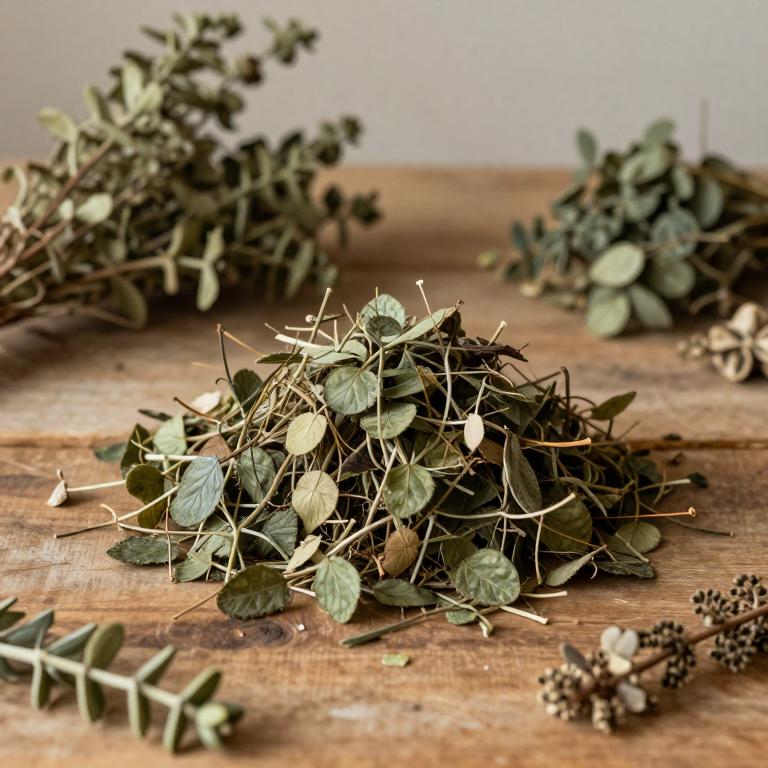
Names and Synonyms
Common Names
- bamboo palm
- reed palm
- Seifriz's chamaedorea
Scientific Names
Accepted name
Chamaedorea seifriziiSynonyms
- Chamaedorea erumpens
- Chamaedorea donnell-smithii
Regional and Traditional Names
Spanish:
- Xiat
- Palma bambú
- Palma de bambú
German:
- Seifriz-Bergpalme
Sources: Wikidata, Catalogue of Life
Taxonomical Classification
This plant belongs to the kingdom Plantae and the phylum Streptophyta, falling under the class Equisetopsida and subclass Magnoliidae. Within the order Arecales and the family Arecaceae, it is classified under the genus Chamaedorea. Specifically, this medicinal species is known as Chamaedorea seifrizii.
| Rank | Classification |
|---|---|
| Kingdom | Plantae |
| Phylum | Streptophyta |
| Class | Equisetopsida |
| Subclass | Magnoliidae |
| Order | Arecales |
| Family | Arecaceae |
| Genus | Chamaedorea |
Sources: The World Checklist of Vascular Plants (WCVP)
Distribution
This plant exhibits a broad geographical distribution spanning from North America into Central America. In the Southeastern United States, its range is specifically limited to the state of Florida. Moving southward, it can be found across the southeastern regions of Mexico. The species also extends its reach through several Central American nations, including Belize and Guatemala. Finally, its documented presence continues through the country of Honduras.
| Region | Area |
|---|---|
| Southeastern U.S.A. | Florida |
| Mexico | Mexico Southeast |
| Central America | Belize |
| Central America | Guatemala |
| Central America | Honduras |
Sources: The World Checklist of Vascular Plants (WCVP)
Botanical Identification
Ecology
The ecology of Chamaedorea seifrizii is characterized by its distribution across a broad altitudinal gradient, ranging from sea level (0 m AMSL) up to an elevation of 2600 m AMSL. Within its natural environment, this species typically occupies the understorey, thriving in the shaded and sheltered microclimates provided by larger vegetation. Furthermore, the plant lacks specialized chemical or physical defense mechanisms, as indicated by a lack of defensive traits.
- Defense :
- no
- Elevational range max:
- 2600 m AMSL
- Elevational range min:
- 0 m AMSL
- Habitat :
- understorey
Life history
The life history of Chamaedorea seifrizii is characterized by its perennial lifecycle, allowing the plant to persist across multiple growing seasons. In terms of its structural growth patterns and survival strategies, it exhibits a dual classification of life forms, manifesting as both a nanophanerophyte and a phanerophyte depending on its developmental stage or environmental conditions. This combination of life forms dictates how the plant manages its shoot systems and responds to seasonal variations in its habitat.
- Life form :
- nanophanerophyte
- Life form :
- phanerophyte
- Lifecycle :
- perennial
Morphology
The morphology of Chamaedorea seifrizii is characterized by a woody growth form that functions as a tree, maintaining an erect shoot orientation. Although it exhibits a terrestrial habit rather than an aquatic or semiaquatic lifestyle, the plant is categorized as an independent organism, functioning neither as an obligate nor facultative parasite. It does not exhibit epiphytic behavior, remaining strictly terrestrial. In terms of its structural dimensions, the plant possesses a maximum shoot length of 25 cm and reaches a maximum diameter at breast height (DBH) of 2 cm. Furthermore, it is classified as a self-supporting plant rather than a liana, vine, or climbing entity.
- Aquatic :
- terrestrial
- Climber :
- self-supporting
- DBH max:
- 2 cm
- Epiphyte :
- terrestrial
- Growth form :
- tree
- Parasite :
- independent
- Shoot length max:
- 25 cm
- Shoot orientation :
- erect
- Woodiness :
- woody
Physiology
The physiology of Chamaedorea seiifrii is characterized by a C3 photosynthetic pathway, which dictates its carbon fixation processes and metabolic efficiency in its specific ecological niche. The plant exhibits significant vegetative development, with leaf morphology reaching a maximum length of 63 cm. In terms of structural defense mechanisms, the leaves are notably smooth and lack the presence of leaf spines, indicating a physiological strategy that relies on other forms of protection or environmental adaptations rather than mechanical deterrents on the leaf surface.
- Leaf length max:
- 63 cm
- Leaf spines :
- no
- Photosynthetic pathway :
- C3
Reproduction
The reproduction of Chamaedorea seifrizii culminates in the development of distinct fruits that serve as the primary dispersal units for the species. These fruits are characterized by their uniform spherical shape, possessing a mean fruit length of 0.8 cm and a corresponding mean fruit width of 0.8 cm. As the fruit reaches maturity, it undergoes a significant color change, eventually presenting a deep black coloration. This specific morphological profile of the fruit is essential to its reproductive cycle and ecological role within its natural habitat.
- Fruit colour :
- black
- Fruit length mean:
- 0.8 cm
- Fruit width mean:
- 0.8 cm
Sources: Global Inventory of Floras and Traits (GIFT)
Plant Parts
Chamaedorea seifrizii has 2 reported plant parts identified across 2 scientific publications and several other databases that are studied for medicinal purposes. The most consistently reported plant part include flower, fruit.
| Plant part | Supporting sources | Consensus |
|---|---|---|
| Flower | 1 supporting sources | ★☆☆☆☆ |
| Fruit | 1 supporting sources | ★☆☆☆☆ |
Flower
- Biotechnology and applied biochemistry
Fruit
- Biotechnology and applied biochemistry
Chemicals
Chamaedorea seifrizii has 10 reported phytochemicals identified across 2 scientific publications and several other databases. The most consistently reported chemicals include BUTYLATED HYDROXYANISOLE, Cedrene epoxide, Hinokione, Larixol, Methyl pentanoate.
| Chemical | Supporting sources | Consensus |
|---|---|---|
| BUTYLATED HYDROXYANISOLE | 1 supporting sources | ★☆☆☆☆ |
| Cedrene epoxide | 1 supporting sources | ★☆☆☆☆ |
| Hinokione | 1 supporting sources | ★☆☆☆☆ |
| Larixol | 1 supporting sources | ★☆☆☆☆ |
| Methyl pentanoate | 1 supporting sources | ★☆☆☆☆ |
| Phenethyl cinnamate | 1 supporting sources | ★☆☆☆☆ |
| Sandaracopimarinol | 1 supporting sources | ★☆☆☆☆ |
| Taxodione | 1 supporting sources | ★☆☆☆☆ |
| nezukol | 1 supporting sources | ★☆☆☆☆ |
| resveratrol | 1 supporting sources | ★☆☆☆☆ |
BUTYLATED HYDROXYANISOLE
- Biotechnology and applied biochemistry
Cedrene epoxide
- Biotechnology and applied biochemistry
Hinokione
- Biotechnology and applied biochemistry
Larixol
- Biotechnology and applied biochemistry
Methyl pentanoate
- Biotechnology and applied biochemistry
Phenethyl cinnamate
- Biotechnology and applied biochemistry
Sandaracopimarinol
- Biotechnology and applied biochemistry
Taxodione
- Biotechnology and applied biochemistry
nezukol
- Biotechnology and applied biochemistry
resveratrol
- Biotechnology and applied biochemistry
Conditions
Chamaedorea seifrizii has 1 reported investigations on conditions identified across 2 scientific publications and several other databases. The most consistently reported conditions include Type 2 diabetes.
| Condition | Supporting sources | Consensus |
|---|---|---|
| Type 2 diabetes | 1 supporting sources | ★☆☆☆☆ |
Type 2 diabetes
- Biotechnology and applied biochemistry