Chamaecytisus rochelii
Chamaecytisus rochelii · Accepted scientific name
Scientific literature: Very Sparse (9 studies) · ★☆☆☆☆
Chamaecytisus rochelii, is a remarkable medicinal plant cherished in traditional healing practices. Renowned for its unique therapeutic properties, this species offers diverse biological benefits. Understanding its botanical characteristics and medicinal potential is essential for exploring its role in holistic wellness and its growing significance in modern pharmacological research.
- Family
- Fabaceae
- Native range
- Europe
- Parts used
- Not available
- Common names
- Not available
- Scientific synonyms
- Chamaecytisus Albus Subsp. Obscurus · Chamaecytisus Ambiguus · 13 more
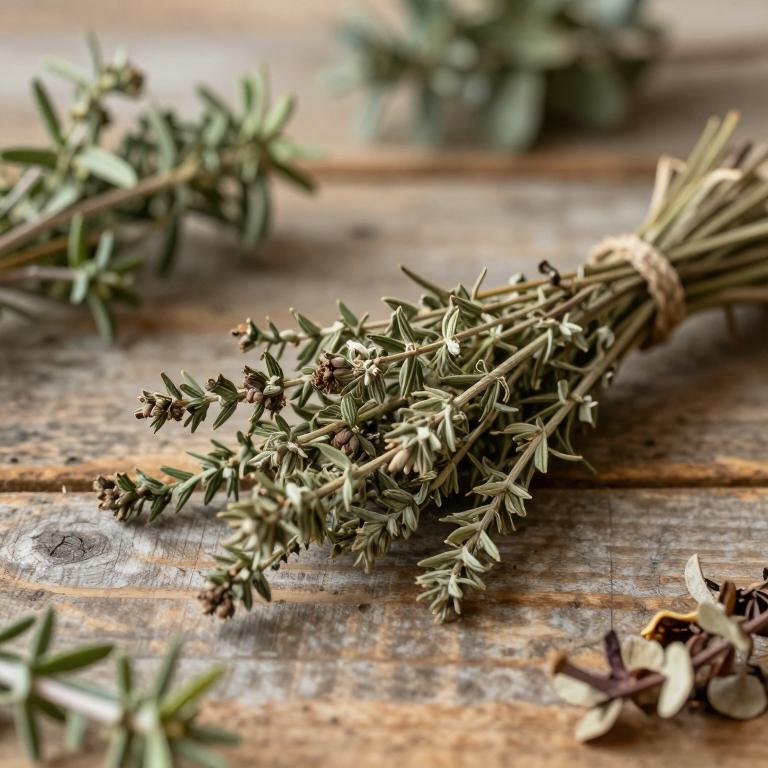
Names and Synonyms
Scientific Names
Accepted name
Chamaecytisus rocheliiSynonyms
- Chamaecytisus albus subsp. obscurus
- Chamaecytisus ambiguus
- Cytisus ambiguus
- Chamaecytisus rochelii var. angustifolius
- Chamaecytisus rochelii subsp. ambiguus
- Chamaecytisus rochelii var. bulgaricus
- Cytisus leucanthus var. obscurus
- Cytisus leucanthus var. angustifolius
- Cytisus austriacus var. rochelii
- Cytisus supinus var. angustifolius
- Cytisus leucanthus var. bulgaricus
- Cytisus supinus var. bulgaricus
- Cytisus supinus var. obscurus
- Cytisus leucanthus subsp. obscurus
- Cytisus albus subsp. obscurus
Sources: Wikidata
Taxonomical Classification
This plant belongs to the kingdom Plantae and the phylum Streptophyta. Within the class Equisetopsida and subclass Magnoliidae, it is categorized under the order Fabales and the family Fabaceae. Ultimately, it is classified under the genus Chamaecytisus.
| Rank | Classification |
|---|---|
| Kingdom | Plantae |
| Phylum | Streptophyta |
| Class | Equisetopsida |
| Subclass | Magnoliidae |
| Order | Fabales |
| Family | Fabaceae |
| Genus | Chamaecytisus |
Sources: The World Checklist of Vascular Plants (WCVP)
Distribution
This plant exhibits a specific geographical distribution spanning several distinct regions of the European continent. In Middle Europe, its presence is notably recorded within the borders of Hungary. Moving toward the southern territories, it can be found throughout Southeastern Europe, specifically in Bulgaria and Romania. Furthermore, the species extends into the Northwest Balkan Peninsula within the same southeastern region. Finally, its range reaches into Eastern Europe, where it is documented in Ukraine.
| Region | Area |
|---|---|
| Middle Europe | Hungary |
| Southeastern Europe | Bulgaria |
| Southeastern Europe | Romania |
| Southeastern Europe | NW. Balkan Pen. |
| Eastern Europe | Ukraine |
Sources: The World Checklist of Vascular Plants (WCVP)
Botanical Identification
Ecology
The ecology of Chamaecytisus rochelii is characterized by its preference for specific transitional environments, most notably occurring within forest edges. These ecotones provide a unique microclimate where the plant can benefit from the filtered light and increased solar exposure found at the periphery of denser woodland, while still being sheltered from extreme wind and desiccation by the adjacent canopy. By occupying these forest margins, the species thrives in the increased light availability typical of edge habitats, which facilitates its growth and reproductive success compared to the more shaded interior of the forest.
- Habitat :
- forest edges
Morphology
The morphology of Chamaecytisus rochelii is characterized by its growth form as a shrub, displaying a distinctly woody structure throughout its stems and branches. This plant maintains a relatively compact stature, reaching a maximum plant height of approximately 1 meter.
- Growth form :
- shrub
- Plant height max:
- 1 m
- Woodiness :
- woody
Physiology
The physiology of Chamaecytisus rochelii is fundamentally characterized by its reliance on the C3 photosynthetic pathway, a metabolic strategy where the initial fixation of atmospheric carbon dioxide occurs through the enzyme ribulose-1,5-bisphosphate carboxylase/oxygenase (RuBisCO) to form a three-carbon compound. This C3 mechanism dictates the plant's resource management, particularly its water-use efficiency and gas exchange dynamics, as it remains susceptible to photorespiration under conditions of high temperature or significant moisture stress. The metabolic processes within its leaf tissues are optimized for moderate environments, where the energy conversion from sunlight is channeled through the Calvin cycle to produce carbohydrates. Consequently, its physiological performance is closely tied to its ability to regulate stomatal conductance to balance the intake of CO2 for carbon assimilation against the transpirational loss of water.
- Photosynthetic pathway :
- C3
Sources: Global Inventory of Floras and Traits (GIFT)
Chemicals
Chamaecytisus rochelii has 2 reported phytochemicals identified across 0 scientific publications and several other databases. The most consistently reported chemicals include chrysin, genistein.
| Chemical | Supporting sources | Consensus |
|---|---|---|
| chrysin | 2 supporting sources | ★☆☆☆☆ |
| genistein | 2 supporting sources | ★☆☆☆☆ |
chrysin
- Phytomedicine : international journal of phytotherapy and phytopharmacology
- Biomolecules
genistein
- Phytomedicine : international journal of phytotherapy and phytopharmacology
- Biomolecules
Activities
Chamaecytisus rochelii has 5 reported activities identified across 0 scientific publications and several other databases. The most consistently reported activities include Antibacterial, Antifungal, Antimalarial, Antioxidant, Antiprotozoal.
| Activity | Supporting sources | Consensus |
|---|---|---|
| Antibacterial | 1 supporting sources | ★☆☆☆☆ |
| Antifungal | 1 supporting sources | ★☆☆☆☆ |
| Antimalarial | 1 supporting sources | ★☆☆☆☆ |
| Antioxidant | 1 supporting sources | ★☆☆☆☆ |
| Antiprotozoal | 1 supporting sources | ★☆☆☆☆ |
Antibacterial
- Biomolecules
Antifungal
- Biomolecules
Antimalarial
- Biomolecules
Antioxidant
- Biomolecules
Antiprotozoal
- Biomolecules