Hinoki Cypress
Chamaecyparis obtusa · Accepted scientific name
Scientific literature: Very Sparse (39 studies) · ★☆☆☆☆
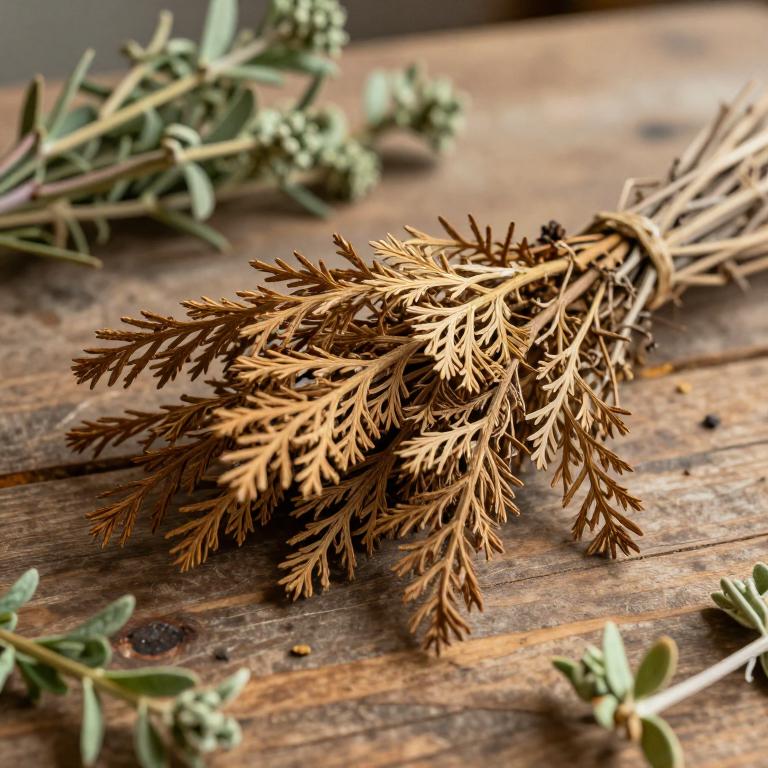
Hinoki Cypress, scientifically known as Chamaecypares obtusa, is a revered evergreen tree native to Japan. Highly prized for its aromatic, therapeutic wood, it is widely used in traditional medicine and aromatherapy. Its essential oils offer calming, antimicrobial, and anti-inflammatory benefits, making it a cornerstone of holistic wellness practices.
Names and Synonyms
Common Names
- Hinoki Cypress
- hinoki false cypress
- hinoki-cypress
- Japanese cypress
Scientific Names
Accepted name
Chamaecyparis obtusaSynonyms
- Retinispora obtusa
- Cupressus obtusa
- Chamaepeuce obtusa
Regional and Traditional Names
Spanish:
- Ciprés japonés
- Falso ciprés hinoki
- Cipres japones
- Falso cipres hinoki
German:
- Hinoki-Scheinzypresse
- Hinoky-Scheinzypresse
- Hinoki
- Chamaecyparis taiwanensis
- Muschelzypresse
- Feuerscheinzypresse
- Hinokibaum
- Hinoki-Scheinzypresse
French:
- Hinoki
- Cyprès du Japon
- Hinoki faux-cyprès
Sources: Wikidata, Catalogue of Life
Taxonomical Classification
This plant belongs to the kingdom Plantae and the phylum Streptophyta, falling under the class Equisetopsida and subclass Pinidae. Within the order Pinales, it is classified under the family Cupressaceae. Finally, it is identified by its scientific genus, Chamaecyparis.
| Rank | Classification |
|---|---|
| Kingdom | Plantae |
| Phylum | Streptophyta |
| Class | Equisetopsida |
| Subclass | Pinidae |
| Order | Pinales |
| Family | Cupressaceae |
| Genus | Chamaecyparis |
Sources: The World Checklist of Vascular Plants (WCVP)
Distribution
This plant is primarily found within the diverse landscapes of Eastern Asia. Its natural range is notably centered in the islands of Japan. Furthermore, the species extends its presence across the Korean Peninsula. It is also documented to grow within the subtropical regions of Taiwan. Collectively, these locations define the specific geographical distribution of this medicinal species.
| Region | Area |
|---|---|
| Eastern Asia | Japan |
| Eastern Asia | Korea |
| Eastern Asia | Taiwan |
Sources: The World Checklist of Vascular Plants (WCVP)
Botanical Identification
Life history
The life history of Chamaecypressus obtusa is characterized by a perennial lifecycle, allowing the plant to persist through multiple growing seasons and establish long-term presence in its ecosystem. As a phanerophyte, it exhibits a growth form where its buds are located high above the ground on woody branches, a structural strategy that facilitates its development into a substantial tree. This phanerophyte classification is consistent across its life stages, ensuring that its reproductive and vegetative structures are maintained well above the soil surface, contributing to its enduring and stable biological existence.
- Life form :
- phanerophyte
- Lifecycle :
- perennial
Morphology
The morphology of Chamaecypressus obtusa is characterized by its growth form as a perennial woody tree. As a self-supporting organism, it does not exhibit any climbing or liana-like tendencies, maintaining a stable, upright structure. The plant is strictly terrestrial in its ecological habit, functioning as an independent species that does not rely on a parasitic or epiphytic lifestyle. Its physical structure is defined by its significant woodiness, which supports its stature as a robust tree.
- Aquatic :
- terrestrial
- Climber :
- self-supporting
- Epiphyte :
- terrestrial
- Growth form :
- tree
- Parasite :
- independent
- Woodiness :
- woody
Physiology
The physiology of Chamaecypressus obtusa is characterized by its specialized adaptations to temperate and montane environments, primarily governed by its metabolic processes and water-use efficiency. As a gymnosperm, it utilizes the C3 photosynthetic pathway, which involves the direct fixation of carbon dioxide by the enzyme RuBisCO within the mesophyll cells during the light-independent reactions. This C3 pathway dictates its physiological response to light intensity and temperature, as the plant must balance the efficiency of carbon assimilation against the risks of photorespiration, particularly in fluctuating environmental conditions. To mitigate potential water loss associated with gas exchange, the plant employs morphological adaptations such as scale-like leaves with sunken stomata, which help regulate transpiration rates. Furthermore, its physiological resilience is supported by robust osmotic regulation and the ability to maintain cellular integrity during periods of physiological drought or cold stress, ensuring continuous metabolic function despite seasonal variations in moisture availability.
- Photosynthetic pathway :
- C3
Reproduction
The reproduction of Chamaecypressus obtusa is characterized by a highly flexible flowering phenology and specific seed characteristics. The flowering period is notably variable, with the capacity to produce flowers throughout almost every month of the year, including January, February, March, April, May, June, July, August, September, October, November, and December. Regarding its reproductive output, the plant produces small seeds with a documented mean mass of 0.00319 g. The seed size distribution shows a narrow range, with the minimum seed mass recorded at 0.00218 g and the maximum seed mass reaching 0.0042 g.
- Flowering time :
- Dec
- Seed mass max:
- 0.0042 g
- Seed mass mean:
- 0.00319 g
- Seed mass min:
- 0.00218 g
Sources: Global Inventory of Floras and Traits (GIFT)
Plant Parts
Chamaecyparis obtusa has 1 reported plant parts identified across 5 scientific publications and several other databases that are studied for medicinal purposes. The most consistently reported plant part include leaf.
| Plant part | Supporting sources | Consensus |
|---|---|---|
| Leaf | 5 supporting sources | ★★★☆☆ |
Leaf
- Current issues in molecular biology
- Food and chemical toxicology : an international journal published for the British Industrial Biological Research Association
- Chemical & pharmaceutical bulletin
- International journal of molecular medicine
- Medicina (Kaunas, Lithuania)
Chemicals
Chamaecyparis obtusa has 13 reported phytochemicals identified across 5 scientific publications and several other databases. The most consistently reported chemicals include Amentoflavone, BORNYL ACETATE, Flavonoids, Gallic acid, Ginkgetin.
| Chemical | Supporting sources | Consensus |
|---|---|---|
| Amentoflavone | 2 supporting sources | ★☆☆☆☆ |
| BORNYL ACETATE | 1 supporting sources | ★☆☆☆☆ |
| Flavonoids | 1 supporting sources | ★☆☆☆☆ |
| Gallic acid | 1 supporting sources | ★☆☆☆☆ |
| Ginkgetin | 1 supporting sources | ★☆☆☆☆ |
| Hinokiflavone | 1 supporting sources | ★☆☆☆☆ |
| Hinokinin | 1 supporting sources | ★☆☆☆☆ |
| Lignans | 1 supporting sources | ★☆☆☆☆ |
| Terpenes | 1 supporting sources | ★☆☆☆☆ |
| catechins | 1 supporting sources | ★☆☆☆☆ |
Amentoflavone
- Food and chemical toxicology : an international journal published for the British Industrial Biological Research Association
- Medicina (Kaunas, Lithuania)
BORNYL ACETATE
- Evidence-based complementary and alternative medicine : eCAM
Flavonoids
- Current issues in molecular biology
Gallic acid
- Current issues in molecular biology
Ginkgetin
- Food and chemical toxicology : an international journal published for the British Industrial Biological Research Association
Hinokiflavone
- Medicina (Kaunas, Lithuania)
Hinokinin
- Chemical & pharmaceutical bulletin
Lignans
- Food and chemical toxicology : an international journal published for the British Industrial Biological Research Association
Terpenes
- International journal of molecular medicine
catechins
- Food and chemical toxicology : an international journal published for the British Industrial Biological Research Association
Activities
Chamaecyparis obtusa has 3 reported activities identified across 5 scientific publications and several other databases. The most consistently reported activities include Antioxidant, Antiwrinkle, Neuroprotective.
| Activity | Supporting sources | Consensus |
|---|---|---|
| Antioxidant | 1 supporting sources | ★☆☆☆☆ |
| Antiwrinkle | 1 supporting sources | ★☆☆☆☆ |
| Neuroprotective | 1 supporting sources | ★☆☆☆☆ |
Antioxidant
- Current issues in molecular biology
Antiwrinkle
- Medicina (Kaunas, Lithuania)
Neuroprotective
- Food and chemical toxicology : an international journal published for the British Industrial Biological Research Association
Conditions
Chamaecyparis obtusa has 9 reported investigations on conditions identified across 5 scientific publications and several other databases. The most consistently reported conditions include inflammation, allergies, allergy, antioxidant, asthma.
| Condition | Supporting sources | Consensus |
|---|---|---|
| Inflammation | 3 supporting sources | ★★☆☆☆ |
| Allergies | 1 supporting sources | ★☆☆☆☆ |
| Allergy | 1 supporting sources | ★☆☆☆☆ |
| Antioxidant | 1 supporting sources | ★☆☆☆☆ |
| Asthma | 1 supporting sources | ★☆☆☆☆ |
| Dental caries | 1 supporting sources | ★☆☆☆☆ |
| Lung inflammation | 1 supporting sources | ★☆☆☆☆ |
| Plant disease | 1 supporting sources | ★☆☆☆☆ |
| Skin aging | 1 supporting sources | ★☆☆☆☆ |
Inflammation
- International journal of molecular medicine
- Medicina (Kaunas, Lithuania)
- International journal of molecular sciences
Allergies
- Medicina (Kaunas, Lithuania)
Allergy
- International journal of molecular sciences
Antioxidant
- International journal of molecular sciences
Asthma
- International journal of molecular sciences
Dental caries
- Evidence-based complementary and alternative medicine : eCAM
Lung inflammation
- International journal of molecular medicine
Plant disease
- International journal of molecular sciences
Skin aging
- Medicina (Kaunas, Lithuania)
Preparations
Chamaecyparis obtusa has 6 reported preparations identified across 5 scientific publications and several other databases. The most consistently reported preparations include 70% ethanol extract, Plant sap, essential oil, ethyl acetate-soluble fraction of the methanol extract, leaves.
| Preparation | Supporting sources | Consensus |
|---|---|---|
| 70% ethanol extract | 1 supporting sources | ★☆☆☆☆ |
| Plant sap | 1 supporting sources | ★☆☆☆☆ |
| Essential oil | 1 supporting sources | ★☆☆☆☆ |
| Ethyl acetate-soluble fraction of the methanol extract | 1 supporting sources | ★☆☆☆☆ |
| Leaves | 1 supporting sources | ★☆☆☆☆ |
| Methanol extract of leaves | 1 supporting sources | ★☆☆☆☆ |
70% ethanol extract
- Medicina (Kaunas, Lithuania)
Plant sap
- Journal of functional biomaterials
Essential oil
- Evidence-based complementary and alternative medicine : eCAM
Ethyl acetate-soluble fraction of the methanol extract
- Chemical & pharmaceutical bulletin
Leaves
- Food and chemical toxicology : an international journal published for the British Industrial Biological Research Association
Methanol extract of leaves
- Chemical & pharmaceutical bulletin