Lawson's Cypress
Chamaecyparis lawsoniana · Accepted scientific name
Scientific literature: Very Sparse (6 studies) · ★☆☆☆☆
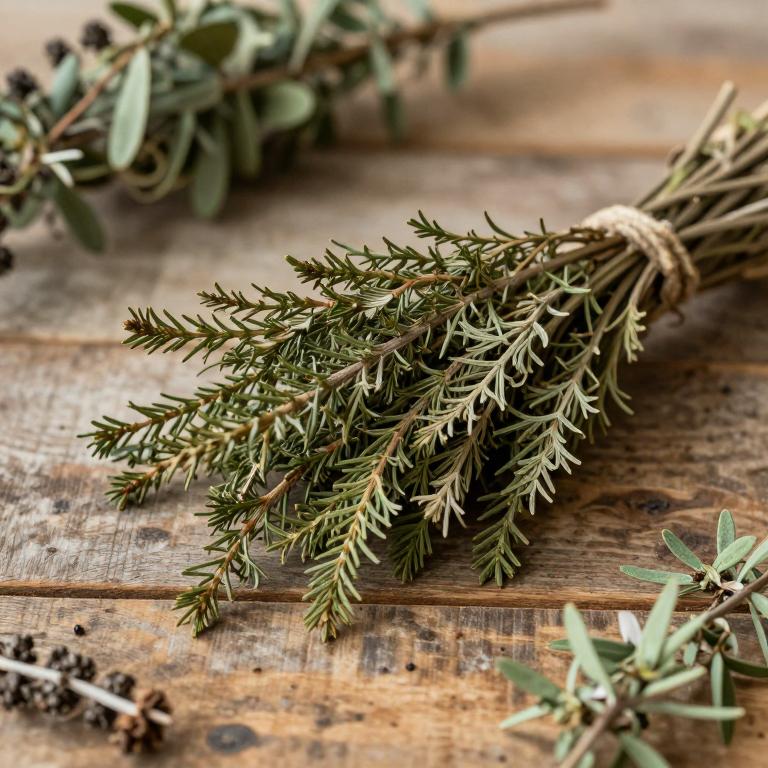
Lawson's Cypress, scientifically known as Chamaecyparis lawsoniana, is an evergreen conifer prized for its aromatic foliage. Historically utilized in traditional medicine, its essential oils possess antimicrobial and antiseptic properties. Often studied for potential therapeutic benefits, this resilient plant offers a rich intersection of botanical beauty and medicinal interest.
Names and Synonyms
Common Names
- Lawson Cypress
- Lawson's Cypress
- Ginger Pine
- Oregon Cedar
- Port Orford Cedar
- Port Orford Cypress
- Port Orford White-cedar
- Port-Orford Cedar
- Lawson's false cypress
- Lawson's-cypress
- Oregon-cedar
- Port Orford-cedar
- ginger-pine
Scientific Names
Accepted name
Chamaecyparis lawsonianaSynonyms
- Chamaecyparis lawsoniana pendula-alba
- Chamaecyparis lawsoniana f. pendula-vera
- Chamaecyparis boursieri var. filiformis
- Chamaecyparis lawsoniana var. minima-glauca
- Chamaecyparis lawsoniana f. gracilis
- Chamaecyparis boursieri var. alba-variegatis
- Chamaecyparis boursieri lutescens
- Chamaecyparis lawsoniana f. fraseri
- Chamaecyparis lawsoniana var. nana-glauca
- Chamaecyparis lawsoniana var. pendula
- Cupressus lawsoniana var. pendula
- Chamaecyparis boursieri f. viridis
- Chamaecyparis boursieri filiformis
- Chamaecyparis lawsoniana filiformis
- Cupressus lawsoniana gracilis-pendula
- Chamaecyparis lawsoniana gracilis-pendula
- Chamaecyparis lawsoniana f. aluminii
- Chamaecyparis lawsoniana f. pendula
- Chamaecyparis boursieri var. compacta
- Cupressus lawsoniana var. pendula-alba
- Chamaecyparis lawsoniana f. argentea
- Chamaecyparis lawsoniana f. pendula-alba
- Chamaecyparis boursieri var. lutescens
- Chamaecyparis lawsoniana var. argentea
- Chamaecyparis lawsoniana pendula-aurea
- Chamaecyparis boursieri var. pyramidalis-alba-nana
- Chamaecyparis lawsoniana pendula-nova
- Cupressus fragrans
- Chamaecyparis lawsoniana var. glauca
- Chamaecyparis lawsoniana pendula-vera
- Chamaecyparis lawsoniana f. glauca
- Chamaecyparis lawsoniana var. pendula-vera
- Chamaecyparis lawsonii
- Chamaecyparis lawsoniana var. billwoodiana
- Chamaecyparis lawsoniana var. stewartii
- Chamaecyparis lawsoniana filifera
- Cupressus lawsoniana albospica
- Cupressus lawsoniana
- Cupressus lawsoniana coerulea
- Cupressus lawsoniana var. aluminii
- Chamaecyparis boursieri var. alba-spica
- Cupressus lawsoniana f. alumnii
- Chamaecyparis boursieri var. coerulea
- Cupressus lawsoniana var. argentea
- Chamaecyparis boursieri var. erecta
- Cupressus lawsoniana f. argentea
- Chamaecyparis boursieri variegata-aurea
- Cupressus lawsoniana var. glauca
- Cupressus lawsoniana lutea
- Cupressus lawsoniana f. lutea
- Cupressus lawsoniana f. stewartii
- Cupressus lawsoniana f. viridis
- Cupressus nutkanus
- Retinispora lawsoniana
- Chamaecyparis allumii
- Cupressus lawsoniana var. alba-spica
- Cupressus lawsoniana var. alba-spica-nana
- Chamaecyparis lawsoniana f. alba-spica
- Chamaecyparis lawsoniana f. lutea
- Chamaecyparis lawsoniana f. erecta
- Cupressus lawsoniana var. erecta
- Cupressus lawsoniana erecta-glaucescens
- Chamaecyparis lawsoniana f. glaucescens
- Chamaecyparis lawsoniana f. fletcheri
- Cupressus lawsoniana fletcheri
- Cupressus lawsoniana var. pendula-vera
- Cupressus lawsoniana var. gracilis
- Cupressus lawsoniana var. filiformis
- Chamaecyparis lawsoniana f. filiformis
- Chamaecyparis lawsoniana f. intertexta
- Cupressus lawsoniana var. intertexta
- Cupressus lawsoniana nana
- Chamaecyparis lawsoniana f. nana
- Cupressus lawsoniana var. nana-glauca
- Cupressus lawsoniana var. minima-glauca
Regional and Traditional Names
Spanish:
- Cedro de Puerto Oxford
- Camecíparis de Lawson
- Cameciparis de Lawson
- Cedro de Oregon
- Falso ciprés de Lawson
- Cedro de Oregón
- falso ciprés
- Ciprés de Lawson
German:
- Lawsons Scheinzypresse
- Oregonzeder
- Lawson-Scheinzypresse
- Lawson-Scheinzypresse
- Lawsons Zypresse
- Lawsons Scheinzypresse
French:
- Cyprès de Lawson
- Cypres de Lawson
- cyprès de Lawson
- Cypres de Lawson
- Petit-Cyprès de Lawson
Sources: Wikidata, Catalogue of Life
Taxonomical Classification
This plant belongs to the kingdom Plantae and the phylum Streptophyta within the class Equisetopsida. It is further classified under the subclass Pinidae and the order Pinales, falling into the family Cupressaceae. Ultimately, its taxonomic identity is defined by its placement within the genus Chamaecyparis.
| Rank | Classification |
|---|---|
| Kingdom | Plantae |
| Phylum | Streptophyta |
| Class | Equisetopsida |
| Subclass | Pinidae |
| Order | Pinales |
| Family | Cupressaceae |
| Genus | Chamaecyparis |
Sources: The World Checklist of Vascular Plants (WCVP)
Distribution
This plant exhibits a scattered geographical distribution across several regions of Europe. In Northern Europe, it can be found growing in Denmark, Great Britain, and Ireland. Its presence also extends further north into the mountainous landscapes of Norway. Additionally, the species is recorded within the central regions of the continent. Specifically, it inhabits parts of Middle Europe, including Austria.
| Region | Area |
|---|---|
| Northern Europe | Denmark |
| Northern Europe | Great Britain |
| Northern Europe | Ireland |
| Northern Europe | Norway |
| Middle Europe | Austria |
| Middle Europe | Belgium |
| Middle Europe | Czechia-Slovakia |
| Middle Europe | Germany |
| Middle Europe | Hungary |
| Southwestern Europe | France |
Sources: The World Checklist of Vascular Plants (WCVP)
Botanical Identification
Ecology
The ecology of Chamaecyparis lawsoniana is primarily characterized by its preference for lowland environments, where it establishes itself within specific successional stages of forest ecosystems. In these low-lying regions, the species thrives in well-drained soils, often occupying areas that transition between riparian zones and more stable upland slopes. Its distribution is closely linked to moisture availability and temperature stability, typically favoring temperate to subtropical climates that support consistent growth cycles. As a component of the lowland flora, it often plays a structural role in the canopy or sub-canopy, influencing the microclimate and soil composition for understory species through its needle-leaf litter. The plant's ability to adapt to these specific lowland niches makes it a significant element in the ecological architecture of its native forest habitats.
- Habitat :
- Lowland
Life history
The life history of Chamaecyparis lawsoniana is characterized by its nature as a perennial species, allowing it to persist through multiple growing seasons. As a phanerophyte, it maintains its photosynthetic organs well above the ground level, typically developing into a woody structure that supports its growth throughout its long lifespan. This plant exhibits an evergreen deciduousness, meaning it retains its foliage year-round rather than shedding it seasonally, which provides a continuous capacity for photosynthesis. Its physiological structure further classifies it as a phanerophyte, a growth form defined by its elevated buds and branches that ensure survival and dominance within its ecological niche.
- Deciduousness :
- evergreen
- Life form :
- phanerophyte
- Lifecycle :
- perennial
Morphology
The morphology of Chamaecyparis lawsoniana is characterized by a woody growth form, specifically functioning as a self-supporting tree. As a terrestrial species, it is an independent organism that does not exhibit parasitic or epiphytic behavior. The plant's stature is significant, with its height typically ranging from a minimum of 20 meters to a maximum of 50 meters, maintaining an average plant height of approximately 43 meters.
- Aquatic :
- terrestrial
- Climber :
- self-supporting
- Epiphyte :
- terrestrial
- Growth form :
- tree
- Parasite :
- independent
- Plant height max:
- 50 m
- Plant height mean:
- 43 m
- Plant height min:
- 20 m
- Woodiness :
- woody
Physiology
The physiology of Chamaecyparis lawsoniana is characterized by a C3 photosynthetic pathway, which dictates its carbon fixation processes and metabolic efficiency. The plant is non-carnivorous, relying on traditional root-based nutrient uptake rather than the capture of prey, and it does not function as a nitrogen fixer, meaning it lacks the symbiotic mechanisms to convert atmospheric nitrogen into usable forms. Its vegetative morphology includes highly specialized foliage, with leaf structures that typically exhibit a minimal length of approximately 0.1 cm.
- Carnivory :
- non-carnivorous
- Leaf length max:
- 0.1 cm
- Nitrogen fixer :
- no
- Photosynthetic pathway :
- C3
Reproduction
The reproduction of Chamaecyparis lawsoniana is primarily sexual, characterized by a monoecious reproductive system. The flowering period is relatively concentrated, typically beginning in March and concluding in April, though the timing can be variable. Pollination is achieved through abiotic mechanisms, specifically utilizing a wind-driven pollination syndrome. Following successful pollination, the plant produces fruit with an average length and width of 3 cm. The resulting seeds are quite small, with a mean mass of approximately 0.002128 g, ranging from a minimum of 0.0018 g to a maximum of 0.00462 g. Dispersal of these seeds is anemochorous, meaning they are dispersed by the wind. Notably, there is no evidence of asexual reproduction in this species.
- Dispersal syndrome :
- anemochorous
- Flowering time :
- Mar
- Flowering time :
- Apr
- Fruit length mean:
- 3 cm
- Fruit width mean:
- 3 cm
- Pollination syndrome :
- wind
- Pollination syndrome :
- abiotic
- Reproduction asexual :
- absent
- Reproduction sexual :
- monoecious
- Seed mass max:
- 0.00462 g
- Seed mass mean:
- 0.00212808644444444 g
- Seed mass min:
- 0.0018 g
Sources: Global Inventory of Floras and Traits (GIFT)
Plant Parts
Chamaecyparis lawsoniana has 1 reported plant parts identified across 1 scientific publications and several other databases that are studied for medicinal purposes. The most consistently reported plant part include leaf.
| Plant part | Supporting sources | Consensus |
|---|---|---|
| Leaf | 1 supporting sources | ★☆☆☆☆ |
Leaf
- Plants (Basel, Switzerland)
Chemicals
Chamaecyparis lawsoniana has 2 reported phytochemicals identified across 1 scientific publications and several other databases. The most consistently reported chemicals include cis-Abienol, trans-Ferruginol.
| Chemical | Supporting sources | Consensus |
|---|---|---|
| cis-Abienol | 1 supporting sources | ★☆☆☆☆ |
| trans-Ferruginol | 1 supporting sources | ★☆☆☆☆ |
cis-Abienol
- Plants (Basel, Switzerland)
trans-Ferruginol
- Plants (Basel, Switzerland)
Conditions
Chamaecyparis lawsoniana has 3 reported investigations on conditions identified across 1 scientific publications and several other databases. The most consistently reported conditions include bronchitis, cough, headaches.
| Condition | Supporting sources | Consensus |
|---|---|---|
| Bronchitis | 1 supporting sources | ★☆☆☆☆ |
| Cough | 1 supporting sources | ★☆☆☆☆ |
| Headaches | 1 supporting sources | ★☆☆☆☆ |
Bronchitis
- Molecules (Basel, Switzerland)
Cough
- Molecules (Basel, Switzerland)
Headaches
- Molecules (Basel, Switzerland)