Chamaecrista nigricans
Chamaecrista nigricans · Accepted scientific name
Scientific literature: Very Sparse (3 studies) · ★☆☆☆☆
Scientifically known as Chamaecrista nigricans, is a versatile medicinal plant belonging to the Fabaceae family. Widely recognized in traditional herbalism, this species possesses unique phytochemical properties. It is frequently utilized for its therapeutic potential in treating various ailments, offering significant insights for contemporary pharmacological research and natural healing practices.
- Family
- Not available
- Native range
- Africa
- Parts used
- Leaf
- Common names
- Not available
- Scientific synonyms
- Not available
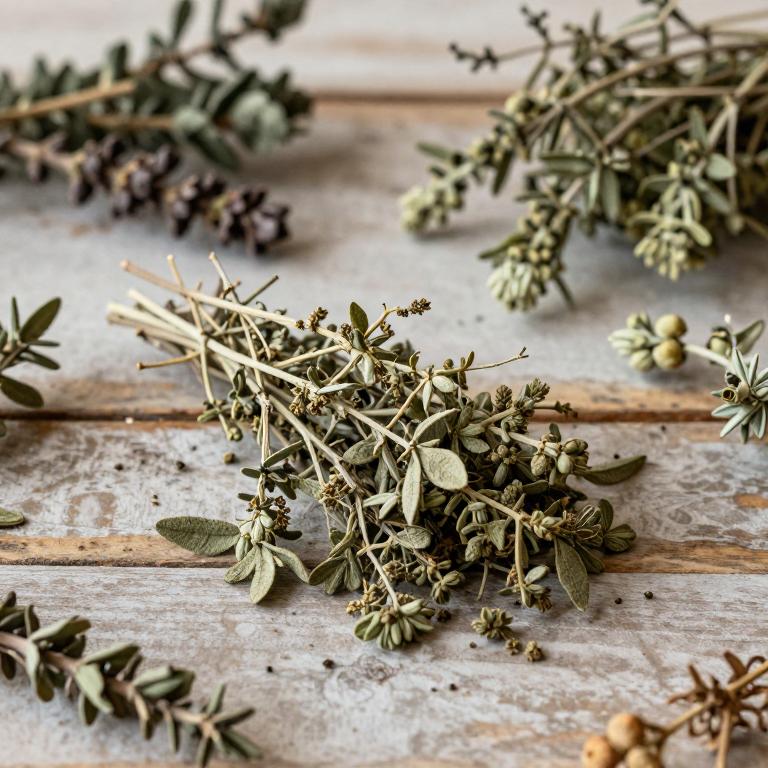
Names and Synonyms
Scientific Names
Accepted name
Chamaecrista nigricansDistribution
This plant exhibits a diverse geographical distribution across several distinct regions. Within Macaronesia, its presence is specifically noted in Cape Verde. Moving to West Tropical Africa, it can be found inhabiting the landscapes of Benin and Burkina. The species also extends its range through the nation of Gambia. Finally, its documented territory includes the country of Ghana.
| Region | Area |
|---|---|
| Macaronesia | Cape Verde |
| West Tropical Africa | Benin |
| West Tropical Africa | Burkina |
| West Tropical Africa | Gambia |
| West Tropical Africa | Ghana |
| West Tropical Africa | Guinea-Bissau |
| West Tropical Africa | Guinea |
| West Tropical Africa | Ivory Coast |
| West Tropical Africa | Mali |
| West Tropical Africa | Mauritania |
Sources: The World Checklist of Vascular Plants (WCVP)
Botanical Identification
Life history
The life history of Chamaecrista nigricans is characterized by an annual lifecycle, meaning the plant completes its entire biological progression from germination to seed production within a single growing season. As a therophyte, it follows a specialized survival strategy where the plant dies down completely at the end of its seasonal cycle, leaving behind only seeds to endure unfavorable conditions. This life form relies on these dormant seeds to persist through periods of environmental stress, ensuring the continuation of the species through the next favorable growing period.
- Life form :
- therophyte
- Lifecycle :
- annual
Morphology
The morphology of Chamaecrista nigricans is characterized by its growth form as a non-woody herb, functioning as a self-supporting plant rather than a climber, liana, or vine. It is an independent organism that does not exhibit parasitic behavior and grows as a terrestrial species, rather than an epiphyte or an aquatic/semiaquatic plant. In terms of stature, it maintains a relatively modest height, with a minimum recorded measurement of 0 m and a maximum height reaching approximately 1.524 m.
- Aquatic :
- terrestrial
- Climber :
- self-supporting
- Epiphyte :
- terrestrial
- Growth form :
- herb
- Parasite :
- independent
- Plant height max:
- 1.524018532 m
- Plant height min:
- 0 m
- Woodiness :
- non-woody
Physiology
The physiology of Chamaecrista nigricans is characterized by its reliance on the C3 photosynthetic pathway, utilizing the standard Calvin cycle to fix carbon dioxide during daylight hours. Furthermore, this species functions as a nitrogen fixer, establishing a symbiotic relationship with rhizobial bacteria within its root nodules to convert atmospheric nitrogen into bioavailable forms, thereby enhancing its nutrient uptake and survival in nitrogen-limited soils.
- Nitrogen fixer :
- yes
- Photosynthetic pathway :
- C3
Reproduction
The reproduction of Chamaecrista nigricans is characterized by the production of seeds with highly specific mass profiles, ensuring the dispersal and establishment of new progeny. Quantitative analysis of its seed characteristics reveals a consistent and narrow range of weight, with a measured seed mass mean of 0.003605 g. This central value is bounded by a maximum seed mass of 0.00374 g and a minimum seed mass of 0.00347 g, indicating a high degree of uniformity in the reproductive output of the species. These precise seed dimensions are critical factors in the plant's life cycle, influencing buoyancy, dispersal mechanisms, and the initial energy reserves available for germination.
- Seed mass max:
- 0.00374 g
- Seed mass mean:
- 0.003605 g
- Seed mass min:
- 0.00347 g
Sources: Global Inventory of Floras and Traits (GIFT)
Plant Parts
Chamaecrista nigricans has 1 reported plant parts identified across 2 scientific publications and several other databases that are studied for medicinal purposes. The most consistently reported plant part include leaf.
| Plant part | Supporting sources | Consensus |
|---|---|---|
| Leaf | 2 supporting sources | ★☆☆☆☆ |
Leaf
- Fitoterapia
- Journal of ethnopharmacology
Conditions
Chamaecrista nigricans has 1 reported investigations on conditions identified across 2 scientific publications and several other databases. The most consistently reported conditions include malaria.
| Condition | Supporting sources | Consensus |
|---|---|---|
| Malaria | 1 supporting sources | ★☆☆☆☆ |
Malaria
- Tropical medicine and health
Preparations
Chamaecrista nigricans has 1 reported preparations identified across 2 scientific publications and several other databases. The most consistently reported preparations include leaves.
| Preparation | Supporting sources | Consensus |
|---|---|---|
| Leaves | 1 supporting sources | ★☆☆☆☆ |
Leaves
- Journal of ethnopharmacology