Hairy Chervil
Chaerophyllum hirsutum · Accepted scientific name
Scientific literature: Very Sparse (8 studies) · ★☆☆☆☆
Hairy Chervil, scientifically known as Chaerophyllum hirsutum, is a versatile medicinal herb native to tropical regions. Renowned for its distinctive hairy foliage, this plant is traditionally utilized in folk medicine to treat digestive ailments, reduce inflammation, and support overall wellness, offering significant therapeutic potential for holistic health practitioners.
- Family
- Apiaceae
- Native range
- Europe
- Parts used
- Root
- Common names
- Hairy Chervil
- Scientific synonyms
- Ligusticum Hirsutum · Rhynchostylis Hirsutus · 3 more
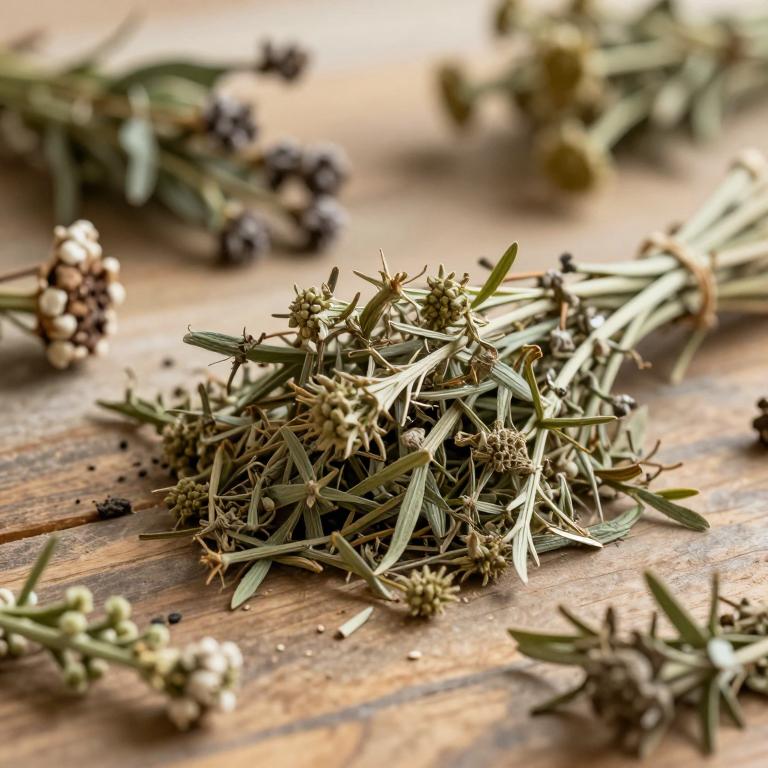
Names and Synonyms
Common Names
- Hairy Chervil
Scientific Names
Accepted name
Chaerophyllum hirsutumSynonyms
- Ligusticum hirsutum
- Rhynchostylis hirsutus
- Sikira hirsuta
- Bellia hirsuta
- Chaerophyllum palustre var. hirsutum
Regional and Traditional Names
German:
- Behaarter Kälberkropf
- Rauhaariger Kälberkropf
- Gewöhnlicher Rauhaariger Kälberkropf
- Rauhaariger-Kälberkropf
- Gewoehnlicher Gebirgs-Kaelberkropf
French:
- Cerfeuil hirsute
- Cherophylle cilie
Sources: Wikidata, Catalogue of Life
Taxonomical Classification
This plant belongs to the kingdom Plantae and the phylum Streptophyta within the class Equisetopsida. It is further classified under the subclass Magnoliidae and the order Apiales. Finally, it resides in the family Apiaceae under the genus Chaerophyllum.
| Rank | Classification |
|---|---|
| Kingdom | Plantae |
| Phylum | Streptophyta |
| Class | Equisetopsida |
| Subclass | Magnoliidae |
| Order | Apiales |
| Family | Apiaceae |
| Genus | Chaerophyllum |
Sources: The World Checklist of Vascular Plants (WCVP)
Distribution
This plant exhibits a specific geographical distribution across several regions of the European continent. In Northern Europe, its presence can be documented in Denmark and Great Britain. Moving toward Middle Europe, the species is also found within the borders of Austria and Belgium. Additionally, its range extends into the central territories of Czechia and Slovakia. Together, these locations define the known habitat of Chaerophyllum hirsutum throughout these specific areas.
| Region | Area |
|---|---|
| Northern Europe | Denmark |
| Northern Europe | Great Britain |
| Middle Europe | Austria |
| Middle Europe | Belgium |
| Middle Europe | Czechia-Slovakia |
| Middle Europe | Germany |
| Middle Europe | Hungary |
| Middle Europe | Poland |
| Middle Europe | Switzerland |
| Southwestern Europe | France |
Sources: The World Checklist of Vascular Plants (WCVP)
Botanical Identification
Ecology
The ecology of Chaerophyllum hirsutum is characterized by its preference for transitional environments, primarily occurring within the moist and shaded settings of forests as well as the open, sunlit expanses of meadows. It thrives in these habitats where soil moisture is relatively consistent, often occupying forest edges or clearings where it can access filtered light. The presence of this species in both woodland and meadow ecosystems indicates an ecological flexibility that allows it to colonize diverse niches, provided there is sufficient organic matter in the substrate and a balance between shade and solar exposure.
- Habitat :
- forest, meadows
Life history
The life history of Chaerophyllum hirsutum is characterized by its status as a perennial plant, allowing it to persist through multiple growing seasons. In terms of its structural life form, the species is classified as a hemicryptophyte, meaning its perennable buds are located at the soil surface, protected by leaf litter or organic matter during unfavorable conditions. This life form is consistently identified across its morphological descriptions, reinforcing its ability to survive seasonal changes and re-emerge from the ground level to complete its developmental stages.
- Life form :
- hemicryptophyte
- Lifecycle :
- perennial
Morphology
The morphology of Chaerophyllum hirsutum is characterized by a non-woody, herbaceous growth form, functioning as both a herb and a forb. As a terrestrial plant, it is an independent organism that does not function as a parasite or an epiphyte. The plant exhibits an ascending shoot orientation and is self-supporting in its growth habit, rather than acting as a liana or vine. In terms of stature, it maintains a relatively modest height, with individual specimens ranging from a minimum of 0.3 m to a maximum of 1.2 m, resulting in an average plant height of approximately 0.575 m.
- Aquatic :
- terrestrial
- Climber :
- self-supporting
- Epiphyte :
- terrestrial
- Growth form :
- herb
- Parasite :
- independent
- Plant height max:
- 1.2 m
- Plant height mean:
- 0.575 m
- Plant height min:
- 0.3 m
- Shoot orientation :
- ascending
- Woodiness :
- non-woody
Physiology
The physiology of Chaerophyllum hirsutum is characterized by a C3 photosynthetic pathway, which dictates its carbon fixation processes and metabolic efficiency in varying light and temperature conditions. The plant exhibits significant biomass allocation in its foliage, with a mean leaf size of 194.5775 cm², indicating a substantial surface area dedicated to light interception and gas exchange. This expansive leaf morphology is further reflected in its Specific Leaf Area (SLA), which maintains a mean value of 279.05 cm²/g, suggesting a relatively high ratio of leaf area to dry mass and implying a physiological strategy optimized for efficient light capture and rapid resource acquisition.
- Leaf size mean:
- 194.5775 cm²
- Photosynthetic pathway :
- C3
- Specific Leaf Area (SLA) mean:
- 279.05 cm²/g
Reproduction
The reproduction of Chaerophyllum hirsutum is characterized by a specific phenological window and specialized biological interactions. The flowering period typically commences in June and concludes in July. During this stage, the plant relies on biotic pollination syndromes, specifically utilizing insects to facilitate the transfer of pollen. Notably, self-fertilization is absent in this species, necessitating cross-pollination to ensure genetic diversity. Once fertilization is successful, the plant produces seeds with a mean mass of approximately 0.003179 g. The dispersal of these seeds follows a zoochorous strategy, specifically through epizoochory, where the seeds are transported by adhering to the external surfaces of animals.
- Dispersal syndrome :
- zoochorous
- Dispersal syndrome :
- epizoochorous
- Flowering time :
- Jun
- Flowering time :
- Jul
- Pollination syndrome :
- insect
- Pollination syndrome :
- biotic
- Seed mass mean:
- 0.003179 g
- Self fertilization :
- absent
Sources: Global Inventory of Floras and Traits (GIFT)
Plant Parts
Chaerophyllum hirsutum has 1 reported plant parts identified across 1 scientific publications and several other databases that are studied for medicinal purposes. The most consistently reported plant part include root.
| Plant part | Supporting sources | Consensus |
|---|---|---|
| Root | 1 supporting sources | ★☆☆☆☆ |
Root
- Journal of natural products
Chemicals
Chaerophyllum hirsutum has 7 reported phytochemicals identified across 1 scientific publications and several other databases. The most consistently reported chemicals include 3,5-Dicaffeoylquinic acid, CHLOROGENIC ACID, Falcarindiol, Methyl caffeate, p-hydroxyphenylethyl trans-ferulate.
| Chemical | Supporting sources | Consensus |
|---|---|---|
| 3,5-Dicaffeoylquinic acid | 1 supporting sources | ★☆☆☆☆ |
| CHLOROGENIC ACID | 1 supporting sources | ★☆☆☆☆ |
| Falcarindiol | 1 supporting sources | ★☆☆☆☆ |
| Methyl caffeate | 1 supporting sources | ★☆☆☆☆ |
| p-hydroxyphenylethyl trans-ferulate | 1 supporting sources | ★☆☆☆☆ |
| scopoletin | 1 supporting sources | ★☆☆☆☆ |
| vanillin | 1 supporting sources | ★☆☆☆☆ |
3,5-Dicaffeoylquinic acid
- Journal of natural products
CHLOROGENIC ACID
- Journal of natural products
Falcarindiol
- Journal of natural products
Methyl caffeate
- Journal of natural products
p-hydroxyphenylethyl trans-ferulate
- Journal of natural products
scopoletin
- Journal of natural products
vanillin
- Journal of natural products
Preparations
Chaerophyllum hirsutum has 1 reported preparations identified across 1 scientific publications and several other databases. The most consistently reported preparations include extracts of the roots.
| Preparation | Supporting sources | Consensus |
|---|---|---|
| Extracts of the roots | 1 supporting sources | ★☆☆☆☆ |
Extracts of the roots
- Journal of natural products