flowering quince
Chaenomeles · Accepted scientific name
Scientific literature: Very Sparse (28 studies) · ★☆☆☆☆
Flowering quince, scientifically known as Chaenomelos, is a versatile medicinal shrub prized in traditional practices. Renowned for its antioxidant properties, it is frequently utilized to support digestive health and alleviate respiratory ailments. Its nutrient-rich fruits and bark offer therapeutic benefits, making it a valuable botanical resource in herbal medicine.
- Family
- Rosaceae
- Native range
- Europe
- Parts used
- Fruit · Leaf
- Common names
- Flowering Quince · Japonica · 2 more
- Scientific synonyms
- Pseudochaenomeles
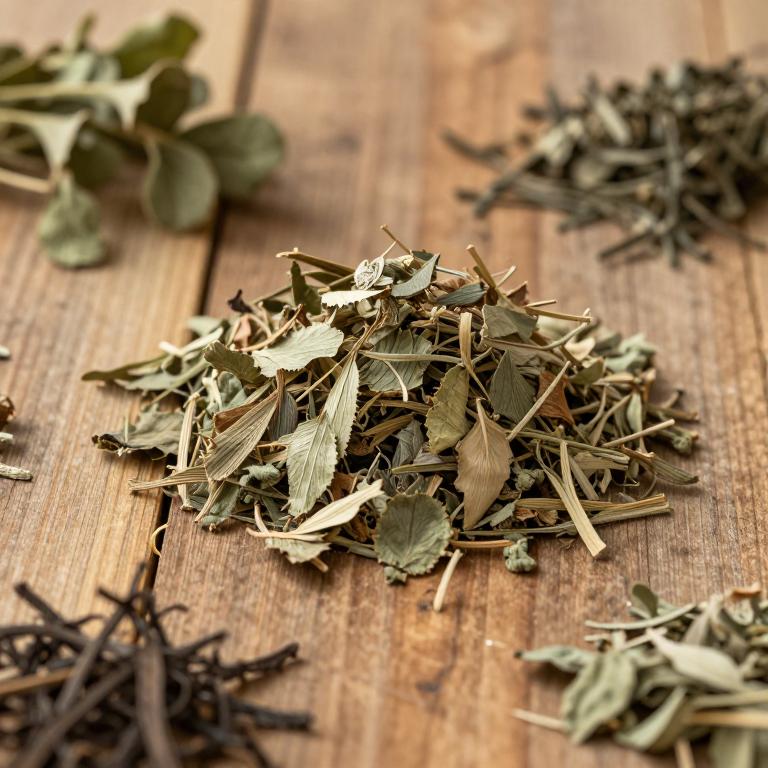
Names and Synonyms
Common Names
- flowering quince
- Japonica
- Flowering quinces
- Japanese and Chinese Quinces
Scientific Names
Accepted name
ChaenomelesSynonyms
- Pseudochaenomeles
Regional and Traditional Names
German:
- Zierquitten
- Zierquitte
- Scheinquitte
- Scheinquitte
- Zierquitte
Sources: Wikidata, Catalogue of Life
Taxonomical Classification
This plant belongs to the kingdom Plantae and the phylum Streptophyta, falling under the class Equisetopsida and subclass Magnoliidae. It is further classified within the order Rosales and the family Rosaceae. Finally, it is identified by the specific genus Chaenomeles.
| Rank | Classification |
|---|---|
| Kingdom | Plantae |
| Phylum | Streptophyta |
| Class | Equisetopsida |
| Subclass | Magnoliidae |
| Order | Rosales |
| Family | Rosaceae |
| Genus | Chaenomeles |
Sources: The World Checklist of Vascular Plants (WCVP)
Distribution
This plant exhibits a diverse geographical distribution across several European regions. In Northern Europe, its presence can be documented within Great Britain. Moving into Middle Europe, it is commonly found in Germany, Poland, and Switzerland. Additionally, the species extends into Southwestern Europe, specifically inhabiting France. These locations highlight its ability to thrive across various continental landscapes.
| Region | Area |
|---|---|
| Northern Europe | Great Britain |
| Middle Europe | Germany |
| Middle Europe | Poland |
| Middle Europe | Switzerland |
| Southwestern Europe | France |
| Southwestern Europe | Portugal |
| Southwestern Europe | Spain |
| Southeastern Europe | Bulgaria |
| Southeastern Europe | Italy |
| Southeastern Europe | Romania |
Sources: The World Checklist of Vascular Plants (WCVP)
Plant Parts
Chaenomeles has 3 reported plant parts identified across 4 scientific publications and several other databases that are studied for medicinal purposes. The most consistently reported plant part include fruit, leaf, seed.
| Plant part | Supporting sources | Consensus |
|---|---|---|
| Fruit | 2 supporting sources | ★☆☆☆☆ |
| Leaf | 1 supporting sources | ★☆☆☆☆ |
| Seed | 1 supporting sources | ★☆☆☆☆ |
Fruit
- Food chemistry
- Roczniki Panstwowego Zakladu Higieny
Leaf
- Food chemistry
Seed
- Food chemistry
Chemicals
Chaenomeles has 12 reported phytochemicals identified across 4 scientific publications and several other databases. The most consistently reported chemicals include Acetyl ursolic acid, Alcohols, Betulin, ERYTHODIOL, OLEANOLIC ACID.
| Chemical | Supporting sources | Consensus |
|---|---|---|
| Acetyl ursolic acid | 1 supporting sources | ★☆☆☆☆ |
| Alcohols | 1 supporting sources | ★☆☆☆☆ |
| Betulin | 1 supporting sources | ★☆☆☆☆ |
| ERYTHODIOL | 1 supporting sources | ★☆☆☆☆ |
| OLEANOLIC ACID | 1 supporting sources | ★☆☆☆☆ |
| Pomolic acid | 1 supporting sources | ★☆☆☆☆ |
| Terpenoids | 1 supporting sources | ★☆☆☆☆ |
| Ursolic acid | 1 supporting sources | ★☆☆☆☆ |
| aldehydes | 1 supporting sources | ★☆☆☆☆ |
| betulinic acid | 1 supporting sources | ★☆☆☆☆ |
Acetyl ursolic acid
- Journal of chromatographic science
Alcohols
- Roczniki Panstwowego Zakladu Higieny
Betulin
- Journal of chromatographic science
ERYTHODIOL
- Journal of chromatographic science
OLEANOLIC ACID
- Journal of chromatographic science
Pomolic acid
- Journal of chromatographic science
Terpenoids
- Roczniki Panstwowego Zakladu Higieny
Ursolic acid
- Journal of chromatographic science
aldehydes
- Roczniki Panstwowego Zakladu Higieny
betulinic acid
- Journal of chromatographic science
Activities
Chaenomeles has 1 reported activities identified across 4 scientific publications and several other databases. The most consistently reported activities include Antimicrobial.
| Activity | Supporting sources | Consensus |
|---|---|---|
| Antimicrobial | 1 supporting sources | ★☆☆☆☆ |
Antimicrobial
- Roczniki Panstwowego Zakladu Higieny
Conditions
Chaenomeles has 7 reported investigations on conditions identified across 4 scientific publications and several other databases. The most consistently reported conditions include allergies, anemia, cardiovascular diseases, gout, liver diseases.
| Condition | Supporting sources | Consensus |
|---|---|---|
| Allergies | 1 supporting sources | ★☆☆☆☆ |
| Anemia | 1 supporting sources | ★☆☆☆☆ |
| Cardiovascular diseases | 1 supporting sources | ★☆☆☆☆ |
| Gout | 1 supporting sources | ★☆☆☆☆ |
| Liver diseases | 1 supporting sources | ★☆☆☆☆ |
| Rheumatism | 1 supporting sources | ★☆☆☆☆ |
| Tumor | 1 supporting sources | ★☆☆☆☆ |
Allergies
- Roczniki Panstwowego Zakladu Higieny
Anemia
- Roczniki Panstwowego Zakladu Higieny
Cardiovascular diseases
- Roczniki Panstwowego Zakladu Higieny
Gout
- Roczniki Panstwowego Zakladu Higieny
Liver diseases
- Roczniki Panstwowego Zakladu Higieny
Rheumatism
- Roczniki Panstwowego Zakladu Higieny
Tumor
- Roczniki Panstwowego Zakladu Higieny