Douglas' dustymaiden
Chaenactis douglasii · Accepted scientific name
Scientific literature: Very Sparse (4 studies) · ★☆☆☆☆
Douglas' dustymaiden, scientifically known as Chaenactis douglasii, is a resilient perennial herb native to the arid regions of western North America. Characterized by its distinctive fuzzy foliage and yellow composite flowers, this plant plays a vital role in its ecosystem, offering ecological value and traditional medicinal interest.
- Family
- Asteraceae
- Native range
- Northern America
- Parts used
- Root
- Common names
- Douglas' Dustymaiden · Hoary False Yarrow · 4 more
- Scientific synonyms
- Chaenactis Achilleifolia Var. Douglasii
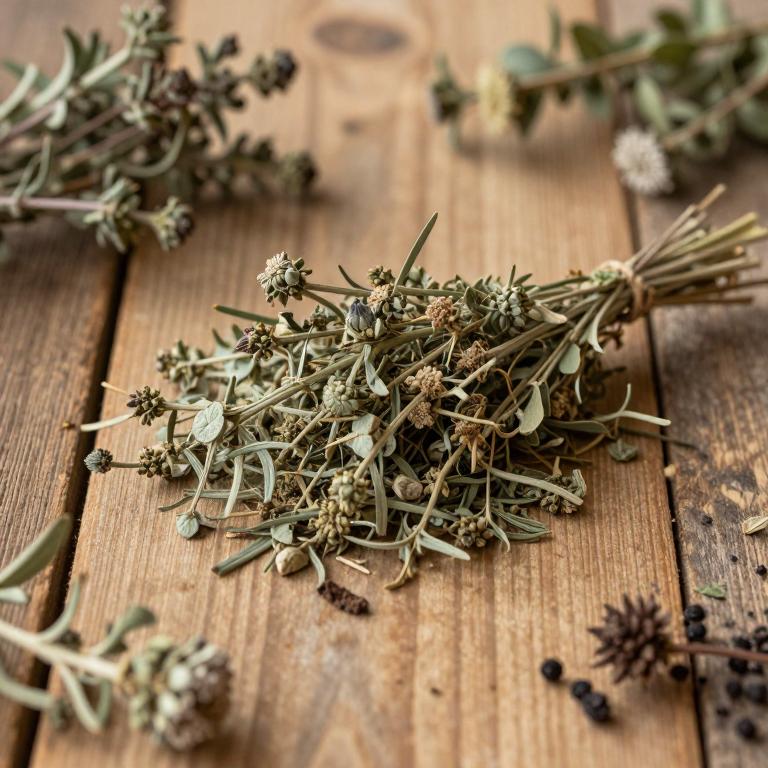
Names and Synonyms
Common Names
- Douglas' dustymaiden
- hoary false yarrow
- Douglas's dusty-maiden
- dusty-maiden
- Douglas Dustymaiden
- Hoary Chaenactis
Scientific Names
Accepted name
Chaenactis douglasiiSynonyms
- Chaenactis achilleifolia var. douglasii
Regional and Traditional Names
French:
- chénacte de Douglas
Sources: Wikidata, Catalogue of Life
Taxonomical Classification
This plant belongs to the kingdom Plantae and the phylum Streptophyta, falling under the class Equisetopsida and subclass Magnoliidae. It is further classified within the order Asterales and the family Asteraceae. Finally, it is identified by its genus, Chaenactis.
| Rank | Classification |
|---|---|
| Kingdom | Plantae |
| Phylum | Streptophyta |
| Class | Equisetopsida |
| Subclass | Magnoliidae |
| Order | Asterales |
| Family | Asteraceae |
| Genus | Chaenactis |
Sources: The World Checklist of Vascular Plants (WCVP)
Distribution
This plant exhibits a broad geographical distribution across parts of Western North America. In Western Canada, its range includes the provinces of Alberta and British Columbia. Moving into the Northwestern United States, it can be found growing in the state of Idaho. The species also extends its reach into Montana within the same region. Additionally, its habitat reaches as far south as Colorado.
| Region | Area |
|---|---|
| Western Canada | Alberta |
| Western Canada | British Columbia |
| Northwestern U.S.A. | Colorado |
| Northwestern U.S.A. | Idaho |
| Northwestern U.S.A. | Montana |
| Northwestern U.S.A. | Oregon |
| Northwestern U.S.A. | Washington |
| Northwestern U.S.A. | Wyoming |
| North-Central U.S.A. | North Dakota |
| North-Central U.S.A. | South Dakota |
Sources: The World Checklist of Vascular Plants (WCVP)
Botanical Identification
Life history
The life history of Chaenactis douglasii is characterized by its status as a perennial species, allowing it to persist through multiple growing seasons within its habitat. As a perennial, it avoids the complete mortality associated with annuals, instead focusing on establishing a stable root system that supports recurring vegetative growth. This life cycle enables the plant to navigate the environmental fluctuations of its native ecosystems, often utilizing its established structure to emerge and flower repeatedly when seasonal conditions become favorable. Through this perennial strategy, the plant can invest energy into long-term survival and reproductive success, contributing to its ability to maintain populations in its specific ecological niche.
- Lifecycle :
- perennial
Morphology
The morphology of Chaenactis douglasii is characterized by a growth form classified as both a herb and a forb, typically reaching an average plant height of 0.49 m. It is a non-woody, self-supporting plant that does not function as a climber, liana, or vine, nor does it exhibit any parasitic behavior, existing instead as an independent organism. The species is terrestrial in nature, lacking aquatic or epiphytic tendencies, and maintains a structural habit that is entirely self-supporting without the need for external attachment.
- Aquatic :
- terrestrial
- Climber :
- self-supporting
- Epiphyte :
- terrestrial
- Growth form :
- herb
- Growth form :
- forb
- Parasite :
- independent
- Plant height mean:
- 0.49 m
- Woodiness :
- non-woody
Reproduction
Reproduction in Chaenaectis douglasii is primarily driven by the production of specialized seeds that facilitate dispersal and colonization of suitable habitats. The reproductive success of the species is closely linked to the physical characteristics of its progeny, specifically regarding the mass of the individual seeds produced. Quantitative analysis of the seed mass reveals a highly consistent range, with a measured mean seed mass of approximately 0.00129741675 g. The variability within the population is relatively narrow, as evidenced by a minimum seed mass of 0.001183 g and a maximum seed mass of 0.001668 g. These fine-scale measurements indicate a stabilized reproductive strategy where seed size is tightly controlled, likely to optimize the balance between nutrient provisioning for the embryo and the capacity for efficient dispersal within its ecological niche.
- Seed mass max:
- 0.001668 g
- Seed mass mean:
- 0.00129741675 g
- Seed mass min:
- 0.001183 g
Sources: Global Inventory of Floras and Traits (GIFT)
Plant Parts
Chaenactis douglasii has 1 reported plant parts identified across 1 scientific publications and several other databases that are studied for medicinal purposes. The most consistently reported plant part include root.
| Plant part | Supporting sources | Consensus |
|---|---|---|
| Root | 1 supporting sources | ★☆☆☆☆ |
Root
- Planta medica
Chemicals
Chaenactis douglasii has 1 reported phytochemicals identified across 1 scientific publications and several other databases. The most consistently reported chemicals include Thiarubrine A.
| Chemical | Supporting sources | Consensus |
|---|---|---|
| Thiarubrine A | 1 supporting sources | ★☆☆☆☆ |
Thiarubrine A
- Planta medica
Activities
Chaenactis douglasii has 2 reported activities identified across 1 scientific publications and several other databases. The most consistently reported activities include Antibacterial, Antifungal.
| Activity | Supporting sources | Consensus |
|---|---|---|
| Antibacterial | 1 supporting sources | ★☆☆☆☆ |
| Antifungal | 1 supporting sources | ★☆☆☆☆ |
Antibacterial
- Planta medica
Antifungal
- Planta medica