Cephalotaxus nana
Cephalotaxus nana · Accepted scientific name
Scientific literature: Very Sparse (7 studies) · ★☆☆☆☆
scientifically known as Cephalotaxus nana, is a rare evergreen conifer valued for its significant medicinal properties. Found primarily in East Asian landscapes, this plant contains unique alkaloids that demonstrate potential anti-tumor and anti-inflammatory activities. Researchers continue to explore its bioactive compounds to develop advanced therapeutic treatments for various diseases.
- Family
- Cephalotaxaceae
- Native range
- Asia-Temperate
- Parts used
- Fruit
- Common names
- Not available
- Scientific synonyms
- Cephalotaxus Sinensis Subsp. Latifolia · Cephalotaxus Harringtonia Var. Koreana · 11 more
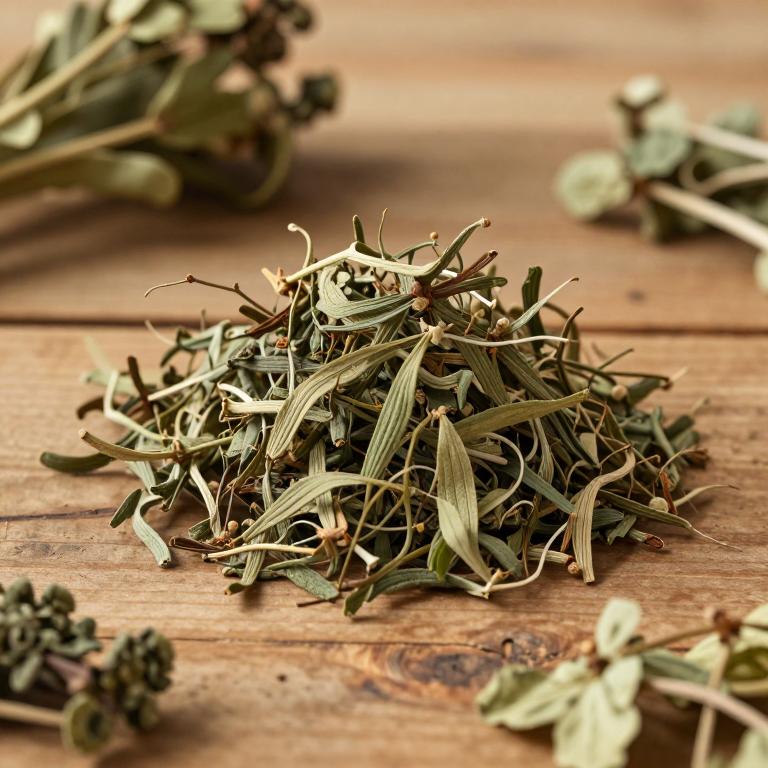
Names and Synonyms
Scientific Names
Accepted name
Cephalotaxus nanaSynonyms
- Cephalotaxus sinensis subsp. latifolia
- Cephalotaxus harringtonia var. koreana
- Cephalotaxus drupacea f. globosa
- Cephalotaxus sinensis f. globosa
- Cephalotaxus nana var. adstringens
- Cephalotaxus sinensis var. latifolia
- Cephalotaxus harringtonia var. nana
- Cephalotaxus latifolia
- Cephalotaxus koreana
- Cephalotaxus drupacea var. koreana
- Cephalotaxus drupacea var. nana
- Cephalotaxus harringtonia subsp. hokkaidoensis
- Cephalotaxus harringtonia subsp. koreana
Sources: Wikidata
Taxonomical Classification
This plant belongs to the kingdom Plantae and is classified under the phylum Streptophyta within the class Equisetopsida. It is further categorized under the subclass Pinidae and the order Pinales. Finally, it is a member of the family Cephalotaxaceae and falls under the genus Cephalotaxus.
| Rank | Classification |
|---|---|
| Kingdom | Plantae |
| Phylum | Streptophyta |
| Class | Equisetopsida |
| Subclass | Pinidae |
| Order | Pinales |
| Family | Cephalotaxaceae |
| Genus | Cephalotaxus |
Sources: The World Checklist of Vascular Plants (WCVP)
Distribution
This plant exhibits a specific range across several regions within East Asia. In China, its presence is noted throughout the South-Central and Southeast territories. Moving further east, the species can be found growing in the natural landscapes of Japan. Its distribution also extends to the Korean Peninsula. Together, these locations define the primary geographical footprint of Cephalotaxus nana.
| Region | Area |
|---|---|
| China | China South-Central |
| China | China Southeast |
| Eastern Asia | Japan |
| Eastern Asia | Korea |
Sources: The World Checklist of Vascular Plants (WCVP)
Botanical Identification
Life history
The life history of Cephalotaxus nana is characterized by its distinct growth habits and structural classifications within its ecological niche. Based on its developmental strategies, the plant exhibits a dual classification of life forms, functioning as both a phanerophyte and a nanophanerophyte. As a phanerophyte, its reproductive buds are elevated above the ground on visible branches, allowing it to maintain a perennial presence and endure seasonal environmental shifts through woody structural persistence. Simultaneously, its classification as a nanophanerophyte indicates a more compact growth architecture, where the height of its woody stems remains relatively low, typically staying within a limited vertical range above the soil surface. This combination of traits enables the species to establish a stable, long-lived existence, utilizing its elevated bud positioning for survival while maintaining a diminutive, specialized stature suited to its specific habitat.
- Life form :
- nanophanerophyte
- Life form :
- phanerophyte
Morphology
The morphology of Cephalotaxus nana is characterized by its woody structure and distinct growth habit. It functions as a self-supporting climber, relying on its own structural integrity rather than external support systems for vertical progression. The plant is an independent organism, functioning without any parasitic relationship to its host or environment. Furthermore, it maintains a terrestrial existence, growing directly within the soil rather than adopting an epiphytic lifestyle.
- Climber :
- self-supporting
- Epiphyte :
- terrestrial
- Parasite :
- independent
- Woodiness :
- woody
Sources: Global Inventory of Floras and Traits (GIFT)
Plant Parts
Cephalotaxus nana has 1 reported plant parts identified across 1 scientific publications and several other databases that are studied for medicinal purposes. The most consistently reported plant part include fruit.
| Plant part | Supporting sources | Consensus |
|---|---|---|
| Fruit | 1 supporting sources | ★☆☆☆☆ |
Fruit
- The Journal of organic chemistry
Chemicals
Cephalotaxus nana has 6 reported phytochemicals identified across 1 scientific publications and several other databases. The most consistently reported chemicals include 11-Hydroxyhainanolidol, Cephalocyclidin A, Isoscutellarein 5-O-beta-D-glucopyranoside, Quercetin 3-O-alpha-L-rhamnopyranoside, apigenin.
| Chemical | Supporting sources | Consensus |
|---|---|---|
| 11-Hydroxyhainanolidol | 1 supporting sources | ★☆☆☆☆ |
| Cephalocyclidin A | 1 supporting sources | ★☆☆☆☆ |
| Isoscutellarein 5-O-beta-D-glucopyranoside | 1 supporting sources | ★☆☆☆☆ |
| Quercetin 3-O-alpha-L-rhamnopyranoside | 1 supporting sources | ★☆☆☆☆ |
| apigenin | 1 supporting sources | ★☆☆☆☆ |
| homoharringtonine | 1 supporting sources | ★☆☆☆☆ |
11-Hydroxyhainanolidol
- Journal of natural products
Cephalocyclidin A
- The Journal of organic chemistry
Isoscutellarein 5-O-beta-D-glucopyranoside
- Journal of natural products
Quercetin 3-O-alpha-L-rhamnopyranoside
- Journal of natural products
apigenin
- Journal of natural products
homoharringtonine
- Translational research : the journal of laboratory and clinical medicine
Preparations
Cephalotaxus nana has 2 reported preparations identified across 1 scientific publications and several other databases. The most consistently reported preparations include 70% ethanol extract, extract.
| Preparation | Supporting sources | Consensus |
|---|---|---|
| 70% ethanol extract | 1 supporting sources | ★☆☆☆☆ |
| Extract | 1 supporting sources | ★☆☆☆☆ |
70% ethanol extract
- PloS one
Extract
- Translational research : the journal of laboratory and clinical medicine