Tatarian cephalaria
Cephalaria gigantea · Accepted scientific name
Scientific literature: Very Sparse (3 studies) · ★☆☆☆☆
Tatarian cephalaria, scientifically known as Cephalaria gigantea, is a perennial herb native to East Asia. Renowned in traditional medicine, it is primarily utilized for its potent anti-inflammatory and antimicrobial properties. This resilient plant offers valuable therapeutic potential, serving as a significant natural resource for treating various systemic ailments.
Names and Synonyms
Common Names
- Tatarian cephalaria
- Tatarian swanseed
- Giant Scabious
- giant-scabious
- yellow-scabious
Scientific Names
Accepted name
Cephalaria giganteaSynonyms
- Succisa tatarica
- Lepicephalus caucasicus
- Scabiosa gigantea
- Scabiosa elata
- Scabiosa altissima
- Cephalaria elata
- Cephalaria caucasica
- Cephalaria sosnowskyi
- Pycnocomon tataricum
Regional and Traditional Names
German:
- Riesen-Schuppenkopf
- großer Schuppenkopf
- Riesen-Schuppenkopf
French:
- céphalaire géante
- Scabieuse geante jaune
- Scabieuse géante
- Scabieuse géante jaune
Sources: Wikidata, Catalogue of Life
Taxonomical Classification
This plant belongs to the kingdom Plantae and the phylum Streptophyta, specifically falling under the class Equisetopsida and subclass Magnoliidae. Within the order Dipsacales, it is classified under the family Caprifoliaceae. Finally, it is identified by the genus Cephalaeria.
| Rank | Classification |
|---|---|
| Kingdom | Plantae |
| Phylum | Streptophyta |
| Class | Equisetopsida |
| Subclass | Magnoliidae |
| Order | Dipsacales |
| Family | Caprifoliaceae |
| Genus | Cephalaria |
Sources: The World Checklist of Vascular Plants (WCVP)
Distribution
This plant exhibits a diverse presence across several distinct regions of the European continent. In Northern Europe, its range extends to include Great Britain. Moving into Middle Europe, the species can be found in Austria as well as Germany. It also maintains a significant distribution throughout the Czech-Slovakia region. Finally, the geographical reach of this medicinal plant extends into Southeastern Europe, specifically within Italy.
| Region | Area |
|---|---|
| Northern Europe | Great Britain |
| Middle Europe | Austria |
| Middle Europe | Czechia-Slovakia |
| Middle Europe | Germany |
| Southeastern Europe | Italy |
| Caucasus | North Caucasus |
| Caucasus | Transcaucasus |
| Western Asia | Türkiye |
| Eastern Canada | Ontario |
| Eastern Canada | Québec |
Sources: The World Checklist of Vascular Plants (WCVP)
Botanical Identification
Ecology
The ecology of Cephalaeria gigantea is characterized by its ability to thrive across a diverse range of topographical and vegetative landscapes. This species is commonly found colonizing various environments, including dense forests, rolling hills, open meadows, and rugged mountain terrains. Furthermore, it demonstrates significant adaptability by populating steppe ecosystems, indicating a resilience to both sheltered woodland conditions and more exposed, open landscapes.
- Habitat :
- forest, hills, meadows, mountains, steppe
Life history
The life history of Cephalaeria gigantea is characterized by its status as a perennial species, meaning it maintains its vegetative structures and continues its growth cycle over multiple years rather than completing a single reproductive cycle in one season. As a long-lived organism, it establishes a stable presence within its ecosystem, undergoing successive stages of seasonal growth, maturation, and repeated flowering phases. This perennial nature allows the plant to invest significant energy into robust structural development, ensuring its survival through varying environmental conditions and providing a consistent foundation for long-term reproductive success.
- Lifecycle :
- perennial
Morphology
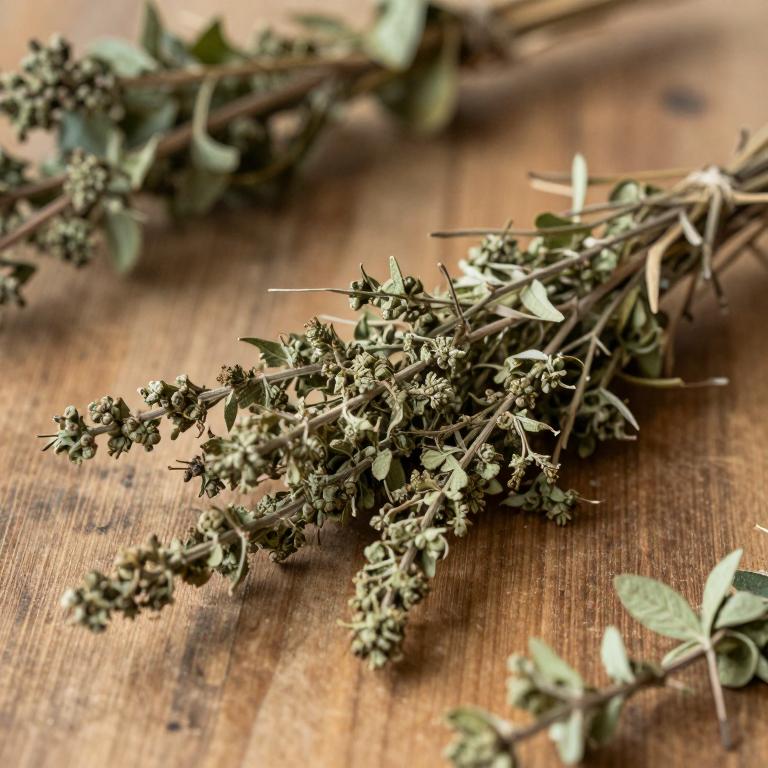
The morphology of Cephalaeria gigantea is characterized by its growth form as a non-woody forb and herb, which functions as a self-supporting plant rather than an obligatory or facultative climber. It is an independent species, lacking parasitic tendencies, and maintains a terrestrial habit rather than being an epiphyte or an aquatic/semiaquatic plant. In terms of stature, the plant reaches a height ranging from a minimum of 1 meter to a maximum of 1.5 meters.
- Aquatic :
- terrestrial
- Climber :
- self-supporting
- Epiphyte :
- terrestrial
- Growth form :
- herb
- Growth form :
- forb
- Parasite :
- independent
- Plant height max:
- 1.5 m
- Plant height min:
- 1 m
- Woodiness :
- non-woody
Physiology
The physiology of Cephalaeria gigantea is characterized by a C3 photosynthetic pathway, which governs its carbon fixation processes and metabolic efficiency within its ecological niche. This carbon assimilation strategy is closely linked to its structural leaf economics, as evidenced by a Specific Leaf Area (SLA) with a mean value of 173 cm²/g. This morphological parameter indicates a specific balance between leaf thickness and area, reflecting the plant's strategy for optimizing light interception and gas exchange relative to its biomass investment.
- Photosynthetic pathway :
- C3
- Specific Leaf Area (SLA) mean:
- 173 cm²/g
Reproduction
The reproduction of Cephalaeria gigantea is characterized by a specific flowering window and a consistent seed profile. The flowering period typically begins in June and concludes within the same month of June, though seasonal variations may occur. The plant produces seeds with a highly uniform mass, where both the mean, minimum, and maximum recorded values are approximately 0.01709 g. Regarding its dispersal mechanisms, the species exhibits an unspecialized dispersal syndrome, utilizing a combination of methods such as anemochory, zoochory, autochory, and hydrochory, while also being subject to anthropochorous dispersal through human activity.
- Dispersal syndrome :
- unspecialized
- Dispersal syndrome :
- anthropochorous
- Flowering time :
- Jun
- Seed mass mean:
- 0.01709 g
Sources: Global Inventory of Floras and Traits (GIFT)
Activities
Cephalaria gigantea has 2 reported activities identified across 0 scientific publications and several other databases. The most consistently reported activities include Antibacterial, Antioxidant.
| Activity | Supporting sources | Consensus |
|---|---|---|
| Antibacterial | 1 supporting sources | ★☆☆☆☆ |
| Antioxidant | 1 supporting sources | ★☆☆☆☆ |
Antibacterial
- Plants (Basel, Switzerland)
Antioxidant
- Plants (Basel, Switzerland)
Conditions
Cephalaria gigantea has 1 reported investigations on conditions identified across 0 scientific publications and several other databases. The most consistently reported conditions include antioxidant.
| Condition | Supporting sources | Consensus |
|---|---|---|
| Antioxidant | 1 supporting sources | ★☆☆☆☆ |
Antioxidant
- Plants (Basel, Switzerland)