Centrosema plumieri
Centrosema plumieri · Accepted scientific name
Scientific literature: Sparse (74 studies) · ★★☆☆☆
Centrosema plumieri, is a significant medicinal plant native to various tropical regions. Renowned for its diverse therapeutic properties, it is traditionally utilized in folk medicine to treat inflammation and skin ailments. This species holds great potential for pharmacological research, offering promising insights into developing new natural healing treatments.
- Family
- Not available
- Native range
- Africa
- Parts used
- Not available
- Common names
- Not available
- Scientific synonyms
- Not available
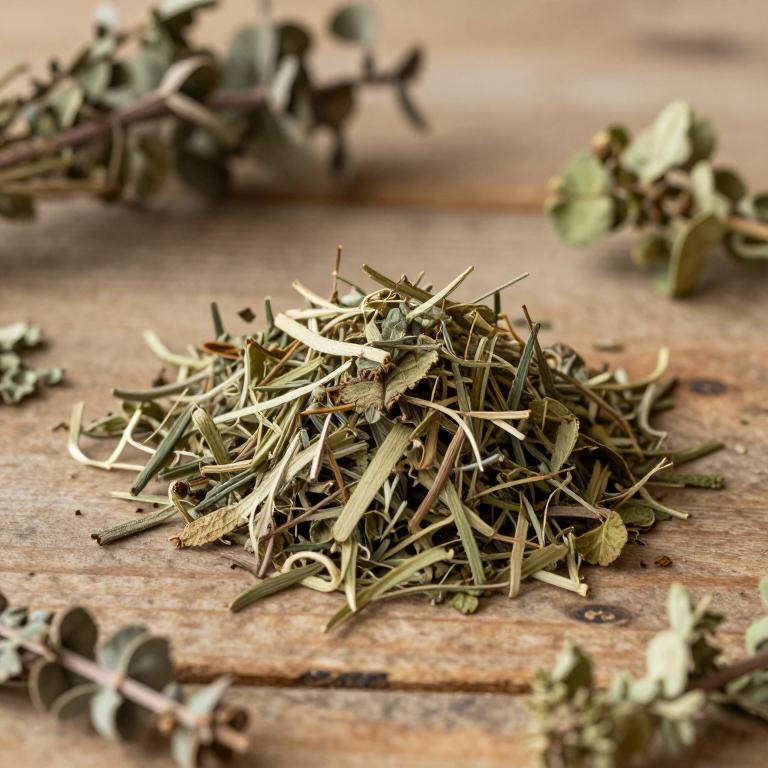
Names and Synonyms
Scientific Names
Accepted name
Centrosema plumieriDistribution
This plant is widely distributed across several regions within the African continent. In West Tropical Africa, its presence is documented in Benin, Ghana, and Nigeria. Moving into the West-Central Tropical Africa region, the species can also be found in Congo. Additionally, its geographical range extends into Gabon. These specific locations highlight the plant's prevalence within tropical African ecosystems.
| Region | Area |
|---|---|
| West Tropical Africa | Benin |
| West Tropical Africa | Ghana |
| West Tropical Africa | Nigeria |
| West-Central Tropical Africa | Congo |
| West-Central Tropical Africa | Gabon |
| West-Central Tropical Africa | Gulf of Guinea Is. |
| West-Central Tropical Africa | DR Congo |
| East Tropical Africa | Kenya |
| East Tropical Africa | Tanzania |
| Western Indian Ocean | Mauritius |
Sources: The World Checklist of Vascular Plants (WCVP)
Botanical Identification
Ecology
The ecology of Centrosema plumieri is characterized by a broad altitudinal distribution, spanning from sea level up to a maximum elevation of 2000 m AMSL, with a mean elevation of approximately 1650 m AMSL. This species exhibits remarkable ecological plasticity, colonizing a diverse array of environments and ecosystems. It is found in anthropogenic areas (Área Antrópica) as well as in specialized natural habitats including high-altitude fields (Campo de Altitude), riparian forests or gallery forests (Floresta Ciliar ou Galeria), and terra firme forests (Floresta de Terra Firmre). Additionally, its range extends into seasonal semi-deciduous forests (Floresta Estacional Semidecidual), ombrophilous or rainforest environments (Floresta Ombrófila), and coastal restinga ecosystems.
- Elevational range max:
- 2000 m AMSL
- Elevational range mean:
- 1650 m AMSL
- Elevational range min:
- 0 m AMSL
- Habitat :
- Área Antrópica, Campo de Altitude, Floresta Ciliar ou Galeria, Floresta de Terra Firme, Floresta Estacional Semidecidual, Floresta Ombrófila (= Floresta Pluvial), Restinga
Life history
The life history of Centrosema plumieri is characterized by its classification as a perennial species, though its biological expression can be variable depending on environmental conditions and local ecological pressures. As a perennial herb or legume, it maintains a continuous presence in its habitat through a life cycle that allows it to persist beyond a single growing season, often establishing robust root systems that facilitate long-term survival. While its growth patterns can fluctuate, the plant typically navigates through stages of vegetative expansion followed by reproductive phases where it produces flowering structures to ensure genetic continuity. This perennial nature enables the plant to adapt to seasonal shifts, allowing it to re-emerge and thrive across multiple years within its native range.
- Lifecycle :
- perennial
Morphology
The morphology of Centrosema plumieri is characterized by its growth form as a non-woody herb, specifically classified as a forb. It functions as an independent organism, lacking any parasitic relationship, and is strictly terrestrial in its ecological habit rather than being aquatic, semiaquatic, or epiphytic. The plant exhibits a climbing habit, specifically manifesting as a vine that acts as an obligatory climber to navigate its environment.
- Aquatic :
- terrestrial
- Climber :
- vine
- Climber :
- obligatory
- Epiphyte :
- terrestrial
- Growth form :
- herb
- Growth form :
- forb
- Parasite :
- independent
- Woodiness :
- non-woody
Physiology
The physiology of Centrosema plumieri is characterized by a C3 photosynthetic pathway, which dictates its carbon fixation processes and metabolic efficiency under varying environmental conditions. As a member of the Fabaceae family, this species functions as an active nitrogen fixer, utilizing a symbiotic relationship with rhizobial bacteria within its root nodules to convert atmospheric nitrogen into bioavailable forms. This nitrogen-fixing capability enhances its nutritional autonomy and supports vigorous growth in nitrogen-limited soils, directly influencing its overall metabolic vigor and biomass production.
- Nitrogen fixer :
- yes
- Photosynthetic pathway :
- C3
Reproduction
The reproduction of Centrosema plumieri is characterized by a highly versatile dispersal strategy and specific seed morphology. The plant exhibits an unspecialized dispersal syndrome, meaning it does not rely on a single method for spreading its progeny; instead, it utilizes a combination of anemochory (wind dispersal), zoochory (animal dispersal), autochory (self-dispersal), and hydrochory (water dispersal) to colonize new environments. The seeds produced are uniform in size, with a recorded seed mass that remains constant at a mean, minimum, and maximum value of 0.08693 g. This lack of variation in seed mass, coupled with its multifaceted dispersal mechanisms, suggests an evolutionary adaptation designed to maximize reproductive success across diverse ecological niches.
- Dispersal syndrome :
- unspecialized
- Seed mass mean:
- 0.08693 g
Sources: Global Inventory of Floras and Traits (GIFT)
Chemicals
Centrosema plumieri has 2 reported phytochemicals identified across 0 scientific publications and several other databases. The most consistently reported chemicals include genistein, hydroxygenistein.
| Chemical | Supporting sources | Consensus |
|---|---|---|
| genistein | 1 supporting sources | ★☆☆☆☆ |
| hydroxygenistein | 1 supporting sources | ★☆☆☆☆ |
genistein
- Dr. Duke
hydroxygenistein
- Dr. Duke
Activities
Centrosema plumieri has 72 reported activities identified across 0 scientific publications and several other databases. The most consistently reported activities include Abortifacient, Aldose-Reductase-Inhibitor, Alpha-Reductase-Inhibitor, Antiaggregant, Antiangiogenic.
| Activity | Supporting sources | Consensus |
|---|---|---|
| Abortifacient | 1 supporting sources | ★☆☆☆☆ |
| Aldose-Reductase-Inhibitor | 1 supporting sources | ★☆☆☆☆ |
| Alpha-Reductase-Inhibitor | 1 supporting sources | ★☆☆☆☆ |
| Antiaggregant | 1 supporting sources | ★☆☆☆☆ |
| Antiangiogenic | 1 supporting sources | ★☆☆☆☆ |
| Antiatherosclerotic | 1 supporting sources | ★☆☆☆☆ |
| Anticancer (Breast) | 1 supporting sources | ★☆☆☆☆ |
| Anticarcinomic (Breast) | 1 supporting sources | ★☆☆☆☆ |
| Anticlimacteric | 1 supporting sources | ★☆☆☆☆ |
| Antiendoccytotic | 1 supporting sources | ★☆☆☆☆ |
Abortifacient
- Dr. Duke
Aldose-Reductase-Inhibitor
- Dr. Duke
Alpha-Reductase-Inhibitor
- Dr. Duke
Antiaggregant
- Dr. Duke
Antiangiogenic
- Dr. Duke
Antiatherosclerotic
- Dr. Duke
Anticancer (Breast)
- Dr. Duke
Anticarcinomic (Breast)
- Dr. Duke
Anticlimacteric
- Dr. Duke
Antiendoccytotic
- Dr. Duke