Centaurea spinosa
Centaurea spinosa · Accepted scientific name
Scientific literature: Very Sparse (8 studies) · ★☆☆☆☆
Centaurea spinosa, scientifically known as Centaurea spinosa, is a resilient, spiny perennial native to the Mediterranean region. Renowned for its medicinal properties, this plant has been traditionally used to support digestive health and reduce inflammation. Its unique bioactive compounds offer promising potential for modern therapeutic research and natural wellness.
- Family
- Asteraceae
- Native range
- Europe
- Parts used
- Not available
- Common names
- Not available
- Scientific synonyms
- Acosta Spinosa · Centaurea Spinosa Var. Tomentosa · 4 more
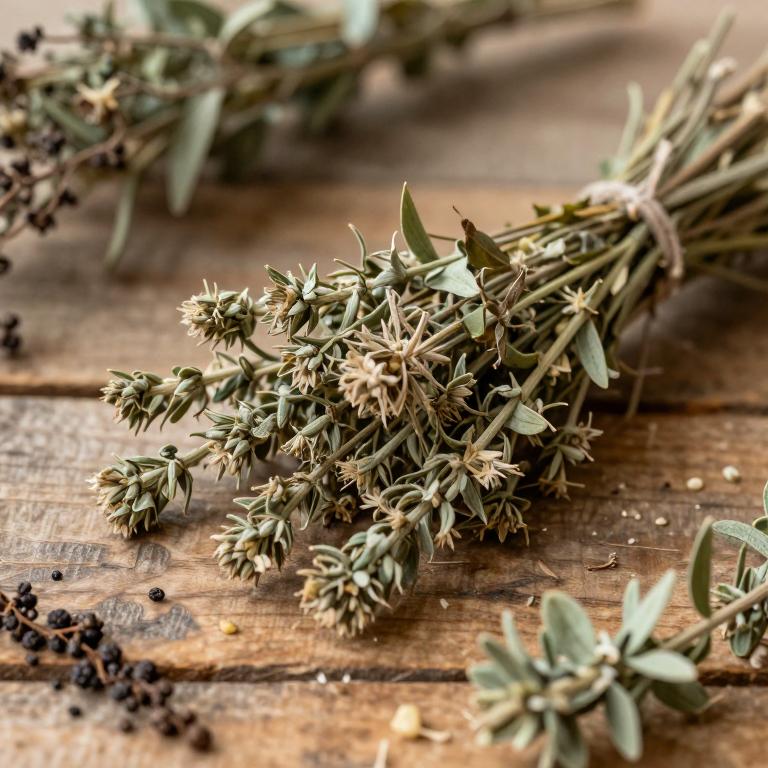
Names and Synonyms
Scientific Names
Accepted name
Centaurea spinosaSynonyms
- Acosta spinosa
- Centaurea spinosa var. tomentosa
- Centaurea tragacanthoides
- Centaurea cycladum
- Centaurea spinosa f. glabrata
- Centaurea spinosa var. tragacanthoides
Sources: Wikidata
Taxonomical Classification
This plant belongs to the kingdom Plantae and the phylum Streptophyta, falling under the class Equisetopsida and subclass Magnoliidae. Within the order Asterales, it is classified under the family Asteraceae. Specifically, it is identified by the genus Centaurea, where its species name is spinosa.
| Rank | Classification |
|---|---|
| Kingdom | Plantae |
| Phylum | Streptophyta |
| Class | Equisetopsida |
| Subclass | Magnoliidae |
| Order | Asterales |
| Family | Asteraceae |
| Genus | Centaurea |
Sources: The World Checklist of Vascular Plants (WCVP)
Distribution
This plant is primarily distributed across the southeastern regions of Europe. Within this area, it can be found growing in Greece and on the island of Kriti. Its range also extends into the European portion of Türkiye. Moving into Western Asia, the species is present throughout the East Aegean Islands. Finally, the plant's distribution encompasses the broader territory of Türkiye.
| Region | Area |
|---|---|
| Southeastern Europe | Greece |
| Southeastern Europe | Kriti |
| Southeastern Europe | Türkiye-in-Europe |
| Western Asia | East Aegean Is. |
| Western Asia | Türkiye |
Sources: The World Checklist of Vascular Plants (WCVP)
Botanical Identification
Life history
The life history of Centaurea spinosa is characterized by its growth habit as a chamaephyte, a life form where the perennating buds are located close to the soil surface, often protected by the plant's structural defenses. This species typically follows a perennial life cycle, establishing itself in rocky or calcareous habitats where it can endure seasonal fluctuations. During its developmental stages, the plant utilizes its low-lying stature to mitigate the effects of wind and temperature extremes, relying on its ability to maintain dormant buds near the ground level to survive adverse periods. As it matures, the plant focuses energy on the development of its characteristic spiny architecture, which serves both as a deterrent to herbivory and a means of stabilizing its position within its niche. Its reproductive cycle involves the production of inflorescences that facilitate pollination, after which seed dispersal allows for the colonization of new microsites, ensuring the continuity of the population across its specialized ecological range.
- Life form :
- chamaephyte
Morphology
The morphology of Centaurea spinosa is characterized by a robust, perennial growth habit, typically presenting as a branched herb or subshrub with a woody base. Its stems are erect, often stiff, and can exhibit varying degrees of branching, providing a structural framework for its foliage and inflorescences. The leaves are generally arranged oppositely or in whorls, displaying a lanceolate to linear shape with entire or slightly serrated margins, often possessing a somewhat leathery texture. The reproductive structures consist of distinctive flower heads typical of the Asteraceae family, featuring tubular florets enclosed within involucral bracts that may exhibit spiny or specialized margins. Regarding its ecological niche and growth habit, the plant is strictly terrestrial, lacking the adaptations required for aquatic or semiaquatic environments.
- Aquatic :
- terrestrial
Sources: Global Inventory of Floras and Traits (GIFT)
Chemicals
Centaurea spinosa has 3 reported phytochemicals identified across 0 scientific publications and several other databases. The most consistently reported chemicals include Cnicin, Flavonoids, Malacitanolide.
| Chemical | Supporting sources | Consensus |
|---|---|---|
| Cnicin | 1 supporting sources | ★☆☆☆☆ |
| Flavonoids | 1 supporting sources | ★☆☆☆☆ |
| Malacitanolide | 1 supporting sources | ★☆☆☆☆ |
Cnicin
- Journal of natural products
Flavonoids
- Journal of natural products
Malacitanolide
- Journal of natural products
Activities
Centaurea spinosa has 2 reported activities identified across 0 scientific publications and several other databases. The most consistently reported activities include Antibacterial, Cytotoxic.
| Activity | Supporting sources | Consensus |
|---|---|---|
| Antibacterial | 1 supporting sources | ★☆☆☆☆ |
| Cytotoxic | 1 supporting sources | ★☆☆☆☆ |
Antibacterial
- Journal of natural products
Cytotoxic
- Journal of natural products
Conditions
Centaurea spinosa has 2 reported investigations on conditions identified across 0 scientific publications and several other databases. The most consistently reported conditions include Gram-negative bacteria, Gram-positive bacteria.
| Condition | Supporting sources | Consensus |
|---|---|---|
| Gram-negative bacteria | 1 supporting sources | ★☆☆☆☆ |
| Gram-positive bacteria | 1 supporting sources | ★☆☆☆☆ |
Gram-negative bacteria
- Journal of natural products
Gram-positive bacteria
- Journal of natural products