Centaurea parviflora
Centaurea parviflora · Accepted scientific name
Scientific literature: Very Sparse (11 studies) · ★☆☆☆☆
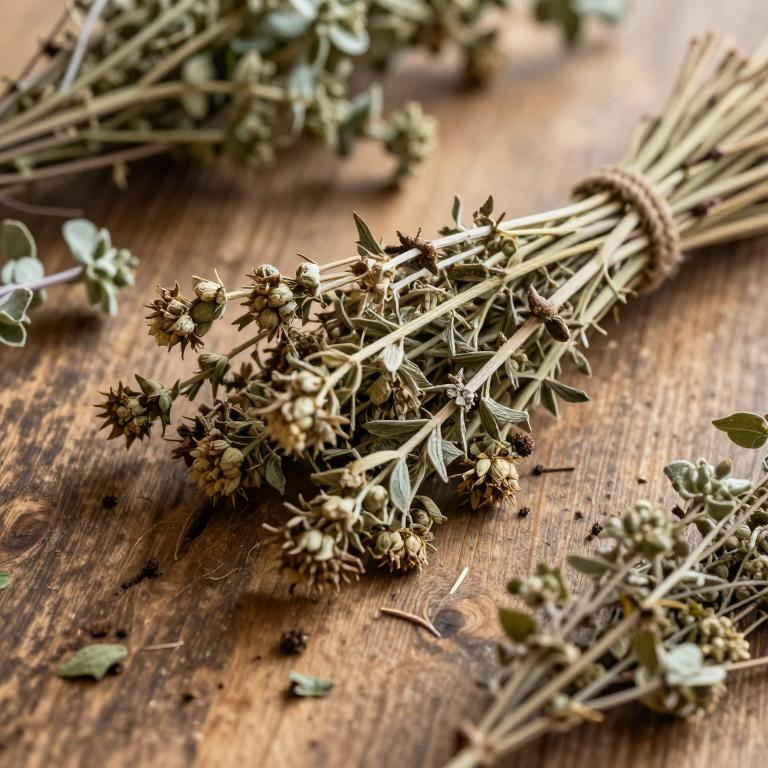
, scientifically known as Centaurea parviflora, is a remarkable medicinal herb valued for its diverse therapeutic properties. Often found in diverse ecosystems, this plant contains bioactive compounds used in traditional medicine to address various ailments. Understanding its chemical profile offers promising insights into its potential roles in modern pharmacology.
- Family
- Asteraceae
- Native range
- Europe
- Parts used
- Not available
- Common names
- Not available
- Scientific synonyms
- Not available
Names and Synonyms
Scientific Names
Accepted name
Centaurea parvifloraSources: Wikidata
Taxonomical Classification
This plant, Centaurea parviflora, belongs to the kingdom Plantae and the phylum Streptophyta. Within the class Equisetopsida and subclass Magnoliidae, it is further categorized under the order Asterales. Finally, it is classified under the family Asteraceae within the genus Centaurea.
| Rank | Classification |
|---|---|
| Kingdom | Plantae |
| Phylum | Streptophyta |
| Class | Equisetopsida |
| Subclass | Magnoliidae |
| Order | Asterales |
| Family | Asteraceae |
| Genus | Centaurea |
Sources: The World Checklist of Vascular Plants (WCVP)
Distribution
This plant exhibits a specific geographical distribution across the Mediterranean region. Within Southwestern Europe, its presence is notably documented in France. Moving across the sea to Northern Africa, the species can be found in Algeria. Furthermore, it is also distributed throughout the territory of Tunisia. Together, these locations define the primary natural range of Centaurea parviflora.
| Region | Area |
|---|---|
| Southwestern Europe | France |
| Northern Africa | Algeria |
| Northern Africa | Tunisia |
Sources: The World Checklist of Vascular Plants (WCVP)
Chemicals
Centaurea parviflora has 8 reported phytochemicals identified across 0 scientific publications and several other databases. The most consistently reported chemicals include Flavonoid, Flavonoids, Flavonol, Quercetin 3-O-glucoside, RUTIN.
| Chemical | Supporting sources | Consensus |
|---|---|---|
| Flavonoid | 1 supporting sources | ★☆☆☆☆ |
| Flavonoids | 1 supporting sources | ★☆☆☆☆ |
| Flavonol | 1 supporting sources | ★☆☆☆☆ |
| Quercetin 3-O-glucoside | 1 supporting sources | ★☆☆☆☆ |
| RUTIN | 1 supporting sources | ★☆☆☆☆ |
| flavonols | 1 supporting sources | ★☆☆☆☆ |
| polyphenols | 1 supporting sources | ★☆☆☆☆ |
| quinic acid | 1 supporting sources | ★☆☆☆☆ |
Flavonoid
- Molecules (Basel, Switzerland)
Flavonoids
- Molecules (Basel, Switzerland)
Flavonol
- Molecules (Basel, Switzerland)
Quercetin 3-O-glucoside
- Molecules (Basel, Switzerland)
RUTIN
- Molecules (Basel, Switzerland)
flavonols
- Molecules (Basel, Switzerland)
polyphenols
- Molecules (Basel, Switzerland)
quinic acid
- Molecules (Basel, Switzerland)
Activities
Centaurea parviflora has 2 reported activities identified across 0 scientific publications and several other databases. The most consistently reported activities include Antimicrobial, Antioxidant.
| Activity | Supporting sources | Consensus |
|---|---|---|
| Antimicrobial | 1 supporting sources | ★☆☆☆☆ |
| Antioxidant | 1 supporting sources | ★☆☆☆☆ |
Antimicrobial
- Molecules (Basel, Switzerland)
Antioxidant
- Molecules (Basel, Switzerland)
Preparations
Centaurea parviflora has 5 reported preparations identified across 0 scientific publications and several other databases. The most consistently reported preparations include butanol extract (BUE), chloroform extract (CHE), crude extract (CE), ethyl acetate extract (EAE), methanolic extract.
| Preparation | Supporting sources | Consensus |
|---|---|---|
| Butanol extract (bue) | 1 supporting sources | ★☆☆☆☆ |
| Chloroform extract (che) | 1 supporting sources | ★☆☆☆☆ |
| Crude extract (ce) | 1 supporting sources | ★☆☆☆☆ |
| Ethyl acetate extract (eae) | 1 supporting sources | ★☆☆☆☆ |
| Methanolic extract | 1 supporting sources | ★☆☆☆☆ |
Butanol extract (bue)
- Molecules (Basel, Switzerland)
Chloroform extract (che)
- Molecules (Basel, Switzerland)
Crude extract (ce)
- Molecules (Basel, Switzerland)
Ethyl acetate extract (eae)
- Molecules (Basel, Switzerland)
Methanolic extract
- Molecules (Basel, Switzerland)