Centaurea iberica
Centaurea iberica · Accepted scientific name
Scientific literature: Very Sparse (2 studies) · ★☆☆☆☆
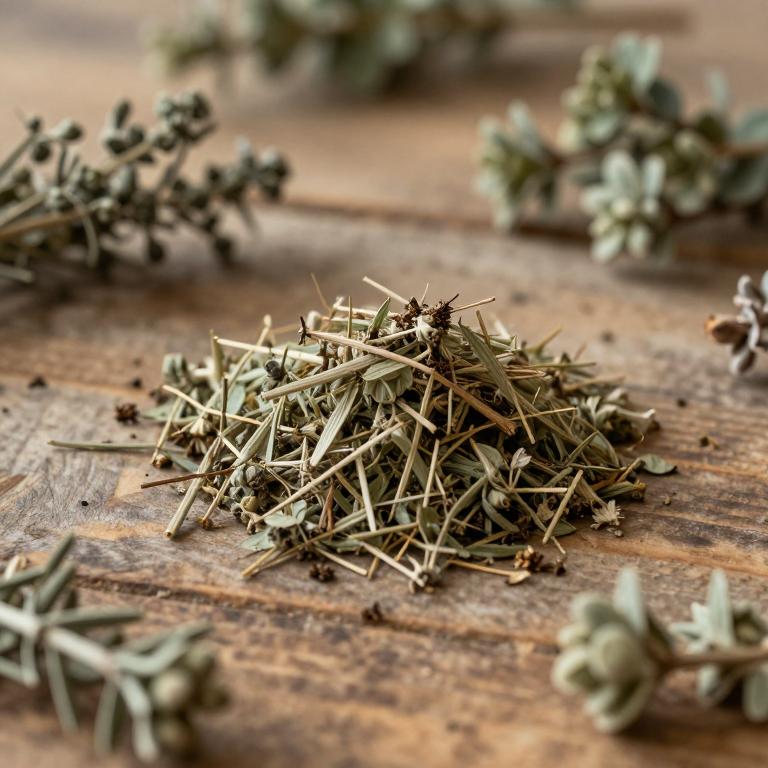
Centaurea iberica, scientifically known as Centaurea iberica, is a resilient perennial herb belonging to the Asteraceae family. Native to Mediterranean regions, this plant is valued in traditional herbalism for its diverse therapeutic potential. Its bioactive compounds offer promising applications in treating inflammatory conditions and supporting overall digestive wellness.
- Family
- Not available
- Native range
- Europe
- Parts used
- Leaf
- Common names
- Not available
- Scientific synonyms
- Not available
Names and Synonyms
Scientific Names
Accepted name
Centaurea ibericaDistribution
This plant exhibits a widespread presence across several distinct regions of the European continent. In Middle Europe, its range extends into the territories of Germany. Moving toward the Mediterranean, it can be found throughout Southwestern Europe, specifically within France. Its distribution also covers significant portions of Southeastern Europe, including Bulgaria and Greece. Finally, the species is also documented as growing within the borders of Italy.
| Region | Area |
|---|---|
| Middle Europe | Germany |
| Southwestern Europe | France |
| Southeastern Europe | Bulgaria |
| Southeastern Europe | Greece |
| Southeastern Europe | Italy |
| Southeastern Europe | Romania |
| Southeastern Europe | Sicilia |
| Southeastern Europe | Türkiye-in-Europe |
| Southeastern Europe | NW. Balkan Pen. |
| Eastern Europe | Belarus |
Sources: The World Checklist of Vascular Plants (WCVP)
Botanical Identification
Ecology
The ecology of Centaurea iberica is characterized by a versatile distribution across diverse topographical landscapes, including dumps, hills, mountains, and parks. It exhibits a broad altitudinal tolerance, spanning an elevational range that begins at sea level (0 m AMSL) and extends up to a maximum of 2400 m AMSL. Across its various habitats, the species maintains an average elevational range of approximately 650 m AMSL, allowing it to colonize both lowland disturbed sites and higher montane environments.
- Elevational range max:
- 2400 m AMSL
- Elevational range mean:
- 650 m AMSL
- Elevational range min:
- 0 m AMSL
- Habitat :
- dump,hills,mountains,parks
Life history
The life history of Centaurea iberica is characterized by a biennial lifecycle, meaning the plant typically completes its development over a period of two years, often spending the first year establishing a vegetative base before transitioning to reproductive maturity. In terms of its structural growth habit, this species is classified as a therophyte, a life form defined by its reliance on ephemeral aerial structures that complete their cycle within a single growing season, leaving behind seeds to survive unfavorable conditions. This specific life form, consistent across its botanical categorization as both a therophyte in its primary classification and its secondary structural designation, ensures that the plant can effectively navigate its environmental constraints through rapid seasonal growth and seed dispersal.
- Life form :
- therophyte
- Lifecycle :
- biennial
Morphology
The morphology of Centaurea iberica is characterized by a growth form typical of a non-woody herb and forb. This self-supporting plant reaches a height ranging from a minimum of 0.2 m to a maximum of 1 m, with an average height of approximately 0.6 m. It is a terrestrial species, functioning as an independent organism rather than a parasite or an epiphyte. As a non-climbing, self-supporting species, it maintains a stable structural form without the need for external support like lianas or vines.
- Aquatic :
- terrestrial
- Climber :
- self-supporting
- Epiphyte :
- terrestrial
- Growth form :
- herb
- Growth form :
- forb
- Parasite :
- independent
- Plant height max:
- 1 m
- Plant height mean:
- 0.6 m
- Plant height min:
- 0.2 m
- Woodiness :
- non-woody
Reproduction
The reproduction of Centaurea ibericas is characterized by a distinct flowering period that begins in May and extends through August. During this reproductive cycle, the plant produces fruits that exhibit specific morphological dimensions, with a mean length of 0.35 cm and a range spanning from a minimum of 0.3 cm to a maximum of 0.4 cm. The width of these fruits is highly consistent, maintaining a mean and maximum measurement of 0.2 cm, with a minimum width also recorded at 0.2 cm. The resulting seeds are quite lightweight, featuring a mean mass of approximately 0.0039783335 g. Individual seed masses vary, with the smallest recorded mass being 0.0016 g and the largest reaching up to 0.00509 g.
- Flowering time :
- May
- Flowering time :
- Aug
- Fruit length max:
- 0.4 cm
- Fruit length mean:
- 0.35 cm
- Fruit length min:
- 0.3 cm
- Fruit width max:
- 0.2 cm
- Seed mass max:
- 0.00509 g
- Seed mass mean:
- 0.0039783335 g
- Seed mass min:
- 0.0016 g
Sources: Global Inventory of Floras and Traits (GIFT)
Plant Parts
Centaurea iberica has 1 reported plant parts identified across 1 scientific publications and several other databases that are studied for medicinal purposes. The most consistently reported plant part include leaf.
| Plant part | Supporting sources | Consensus |
|---|---|---|
| Leaf | 1 supporting sources | ★☆☆☆☆ |
Leaf
- Journal of complementary & integrative medicine
Conditions
Centaurea iberica has 1 reported investigations on conditions identified across 1 scientific publications and several other databases. The most consistently reported conditions include insulin secretion.
| Condition | Supporting sources | Consensus |
|---|---|---|
| Insulin secretion | 1 supporting sources | ★☆☆☆☆ |
Insulin secretion
- Phytotherapy research : PTR
Preparations
Centaurea iberica has 2 reported preparations identified across 1 scientific publications and several other databases. The most consistently reported preparations include Dried ethanol extracts, lipophilic fractions.
| Preparation | Supporting sources | Consensus |
|---|---|---|
| Dried ethanol extracts | 1 supporting sources | ★☆☆☆☆ |
| Lipophilic fractions | 1 supporting sources | ★☆☆☆☆ |
Dried ethanol extracts
- Phytotherapy research : PTR
Lipophilic fractions
- Journal of complementary & integrative medicine