Cenostigma pluviosum
Cenostigma pluviosum · Accepted scientific name
Scientific literature: Very Sparse (6 studies) · ★☆☆☆☆
, scientifically known as Cenostiagmma pluviosum, is a remarkable medicinal plant valued in traditional healing practices. Renowned for its potent bioactive compounds, this species offers significant therapeutic potential. Researchers are increasingly exploring its unique properties to develop innovative treatments, highlighting its vital role in both ethnobotany and modern pharmacology.
- Family
- Fabaceae
- Native range
- Africa
- Parts used
- Fruit · Stem
- Common names
- Not available
- Scientific synonyms
- Poincianella Pluviosa · Caesalpinia Pluviosa
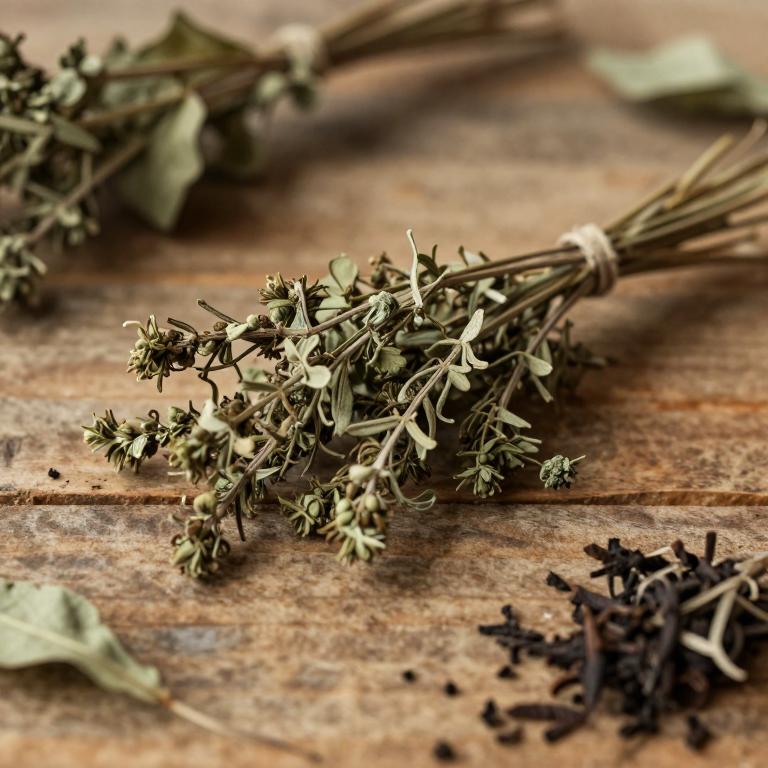
Names and Synonyms
Scientific Names
Accepted name
Cenostigma pluviosumSynonyms
- Poincianella pluviosa
- Caesalpinia pluviosa
Regional and Traditional Names
Spanish:
- Acacia amarilla
- Palo Brasil
Sources: Wikidata, Catalogue of Life
Taxonomical Classification
This plant, Cenostigma pluviosum, belongs to the kingdom Plantae and the phylum Streptophyta. Within the class Equisetopsida and subclass Magnoliidae, it is classified under the order Fabales and the family Fabaceae. Its taxonomic hierarchy concludes with the genus Cenostigmma.
| Rank | Classification |
|---|---|
| Kingdom | Plantae |
| Phylum | Streptophyta |
| Class | Equisetopsida |
| Subclass | Magnoliidae |
| Order | Fabales |
| Family | Fabaceae |
| Genus | Cenostigma |
Sources: The World Checklist of Vascular Plants (WCVP)
Distribution
This plant exhibits a broad and diverse geographical distribution spanning multiple continents. In East Tropical Africa, its presence is specifically noted within the borders of Kenya. Moving to the Americas, it can be found in Northern South America, specifically in Venezuela. The species also inhabits Western South America, with documented locations in both Bolivia and Peru. Finally, its range extends to Brazil, where it is located in the West-Central region.
| Region | Area |
|---|---|
| East Tropical Africa | Kenya |
| Northern South America | Venezuela |
| Western South America | Bolivia |
| Western South America | Peru |
| Brazil | Brazil West-Central |
| Brazil | Brazil Northeast |
| Brazil | Brazil Southeast |
| Brazil | Brazil North |
| Brazil | Brazil South |
| Southern South America | Argentina Northwest |
Sources: The World Checklist of Vascular Plants (WCVP)
Botanical Identification
Ecology
The ecology of Cenostima pluviosum is characterized by a broad altitudinal distribution that spans a significant vertical gradient within its habitat. This species can be found across a vast elevational range, beginning at sea level (0 m AMSL) and extending up to a maximum altitude of 1300 m AMSL. Throughout its environmental niche, the plant maintains a mean elevation of approximately 1480 m AMSL, reflecting its ability to adapt to diverse topographical conditions ranging from lowland areas to more elevated terrains.
- Elevational range max:
- 1300 m AMSL
- Elevational range mean:
- 1480 m AMSL
- Elevational range min:
- 0 m AMSL
Life history
The life history of Cenostiigma pluviosum is characterized by a perennial lifecycle, allowing the individual to persist across multiple growing seasons. Structurally, the plant is classified as a phanerophyte, a life form in which the perennating buds are located well above the ground, typically on branches or stems. This phanerophytic growth habit is further specified as a phanerophyte, ensuring its survival and continued development through various environmental conditions over its extended lifespan.
- Life form :
- phanerophyte
- Lifecycle :
- perennial
Morphology
The morphology of Cenostiigma pluviosum is characterized by its growth form as a woody tree, reaching an average plant height of 20 m, with a maximum potential height of 25 m. This species is strictly terrestrial in its habitat, neither aquatic nor epiphytic, and functions as an independent organism rather than a parasite. Although it possesses certain structural characteristics, it is categorized as self-supporting in terms of its climbing habit, meaning it does not function as a liana or a vine requiring external support to maintain its upright posture.
- Aquatic :
- terrestrial
- Climber :
- self-supporting
- Epiphyte :
- terrestrial
- Growth form :
- tree
- Parasite :
- independent
- Plant height max:
- 25 m
- Plant height mean:
- 20 m
- Woodiness :
- woody
Physiology
The physiology of Cenostima pluviosum is characterized by a C3 photosynthetic pathway, indicating a carbon fixation process typical of many temperate and tropical species that operate under non-extreme water-limited conditions. The plant's structural economy is reflected in its stem specific density (SSD), which maintains a uniform value of 770 mg/cm³ across its minimum, mean, and maximum recorded measurements, suggesting a consistent wood density throughout its development. Leaf morphology is defined by a Specific Leaf Area (SLA) of 251.06 cm²/g, a value that remains constant across its minimum, mean, and maximum observations, providing insight into its leaf mass per area and resource allocation strategies. Furthermore, the species does not function as a nitrogen fixer, meaning it relies on external soil nitrogen sources rather than symbiotic biological nitrogen fixation to meet its nutritional requirements.
- Nitrogen fixer :
- no
- Photosynthetic pathway :
- C3
- Specific Leaf Area (SLA) min:
- 251.06 cm²/g
- Stem specific density (SSD) min:
- 770 mg/cm³
Reproduction
The reproduction of Cenostiqmma pluviosum is driven by a biotic pollination syndrome, indicating that its reproductive success relies on living organisms rather than abiotic environmental factors. The primary mechanism for pollen transfer is mediated by insects, which serve as the essential biological vectors for this species. Within this insect-driven framework, the plant utilizes a diverse array of pollinators, specifically engaging various types of insects to ensure successful fertilization and genetic exchange.
- Pollination syndrome :
- insect
- Pollination syndrome :
- biotic
Sources: Global Inventory of Floras and Traits (GIFT)
Plant Parts
Cenostigma pluviosum has 2 reported plant parts identified across 2 scientific publications and several other databases that are studied for medicinal purposes. The most consistently reported plant part include fruit, stem.
| Plant part | Supporting sources | Consensus |
|---|---|---|
| Fruit | 1 supporting sources | ★☆☆☆☆ |
| Stem | 1 supporting sources | ★☆☆☆☆ |
Fruit
- Natural product research
Stem
- Malaria journal
Chemicals
Cenostigma pluviosum has 2 reported phytochemicals identified across 2 scientific publications and several other databases. The most consistently reported chemicals include EtOAc, quercetin.
| Chemical | Supporting sources | Consensus |
|---|---|---|
| EtOAc | 1 supporting sources | ★☆☆☆☆ |
| quercetin | 1 supporting sources | ★☆☆☆☆ |
EtOAc
- Natural product research
quercetin
- Malaria journal
Conditions
Cenostigma pluviosum has 1 reported investigations on conditions identified across 2 scientific publications and several other databases. The most consistently reported conditions include Spodoptera frugiperda.
| Condition | Supporting sources | Consensus |
|---|---|---|
| Spodoptera frugiperda | 1 supporting sources | ★☆☆☆☆ |
Spodoptera frugiperda
- Natural product research
Preparations
Cenostigma pluviosum has 6 reported preparations identified across 2 scientific publications and several other databases. The most consistently reported preparations include 100% ethanolic (F4), 50% methanolic (F5), Crude extract (CE), EtOH extract, bark.
| Preparation | Supporting sources | Consensus |
|---|---|---|
| 100% ethanolic (f4) | 1 supporting sources | ★☆☆☆☆ |
| 50% methanolic (f5) | 1 supporting sources | ★☆☆☆☆ |
| Crude extract (ce) | 1 supporting sources | ★☆☆☆☆ |
| Etoh extract | 1 supporting sources | ★☆☆☆☆ |
| Bark | 1 supporting sources | ★☆☆☆☆ |
| Fraction etoac of fruits (frea) | 1 supporting sources | ★☆☆☆☆ |
100% ethanolic (f4)
- Malaria journal
50% methanolic (f5)
- Malaria journal
Crude extract (ce)
- Malaria journal
Etoh extract
- Natural product research
Bark
- Journal of ethnopharmacology
Fraction etoac of fruits (frea)
- Natural product research