Indian millet
Cenchrus americanus · Accepted scientific name
Scientific literature: Very Sparse (11 studies) · ★☆☆☆☆
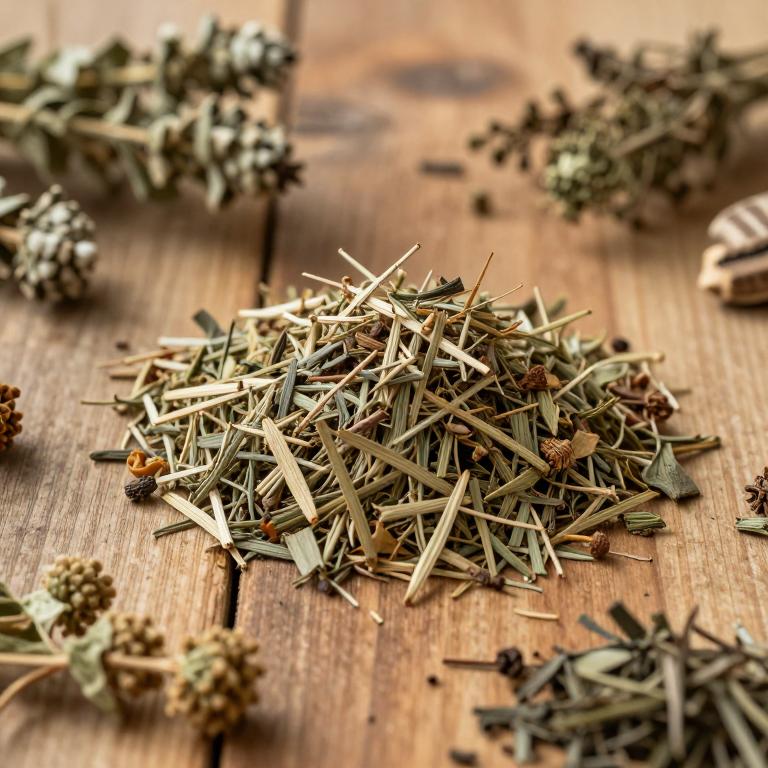
Indian millet, scientifically known as Cenchrus americanus, is a resilient annual grass valued for its nutritional and medicinal properties. Primarily grown as a staple cereal, it serves as a vital food source in various cultures. Beyond nutrition, it is recognized in traditional medicine for supporting overall health and wellness.
Names and Synonyms
Common Names
- Indian millet
- bajra
- bulrush millet
- cattail millet
- horse millet
- pearl millet
- African Millet
- American fountaingrass
- Babala
- Bullrush Millet
- Kaffir Millet
- Mhunga
- Poko Grass
- Pussy Grass
Scientific Names
Accepted name
Cenchrus americanusSynonyms
- Panicum spicatum
- Pennisetum echinurus
- Penicillaria involucrata
- Cenchrus spicatus
- Pennisetum americanum
- Setaria glauca
- Ixophorus glaucus
- Setariopsis glauca
- Chaetochloa glauca
- Chamaeraphis glauca
- Pennisetum typhoideum var. plukenetii
- Setaria lutescens var. parviflora
- Holcus racemosus
- Holcus spicatus
- Penicillaria willdenowii
- Pennisetum albicauda
- Pennisetum gambiense
- Pennisetum leonis
- Phleum africanum
- Panicum sericeum
- Panicum coeruleum
- Panicum americanum
- Panicum involucratum
- Pennisetum cereale
- Pennisetum cinereum
- Setaria sericea
- Pennisetum americanum subsp. spicatum
- Pennisetum americanum convar. spicatum
- Pennisetum americanum f. echinurus
- Pennisetum ancylochaete
- Penicillaria roxburghii
- Penicillaria solitaria
- Penicillaria spicata
- Penicillaria mossambicensis
- Penicillaria nigritarum
- Penicillaria deflexa
- Penicillaria arabica
- Pennisetum nigritarum
- Pennisetum nigritarum var. deflexum
- Pennisetum pycnostachyum
- Pennisetum plukenetii
- Pennisetum spicatum var. echinurus
- Pennisetum spicatum
- Pennisetum spicatum subsp. willdenowii
- Pennisetum solitarium
- Pennisetum megastachyum
- Pennisetum maiwa
- Pennisetum malacochaete
- Pennisetum glaucum
- Pennisetum gibbosum
- Pennisetum spicatum var. longipedunculatum
- Pennisetum spicatum var. macrostachyum
- Pennisetum typhoideum var. echinurus
- Setaria lutescens var. macrocarpa
Regional and Traditional Names
Spanish:
- mijo negro
- mijo perla
- Cola de zorra
German:
- Negerhirse
- Perlhirse
French:
- mil africain
- millet perle
- millet à chandelles
- mil
- petit mil
Sources: Wikidata, Catalogue of Life
Taxonomical Classification
This plant belongs to the kingdom Plantae and is classified within the phylum Streptophyta and the class Equisetopsida. It is further organized under the subclass Magnoliidae and the order Poales, falling within the family Poaceae. Finally, its taxonomic identity is defined by its placement in the genus Cenchrus.
| Rank | Classification |
|---|---|
| Kingdom | Plantae |
| Phylum | Streptophyta |
| Class | Equisetopsida |
| Subclass | Magnoliidae |
| Order | Poales |
| Family | Poaceae |
| Genus | Cenchrus |
Sources: The World Checklist of Vascular Plants (WCVP)
Distribution
This plant exhibits a broad geographical distribution across several regions of Europe. In Northern Europe, its presence is noted within Great Britain. Moving to Southwestern Europe, it can be found in both Spain and Sardegna. The species also extends into Southeastern Europe, specifically inhabiting Italy. Finally, its range reaches the European portion of Türkiye.
| Region | Area |
|---|---|
| Northern Europe | Great Britain |
| Southwestern Europe | Sardegna |
| Southwestern Europe | Spain |
| Southeastern Europe | Italy |
| Southeastern Europe | Türkiye-in-Europe |
| Eastern Europe | Belarus |
| Eastern Europe | Baltic States |
| Eastern Europe | Krym |
| Eastern Europe | Central European Russia |
| Eastern Europe | East European Russia |
Sources: The World Checklist of Vascular Plants (WCVP)
Botanical Identification
Ecology
The ecology of Cenchrus americanus is characterized by its ability to colonize anthropized areas (Área Antrópica), often thriving in environments modified by human activity. Its vertical distribution is quite broad, spanning an elevational range that begins at a minimum of 5 m AMSL and reaches a maximum of 1200 m AMSL. Despite this wide potential reach, its ecological presence is centered at a mean elevation of 0 m AMSL, suggesting a strong preference for lowland or near-sea-level habitats within disturbed landscapes.
- Elevational range max:
- 1200 m AMSL
- Elevational range mean:
- 0 m AMSL
- Elevational range min:
- 5 m AMSL
- Habitat :
- Área Antrópica
Life history
The life history of Cenchrus americanus is characterized by an annual lifecycle, meaning the plant completes its entire developmental process—from germination to seed production—within a single growing season. As a therophyte, its biological strategy focuses on rapid growth and reproduction, typically surviving the unfavorable seasons in the form of resistant seeds rather than maintaining vegetative structures above ground. This life form allows the species to efficiently exploit seasonal resources before senescing at the end of its cycle.
- Life form :
- therophyte
- Lifecycle :
- annual
Morphology
The morphology of Cenchrus americanus is characterized by its growth form as a non-woody herb with a graminoid habit. As a terrestrial plant, it is neither an epiphyte nor a parasite, functioning as an independent organism within its habitat. The plant exhibits an erect shoot orientation and possesses a self-supporting climbing mechanism, rather than being an obligatory or facultative vine. In terms of stature, its height is highly variable, with a minimum measurement of 0.04 m, a mean height of approximately 2.4 m, and a maximum potential height reaching up to 3 m.
- Aquatic :
- terrestrial
- Climber :
- self-supporting
- Epiphyte :
- terrestrial
- Growth form :
- herb
- Growth form :
- graminoid
- Parasite :
- independent
- Plant height max:
- 3 m
- Plant height mean:
- 2.4 m
- Plant height min:
- 0.04 m
- Shoot orientation :
- erect
- Woodiness :
- non-woody
Physiology
The physiology of Cenchrus americanus is characterized by a highly efficient photosynthetic pathway, utilizing the C4 mechanism to optimize carbon fixation and water-use efficiency. Its vegetative structure features elongated leaves, with dimensions typically ranging from a minimum length of 80 cm to a maximum length of 90 cm. The leaf width is comparatively narrow, varying between a minimum of 0.9 cm and a maximum of 5 cm. Regarding nutrient cycling and soil interaction, this species does not function as a nitrogen fixer, relying instead on available soil nitrogen rather than symbiotic atmospheric nitrogen fixation.
- Leaf length max:
- 90 cm
- Leaf length min:
- 80 cm
- Leaf width max:
- 5 cm
- Leaf width min:
- 0.9 cm
- Nitrogen fixer :
- no
- Photosynthetic pathway :
- C4
Reproduction
The reproduction of Ceanothus americanus is characterized by bisexual sexual reproduction, featuring inflorescences in the form of a panicle that typically measures between 0.2 and 0.5 meters in length. The flowering period occurs seasonally, starting in June and concluding in August. The plant utilizes an abiotic pollination syndrome, specifically relying on the wind for pollen transfer. Following successful pollination, it produces dry fruits that contain a high volume of seeds, often exceeding 1,000 seeds per fruit. These seeds are characterized by a mean mass of approximately 0.0042 g (ranging from a minimum of 0.0003 g to a maximum of 0.015 g) and a consistent seed volume of 6.9 mm³. Dispersal is achieved through an anemochorous syndrome, where the seeds are dispersed by the wind.
- Dispersal syndrome :
- anemochorous
- Flowering time :
- Jun
- Flowering time :
- Aug
- Fruit dryness :
- dry
- Inflorescence :
- panicle
- Inflorescence length max:
- 0.5 m
- Inflorescence length min:
- 0.2 m
- Pollination syndrome :
- wind
- Pollination syndrome :
- abiotic
- Reproduction sexual :
- bisexual
- Seed mass max:
- 0.015 g
- Seed mass mean:
- 0.0042000834 g
- Seed mass min:
- 3e-04 g
- Seed volume max:
- 6.9 mm³
- Seeds_per_fruit :
- >1000
Sources: Global Inventory of Floras and Traits (GIFT)
Chemicals
Cenchrus americanus has 10 reported phytochemicals identified across 0 scientific publications and several other databases. The most consistently reported chemicals include Flavonoids, GAMMA-CHLORDANE, HEPTACHLOR EPOXIDE, Tannin, Vitexin.
| Chemical | Supporting sources | Consensus |
|---|---|---|
| Flavonoids | 1 supporting sources | ★☆☆☆☆ |
| GAMMA-CHLORDANE | 1 supporting sources | ★☆☆☆☆ |
| HEPTACHLOR EPOXIDE | 1 supporting sources | ★☆☆☆☆ |
| Tannin | 1 supporting sources | ★☆☆☆☆ |
| Vitexin | 1 supporting sources | ★☆☆☆☆ |
| ZN | 1 supporting sources | ★☆☆☆☆ |
| dieldrin | 1 supporting sources | ★☆☆☆☆ |
| heptachlor | 1 supporting sources | ★☆☆☆☆ |
| oxalate | 1 supporting sources | ★☆☆☆☆ |
| tryptophan | 1 supporting sources | ★☆☆☆☆ |
Flavonoids
- Critical reviews in food science and nutrition
GAMMA-CHLORDANE
- Journal of environmental science and health. Part. B, Pesticides, food contaminants, and agricultural wastes
HEPTACHLOR EPOXIDE
- Journal of environmental science and health. Part. B, Pesticides, food contaminants, and agricultural wastes
Tannin
- Tropical and geographical medicine
Vitexin
- Pharmacological reports : PR
ZN
- Biometals : an international journal on the role of metal ions in biology, biochemistry, and medicine
dieldrin
- Journal of environmental science and health. Part. B, Pesticides, food contaminants, and agricultural wastes
heptachlor
- Journal of environmental science and health. Part. B, Pesticides, food contaminants, and agricultural wastes
oxalate
- Tropical and geographical medicine
tryptophan
- Advances in experimental medicine and biology