bittersweet
Celastrus · Accepted scientific name
Scientific literature: Very Sparse (16 studies) · ★☆☆☆☆
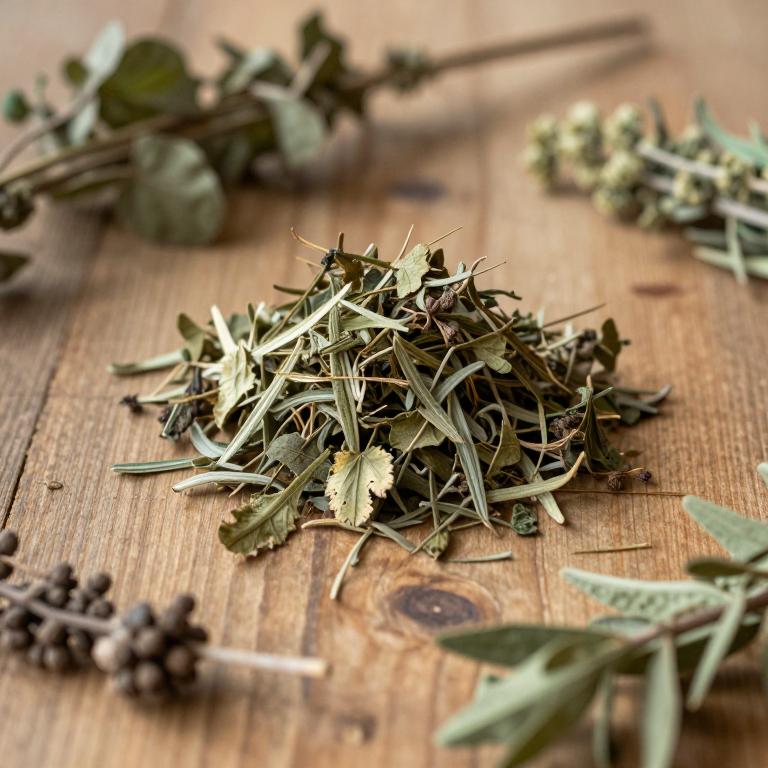
Bittersweet, scientifically known as Celastrus, is a versatile genus of deciduous climbing shrubs and vines. Renowned in traditional medicine for its neuroprotective properties, it is often used to enhance cognitive function and memory. These resilient plants feature distinctive woody stems and vibrant autumn foliage, making them both medicinal and ornamental.
Names and Synonyms
Common Names
- bittersweet
- Staff-vines
- bittersweets
- Staff vines
Scientific Names
Accepted name
CelastrusSynonyms
- Evonimoides
- Evonymoides
- Schieckea
- Monocelastrus
Regional and Traditional Names
German:
- Baumwürger
- Baumwürgergewächse
- Baumwürger
Sources: Wikidata, Catalogue of Life
Taxonomical Classification
This plant belongs to the kingdom Plantae within the phylum Streptophyta and the class Equisetopsida. It is further classified under the subclass Magnoliidae and the order Celastrales. Finally, it is a member of the family Celastraceae and falls under the genus Celastrus.
| Rank | Classification |
|---|---|
| Kingdom | Plantae |
| Phylum | Streptophyta |
| Class | Equisetopsida |
| Subclass | Magnoliidae |
| Order | Celastrales |
| Family | Celastraceae |
| Genus | Celastrus |
Sources: The World Checklist of Vascular Plants (WCVP)
Distribution
This plant exhibits a diverse geographical range spanning several distinct regions across the European continent. In Northern Europe, its presence can be identified within the territory of Great Britain. Moving into Middle Europe, the species is distributed across Germany, Poland, and the combined regions of Czechia and Slovakia. Furthermore, its range extends into Southeastern Europe, specifically within Bulgaria. Together, these locations highlight the plant's widespread occurrence across varied European landscapes.
| Region | Area |
|---|---|
| Northern Europe | Great Britain |
| Middle Europe | Czechia-Slovakia |
| Middle Europe | Germany |
| Middle Europe | Poland |
| Southeastern Europe | Bulgaria |
| Southeastern Europe | Romania |
| Eastern Europe | Baltic States |
| Eastern Europe | Ukraine |
| Western Indian Ocean | Madagascar |
| Russian Far East | Amur |
Sources: The World Checklist of Vascular Plants (WCVP)
Chemicals
Celastrus has 4 reported phytochemicals identified across 0 scientific publications and several other databases. The most consistently reported chemicals include Flavonoids, Lignans, Tetraterpenes, triterpenoids.
| Chemical | Supporting sources | Consensus |
|---|---|---|
| Flavonoids | 1 supporting sources | ★☆☆☆☆ |
| Lignans | 1 supporting sources | ★☆☆☆☆ |
| Tetraterpenes | 1 supporting sources | ★☆☆☆☆ |
| triterpenoids | 1 supporting sources | ★☆☆☆☆ |
Flavonoids
- Journal of ethnopharmacology
Lignans
- Journal of ethnopharmacology
Tetraterpenes
- Journal of ethnopharmacology
triterpenoids
- Journal of ethnopharmacology
Activities
Celastrus has 4 reported activities identified across 0 scientific publications and several other databases. The most consistently reported activities include Neuroprotective, Antimicrobial, Antitumor, Cytotoxic.
| Activity | Supporting sources | Consensus |
|---|---|---|
| Neuroprotective | 2 supporting sources | ★☆☆☆☆ |
| Antimicrobial | 1 supporting sources | ★☆☆☆☆ |
| Antitumor | 1 supporting sources | ★☆☆☆☆ |
| Cytotoxic | 1 supporting sources | ★☆☆☆☆ |
Neuroprotective
- Journal of ethnopharmacology
- PloS one
Antimicrobial
- Journal of ethnopharmacology
Antitumor
- Journal of ethnopharmacology
Cytotoxic
- Journal of ethnopharmacology
Conditions
Celastrus has 7 reported investigations on conditions identified across 0 scientific publications and several other databases. The most consistently reported conditions include cognitive dysfunction, dyspepsia, epilepsy, gout, insomnia.
| Condition | Supporting sources | Consensus |
|---|---|---|
| Cognitive dysfunction | 1 supporting sources | ★☆☆☆☆ |
| Dyspepsia | 1 supporting sources | ★☆☆☆☆ |
| Epilepsy | 1 supporting sources | ★☆☆☆☆ |
| Gout | 1 supporting sources | ★☆☆☆☆ |
| Insomnia | 1 supporting sources | ★☆☆☆☆ |
| Rheumatism | 1 supporting sources | ★☆☆☆☆ |
| Tumor | 1 supporting sources | ★☆☆☆☆ |
Cognitive dysfunction
- Journal of ethnopharmacology
Dyspepsia
- Journal of ethnopharmacology
Epilepsy
- Journal of ethnopharmacology
Gout
- Journal of ethnopharmacology
Insomnia
- Journal of ethnopharmacology
Rheumatism
- Journal of ethnopharmacology
Tumor
- Journal of ethnopharmacology