Cedar
Cedrela fissilis · Accepted scientific name
Scientific literature: Very Sparse (3 studies) · ★☆☆☆☆
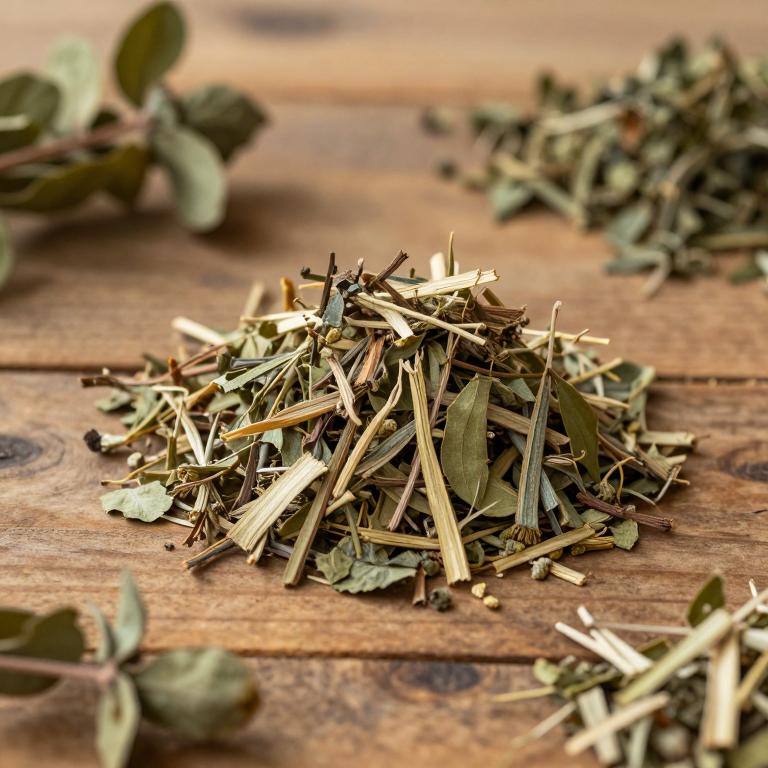
Cedar, scientifically known as Cedrela fissilis, is a majestic tropical tree native to South America. Renowned for its aromatic, durable timber, it also holds significant medicinal value. Traditionally, its bark and leaves are utilized in various cultures to treat inflammatory conditions, digestive issues, and skin ailments through herbal remedies.
- Family
- Not available
- Native range
- Southern America
- Parts used
- Leaf
- Common names
- Not available
- Scientific synonyms
- Not available
Names and Synonyms
Scientific Names
Accepted name
Cedrela fissilisRegional and Traditional Names
Spanish:
- Cedro
- Cedro Blanco
- Cedro Batata
- Cedro Branco
- Cedro Colorado
- Cedro Misionero
- Cedro Rosdao
- Cedro Vermelho
Sources: Wikidata
Distribution
This plant exhibits a broad geographical range spanning several regions across the Americas. In Central America, its presence is documented within the countries of Costa Rica, Honduras, and Panamá. Moving toward the Caribbean, it can also be found in Trinidad and Tobago. Its distribution extends further into Northern South America, specifically within French Guiana. Altogether, these locations highlight the diverse tropical environments where the species thrives.
| Region | Area |
|---|---|
| Central America | Costa Rica |
| Central America | Honduras |
| Central America | Panamá |
| Caribbean | Trinidad-Tobago |
| Northern South America | French Guiana |
| Northern South America | Guyana |
| Northern South America | Venezuela |
| Western South America | Bolivia |
| Western South America | Colombia |
| Western South America | Ecuador |
Sources: The World Checklist of Vascular Plants (WCVP)
Botanical Identification
Ecology
The ecology of Cedrela fissilis is characterized by its presence in diverse forest ecosystems, specifically inhabiting high forests (bosque alto), middle forests (bosque medio), and gallery forests. This species demonstrates a broad altitudinal distribution, thriving across a wide elevational range that begins at sea level (0 m AMSL) and extends up to a maximum altitude of 1800 m AMSL.
- Elevational range max:
- 1800 m AMSL
- Elevational range min:
- 0 m AMSL
- Habitat :
- Bosque alto, bosque medio, gallery forest
Life history
The life history of Cedrela fissilis is characterized by its nature as a perennial species, allowing it to persist in its ecosystem over many years through established growth cycles. As it matures, the plant exhibits a deciduous phenology, shedding its foliage seasonally, which is a key adaptive strategy for managing water resources and light availability within its natural habitat. This lifecycle allows it to undergo periods of dormancy and regrowth, ensuring long-term survival across varying environmental conditions.
- Deciduousness :
- deciduous
- Lifecycle :
- perennial
Morphology
The morphology of Cedrela fissilis is characterized by its growth form as a large, woody tree that functions as a self-supporting organism rather than a climber or liana. As a terrestrial species, it does not exhibit aquatic, semiaquatic, or epiphytic habits, maintaining an independent existence without being a parasite. The plant reaches significant dimensions, typically attaining a mean height of 25 m, though it can grow to a maximum height of 30 m.
- Aquatic :
- terrestrial
- Climber :
- self-supporting
- Epiphyte :
- terrestrial
- Growth form :
- tree
- Parasite :
- independent
- Plant height max:
- 30 m
- Plant height mean:
- 25 m
- Woodiness :
- woody
Physiology
The physiology of Cedrela fissilis is characterized by a C3 photosynthetic pathway, which dictates its metabolic processes for carbon fixation and energy production. As a C3 plant, it relies on the direct fixation of atmospheric carbon dioxide through the Calvin cycle, typically favoring environments with moderate temperatures and sufficient moisture to manage transpiration. Furthermore, this species is not a nitrogen fixer, meaning it lacks the symbiotic relationship with nitrogen-fixing bacteria required to convert atmospheric nitrogen into a usable form; consequently, its nutritional requirements for nitrogen must be met through the uptake of nitrates and ammonium from the soil substrate.
- Nitrogen fixer :
- no
- Photosynthetic pathway :
- C3
Reproduction
The reproduction of Cedrela fissilis is characterized by the production of winged seeds designed for anemochory, or wind dispersal, which facilitates the colonization of new forest gaps. The seeds produced by this species exhibit a highly uniform morphology and weight distribution, showing no significant variance across different samples. Specifically, the seed mass is remarkably consistent, with a measured mean of 0.037 g, a maximum value of 0.037 g, and a minimum value of 0.037 g. This lack of deviation in seed mass suggests a highly stabilized reproductive strategy, ensuring that each propagule possesses a standardized amount of nutrient reserves to support initial seedling establishment upon landing.
- Seed mass mean:
- 0.037 g
Sources: Global Inventory of Floras and Traits (GIFT)
Plant Parts
Cedrela fissilis has 1 reported plant parts identified across 3 scientific publications and several other databases that are studied for medicinal purposes. The most consistently reported plant part include leaf.
| Plant part | Supporting sources | Consensus |
|---|---|---|
| Leaf | 3 supporting sources | ★★☆☆☆ |
Leaf
- Fitoterapia
- Journal of ethnopharmacology
- Phytochemistry
Preparations
Cedrela fissilis has 2 reported preparations identified across 3 scientific publications and several other databases. The most consistently reported preparations include leaf aqueous extracts, water-soluble polysaccharide.
| Preparation | Supporting sources | Consensus |
|---|---|---|
| Leaf aqueous extracts | 1 supporting sources | ★☆☆☆☆ |
| Water-soluble polysaccharide | 1 supporting sources | ★☆☆☆☆ |
Leaf aqueous extracts
- Journal of ethnopharmacology
Water-soluble polysaccharide
- Phytochemistry