Pumpwood
Cecropia pachystachya · Accepted scientific name
Scientific literature: Sparse (60 studies) · ★★☆☆☆
Pumpwood, scientifically known as Cecropia pachystachyia, is a versatile tropical tree widely utilized in traditional medicine. Renowned for its bioactive properties, various parts of the plant are used to treat inflammation, skin ailments, and digestive issues. Exploring its chemical constituents offers promising potential for developing modern therapeutic treatments.
- Family
- Urticaceae
- Native range
- Asia-Tropical
- Parts used
- Leaf
- Common names
- Pumpwood
- Scientific synonyms
- Ambaiba Cyrtostachya · Ambaiba Lyratiflora · 19 more
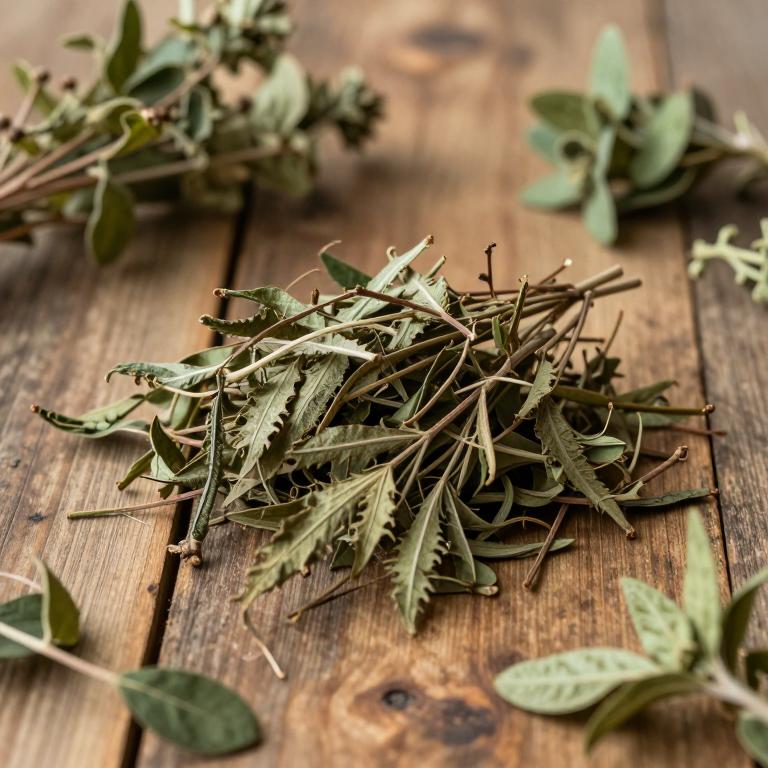
Names and Synonyms
Common Names
- Pumpwood
Scientific Names
Accepted name
Cecropia pachystachyaSynonyms
- Ambaiba cyrtostachya
- Ambaiba lyratiflora
- Ambaiba pachystachya
- Ambaiba tenoreana
- Cecropia adenopus
- Cecropia adenopus var. lata
- Cecropia adenopus var. lyratiloba
- Cecropia adenopus var. macrophylla
- Cecropia ambaci
- Cecropia adenopus var. oblonga
- Cecropia adenopus var. vulgaris
- Cecropia glauca
- Cecropia cyrtostachya
- Cecropia cinerea
- Cecropia carbonaria
- Cecropia catarinensis
- Cecropia lyratiloba
- Cecropia lyratiloba var. nana
- Ambaiba carbonaria
- Ambaiba cinerea
- Ambaiba adenopus
Regional and Traditional Names
Spanish:
- Ambay
Sources: Wikidata, Catalogue of Life
Taxonomical Classification
This plant belongs to the kingdom Plantae and the phylum Streptophyta, placing it within the class Equisetopsida and the subclass Magnoliidae. It is further classified under the order Rosales and the family Urticaceae. Within this botanical hierarchy, it is identified by the genus Cecropia.
| Rank | Classification |
|---|---|
| Kingdom | Plantae |
| Phylum | Streptophyta |
| Class | Equisetopsida |
| Subclass | Magnoliidae |
| Order | Rosales |
| Family | Urticaceae |
| Genus | Cecropia |
Sources: The World Checklist of Vascular Plants (WCVP)
Distribution
This plant exhibits a wide and diverse geographical distribution across several distinct regions of the world. Within the Malesia zone, it can be found inhabiting the areas of Jawa and Malaya. Its presence extends into the South-Central Pacific, specifically within the Cook Islands. In South America, the species is established in Brazil, appearing in both the West-Central and Northeast regions. Consequently, this species maintains a broad ecological footprint spanning tropical islands and vast continental territories.
| Region | Area |
|---|---|
| Malesia | Jawa |
| Malesia | Malaya |
| South-Central Pacific | Cook Is. |
| Brazil | Brazil West-Central |
| Brazil | Brazil Northeast |
| Brazil | Brazil Southeast |
| Brazil | Brazil North |
| Brazil | Brazil South |
| Southern South America | Argentina Northeast |
| Southern South America | Paraguay |
Sources: The World Checklist of Vascular Plants (WCVP)
Botanical Identification
Ecology
The ecology of Cecropia pachystachya is characterized by its adaptability across diverse topographical gradients and specific environmental niches. This species inhabits an elevational range starting from sea level (0 m AMSL) and extending up to a maximum altitude of 1200 m AMSL. Within these altitudinal limits, it is notably found in the Cerrado habitat, where it plays a functional role in the local ecosystem.
- Elevational range max:
- 1200 m AMSL
- Elevational range min:
- 0 m AMSL
- Habitat :
- Cerrado
Life history
The life history of Cecropia pachystachya is characterized by its status as a perennial species, allowing it to persist in its ecosystem over multiple years. As a phanerophyte, it maintains its buds well above the ground, typically manifesting as a tree-like structure that can reach significant heights. This plant exhibits an evergreen deciduousness pattern, retaining its foliage throughout much of its growth cycle to support continuous metabolic processes. Its biological strategy as a phanerophyte ensures its survival through various environmental conditions, establishing a stable presence within its tropical habitat.
- Deciduousness :
- evergreen
- Life form :
- phanerophyte
- Lifecycle :
- perennial
Morphology
The morphology of Cecropia pachystachya is characterized by its growth form as a woody tree, which functions as a self-supporting structure rather than a climber or liana. As a terrestrial species, it does not exhibit epiphytic or aquatic habits, nor does it act as a parasite, maintaining an independent life cycle. The plant reaches significant dimensions, with an average height of approximately 6 meters, though it can attain a maximum height of up to 12 meters.
- Aquatic :
- terrestrial
- Climber :
- self-supporting
- Epiphyte :
- terrestrial
- Growth form :
- tree
- Parasite :
- independent
- Plant height max:
- 12 m
- Plant height mean:
- 6 m
- Woodiness :
- woody
Physiology
The physiology of Cecropia pachystaicha is characterized by a C3 photosynthetic pathway, a common trait among many tropical woody species. Its leaf architecture and resource allocation strategies are reflected in a mean leaf size of 478.089 cm² and a Specific Leaf Area (SLA) that ranges from a minimum of 111 cm²/g to a mean of 175.021 cm²/g, although the provided maximum value is recorded at 111 cm²/g. The leaf dry matter content (LDMC) remains consistent across its measured range, with a mean, minimum, and maximum value of 292 mg/g, indicating a stable concentration of dry mass within the leaf tissue. Regarding structural density, the plant exhibits a mean stem specific density (SSD) of 460 mg/cm³. Furthermore, the species does not function as a nitrogen fixer, relying on other mechanisms for nutrient acquisition.
- Leaf dry matter content (LDMC) mean:
- 292 mg/g
- Leaf size mean:
- 478.089 cm²
- Nitrogen fixer :
- no
- Photosynthetic pathway :
- C3
- Specific Leaf Area (SLA) mean:
- 175.021 cm²/g
- Specific Leaf Area (SLA) min:
- 111 cm²/g
- Stem specific density (SSD) mean:
- 460 mg/cm³
Reproduction
The reproduction of Cecropia pachystachya is characterized by specific morphological and biological traits of its seeds and fruits. The plant produces fleshy fruits, which suggests a dispersal mechanism likely involving biotic agents. The seeds themselves are quite small and uniform in their dimensions, exhibiting a consistent seed length with a mean, minimum, and maximum value of 1.688 mm. The seed mass is also highly stable, recorded at a constant 0.00085 g for both minimum and maximum values. In terms of volume, the seeds show a degree of variation, ranging from a minimum of 0.00052 mm³ to a maximum of 4.2 mm³, with an overall mean seed volume of approximately 2.10557 mm³. Furthermore, the reproductive process is governed by a lack of self-fertilization, as the trait for self-fertilization is documented as absent, indicating that the species relies on cross-pollination to ensure genetic diversity.
- Fruit dryness :
- fleshy
- Seed length mean:
- 1.688 mm
- Seed mass mean:
- 0.00085 g
- Seed volume max:
- 4.2 mm³
- Seed volume mean:
- 2.10557 mm³
- Seed volume min:
- 0.00052 mm³
- Self fertilization :
- absent
Sources: Global Inventory of Floras and Traits (GIFT)
Plant Parts
Cecropia pachystachya has 1 reported plant parts identified across 3 scientific publications and several other databases that are studied for medicinal purposes. The most consistently reported plant part include leaf.
| Plant part | Supporting sources | Consensus |
|---|---|---|
| Leaf | 3 supporting sources | ★★☆☆☆ |
Leaf
- Journal of ethnopharmacology
- Parasite immunology
- Phytochemical analysis : PCA
Chemicals
Cecropia pachystachya has 9 reported phytochemicals identified across 3 scientific publications and several other databases. The most consistently reported chemicals include Isoorientin, Orientin, CHLOROGENIC ACID, Isovitexin, Flavonoids.
| Chemical | Supporting sources | Consensus |
|---|---|---|
| Isoorientin | 3 supporting sources | ★★☆☆☆ |
| Orientin | 3 supporting sources | ★★☆☆☆ |
| CHLOROGENIC ACID | 2 supporting sources | ★☆☆☆☆ |
| Isovitexin | 2 supporting sources | ★☆☆☆☆ |
| Flavonoids | 1 supporting sources | ★☆☆☆☆ |
| Proanthocyanidins | 1 supporting sources | ★☆☆☆☆ |
| Procyanidins | 1 supporting sources | ★☆☆☆☆ |
| Tannin | 1 supporting sources | ★☆☆☆☆ |
| VITEXINA | 1 supporting sources | ★☆☆☆☆ |
Isoorientin
- Clinical and experimental pharmacology & physiology
- Journal of ethnopharmacology
- Phytochemical analysis : PCA
Orientin
- Clinical and experimental pharmacology & physiology
- Journal of ethnopharmacology
- Phytochemical analysis : PCA
CHLOROGENIC ACID
- Journal of ethnopharmacology
- Phytochemical analysis : PCA
Isovitexin
- Clinical and experimental pharmacology & physiology
- Journal of ethnopharmacology
Flavonoids
- Journal of ethnopharmacology
Proanthocyanidins
- Journal of ethnopharmacology
Procyanidins
- Phytochemical analysis : PCA
Tannin
- Journal of ethnopharmacology
VITEXINA
- Phytochemical analysis : PCA
Activities
Cecropia pachystachya has 10 reported activities identified across 3 scientific publications and several other databases. The most consistently reported activities include Antiasthmatic, Antigenotoxic, Antimicrobial, Antioxidant, Diuretic.
| Activity | Supporting sources | Consensus |
|---|---|---|
| Antiasthmatic | 1 supporting sources | ★☆☆☆☆ |
| Antigenotoxic | 1 supporting sources | ★☆☆☆☆ |
| Antimicrobial | 1 supporting sources | ★☆☆☆☆ |
| Antioxidant | 1 supporting sources | ★☆☆☆☆ |
| Diuretic | 1 supporting sources | ★☆☆☆☆ |
| Expectorant | 1 supporting sources | ★☆☆☆☆ |
| Genotoxic | 1 supporting sources | ★☆☆☆☆ |
| Hypoglycemic | 1 supporting sources | ★☆☆☆☆ |
| Mutagenic | 1 supporting sources | ★☆☆☆☆ |
| Neuroprotective | 1 supporting sources | ★☆☆☆☆ |
Antiasthmatic
- Journal of ethnopharmacology
Antigenotoxic
- Journal of ethnopharmacology
Antimicrobial
- Parasite immunology
Antioxidant
- Journal of ethnopharmacology
Diuretic
- Journal of ethnopharmacology
Expectorant
- Journal of ethnopharmacology
Genotoxic
- Journal of ethnopharmacology
Hypoglycemic
- Journal of ethnopharmacology
Mutagenic
- Journal of ethnopharmacology
Neuroprotective
- Journal of ethnopharmacology
Conditions
Cecropia pachystachya has 18 reported investigations on conditions identified across 3 scientific publications and several other databases. The most consistently reported conditions include asthma, inflammation, anxiety, bronchitis, cardiovascular diseases.
| Condition | Supporting sources | Consensus |
|---|---|---|
| Asthma | 2 supporting sources | ★☆☆☆☆ |
| Inflammation | 2 supporting sources | ★☆☆☆☆ |
| Anxiety | 1 supporting sources | ★☆☆☆☆ |
| Bronchitis | 1 supporting sources | ★☆☆☆☆ |
| Cardiovascular diseases | 1 supporting sources | ★☆☆☆☆ |
| Cough | 1 supporting sources | ★☆☆☆☆ |
| Glucose intolerance | 1 supporting sources | ★☆☆☆☆ |
| Hyperglycemia | 1 supporting sources | ★☆☆☆☆ |
| Hypoglycemic | 1 supporting sources | ★☆☆☆☆ |
| Kidney diseases | 1 supporting sources | ★☆☆☆☆ |
Asthma
- Pharmaceutical biology
- Journal of ethnopharmacology
Inflammation
- Journal of ethnopharmacology
- Pharmaceutical biology
Anxiety
- Pharmaceutical biology
Bronchitis
- Pharmaceutical biology
Cardiovascular diseases
- Journal of ethnopharmacology
Cough
- Journal of ethnopharmacology
Glucose intolerance
- Journal of ethnopharmacology
Hyperglycemia
- Journal of ethnopharmacology
Hypoglycemic
- Journal of ethnopharmacology
Kidney diseases
- Journal of ethnopharmacology
Preparations
Cecropia pachystachya has 11 reported preparations identified across 3 scientific publications and several other databases. The most consistently reported preparations include CP extract, EFF-CP, crude aqueous extract of C. pachystachya (CAE-Cp) leaves, enriched flavonoid fraction, flavonoid fraction (FF).
| Preparation | Supporting sources | Consensus |
|---|---|---|
| Cp extract | 1 supporting sources | ★☆☆☆☆ |
| Eff-cp | 1 supporting sources | ★☆☆☆☆ |
| Crude aqueous extract of c. pachystachya (cae-cp) leaves | 1 supporting sources | ★☆☆☆☆ |
| Enriched flavonoid fraction | 1 supporting sources | ★☆☆☆☆ |
| Flavonoid fraction (ff) | 1 supporting sources | ★☆☆☆☆ |
| Methanol extract (me) | 1 supporting sources | ★☆☆☆☆ |
| Methanol extracts | 1 supporting sources | ★☆☆☆☆ |
| Methanolic extract from the leaves of cecropia pachystachya | 1 supporting sources | ★☆☆☆☆ |
| Methanolic extracts | 1 supporting sources | ★☆☆☆☆ |
| Syrups | 1 supporting sources | ★☆☆☆☆ |
Cp extract
- Journal of ethnopharmacology
Eff-cp
- Journal of ethnopharmacology
Crude aqueous extract of c. pachystachya (cae-cp) leaves
- Journal of ethnopharmacology
Enriched flavonoid fraction
- Journal of ethnopharmacology
Flavonoid fraction (ff)
- Clinical and experimental pharmacology & physiology
Methanol extract (me)
- Clinical and experimental pharmacology & physiology
Methanol extracts
- Fitoterapia
Methanolic extract from the leaves of cecropia pachystachya
- Journal of ethnopharmacology
Methanolic extracts
- Phytochemical analysis : PCA
Syrups
- Phytochemical analysis : PCA