Cecropia hololeuca
Cecropia hololeuca · Accepted scientific name
Scientific literature: Very Sparse (11 studies) · ★☆☆☆☆
Cecropia hololeuca, scientifically known as Cecropia hololeuca, is a significant medicinal plant native to tropical regions. Renowned for its diverse therapeutic properties, it is traditionally utilized in various cultures to treat inflammation, infections, and digestive issues. Understanding its botanical characteristics is essential for exploring its vast pharmacological potential.
- Family
- Urticaceae
- Native range
- Southern America
- Parts used
- Not available
- Common names
- Not available
- Scientific synonyms
- Ambaiba Hololeuca
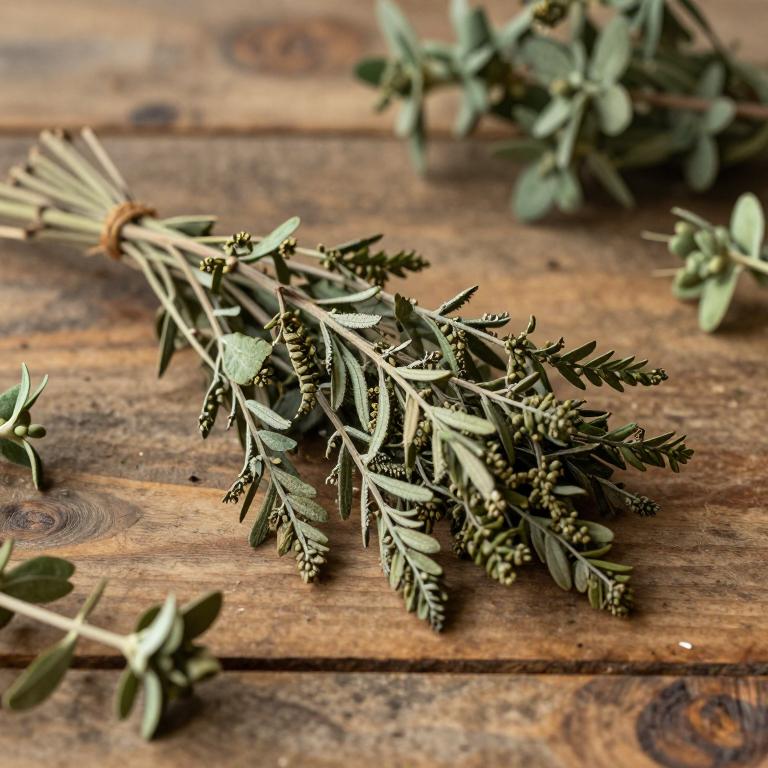
Names and Synonyms
Scientific Names
Accepted name
Cecropia hololeucaSynonyms
- Ambaiba hololeuca
Sources: Wikidata, Catalogue of Life
Taxonomical Classification
This plant belongs to the kingdom Plantae within the phylum Streptophyta and the class Equisetopsida. It is further classified under the subclass Magnoliidae, the order Rosalales, and the family Urticaceae. Finally, it is identified by the genus Cecropia, specifically as the species Cecropia hololeuca.
| Rank | Classification |
|---|---|
| Kingdom | Plantae |
| Phylum | Streptophyta |
| Class | Equisetopsida |
| Subclass | Magnoliidae |
| Order | Rosales |
| Family | Urticaceae |
| Genus | Cecropia |
Sources: The World Checklist of Vascular Plants (WCVP)
Distribution
This plant is characterized by a specific range within the South American continent. Its presence is notably recorded across several regions of Brazil. Specifically, it can be found inhabiting the Northeast region of the country. Additionally, the species extends its reach into the Southeast territory of Brazil. These two distinct areas define the known geographical distribution of Cecropia hololeuca.
| Region | Area |
|---|---|
| Brazil | Brazil Northeast |
| Brazil | Brazil Southeast |
Sources: The World Checklist of Vascular Plants (WCVP)
Botanical Identification
Ecology
The ecology of Cecropia hololeuca is characterized by its occurrence across diverse forest biomes, specifically inhabiting Floresta Estacional Semidecidual, Floresta Ombrófila (also known as Floresta Pluvial), and Floresta Ombrófila Mista. As a pioneer species, its distribution is closely tied to these specific vegetation structures, where it plays a crucial role in forest succession. In these environments, the plant thrives in areas of high light availability, often colonizing gaps created by disturbances such as treefalls or natural clearing processes. Its presence within these varied forest types—ranging from seasonal semi-deciduous forests to more humid ombrophilous and mixed forests—demonstrates a capacity to adapt to differing precipitation patterns and seasonal moisture fluctuations while maintaining its ecological function as a rapid-growth stabilizer in emerging forest stages.
- Habitat :
- Floresta Estacional Semidecidual, Floresta Ombrófila (= Floresta Pluvial), Floresta Ombrófila Mista
Life history
The life history of Cecropia hololeuca is characterized by its nature as a perennial species, allowing it to persist in its ecosystem over multiple growing seasons. Throughout its development, the plant maintains an evergreen status, retaining its foliage continuously rather than shedding it seasonally. This combination of a long-lived life cycle and constant leaf presence supports its ecological role and sustained biological activity.
- Deciduousness :
- evergreen
- Lifecycle :
- perennial
Morphology
The morphology of Cecropia hololeuca is characterized by its stature as a woody tree, typically reaching a mean height of 8 m, though it can grow as tall as 25 m. As a terrestrial species, it does not exhibit aquatic or semiaquatic tendencies, nor does it function as an epiphyte, remaining strictly grounded in its habitat. The plant is a self-supporting organism, lacking any climbing, liana, or vine-like growth habits, and it operates as an independent species without any parasitic requirements. Its structural integrity is defined by its woody nature, supporting its development into a robust tree form.
- Aquatic :
- terrestrial
- Climber :
- self-supporting
- Epiphyte :
- terrestrial
- Growth form :
- tree
- Parasite :
- independent
- Plant height max:
- 25 m
- Plant height mean:
- 8 m
- Woodiness :
- woody
Physiology
The physiology of Cecropia hololeuca is characterized by a C3 photosynthetic pathway, which dictates its carbon fixation processes and metabolic efficiency in its native environment. The plant exhibits a highly consistent Specific Leaf Area (SLA) with a mean, minimum, and maximum value of 83 cm²/g, reflecting a uniform leaf morphology and resource allocation strategy regarding leaf thickness and surface area. Regarding its structural composition, the species possesses a stem specific density (SSD) with a mean value of 430 mg/cm³, providing insight into its wood density and mechanical support capabilities. Furthermore, Cecropia hololeuca does not function as a nitrogen fixer, meaning it relies on soil nutrient availability rather than symbiotic nitrogen-fixing mechanisms to meet its nitrogen requirements.
- Nitrogen fixer :
- no
- Photosynthetic pathway :
- C3
- Specific Leaf Area (SLA) min:
- 83 cm²/g
- Stem specific density (SSD) mean:
- 430 mg/cm³
Reproduction
The reproduction of Cecropia hololeuca is characterized by specific botanical traits that facilitate its propagation. The species produces fleshy fruits, a characteristic that often aids in seed dispersal through biotic agents. The seeds themselves are highly uniform in size and weight; they possess a consistent seed volume of 14 mm³, with no deviation between the minimum, maximum, and mean values. Correspondingly, the seed mass is also remarkably stable, maintaining a constant mass of 0.003 g across the minimum, maximum, and mean measurements. Furthermore, the reproductive biology of this plant indicates that self-fertilization is absent, suggesting a reliance on cross-pollination to ensure genetic diversity within its populations.
- Fruit dryness :
- fleshy
- Seed mass mean:
- 0.003 g
- Seed volume max:
- 14 mm³
- Self fertilization :
- absent
Sources: Global Inventory of Floras and Traits (GIFT)
Chemicals
Cecropia hololeuca has 4 reported phytochemicals identified across 0 scientific publications and several other databases. The most consistently reported chemicals include CHLOROGENIC ACID, Isoorientin, Orientin, Procyanidins.
| Chemical | Supporting sources | Consensus |
|---|---|---|
| CHLOROGENIC ACID | 1 supporting sources | ★☆☆☆☆ |
| Isoorientin | 1 supporting sources | ★☆☆☆☆ |
| Orientin | 1 supporting sources | ★☆☆☆☆ |
| Procyanidins | 1 supporting sources | ★☆☆☆☆ |
CHLOROGENIC ACID
- Phytochemical analysis : PCA
Isoorientin
- Phytochemical analysis : PCA
Orientin
- Phytochemical analysis : PCA
Procyanidins
- Phytochemical analysis : PCA
Activities
Cecropia hololeuca has 1 reported activities identified across 0 scientific publications and several other databases. The most consistently reported activities include Antimalarial.
| Activity | Supporting sources | Consensus |
|---|---|---|
| Antimalarial | 1 supporting sources | ★☆☆☆☆ |
Antimalarial
- Journal of ethnobiology and ethnomedicine
Conditions
Cecropia hololeuca has 6 reported investigations on conditions identified across 0 scientific publications and several other databases. The most consistently reported conditions include anxiety, asthma, bronchitis, inflammation, malaria.
| Condition | Supporting sources | Consensus |
|---|---|---|
| Anxiety | 1 supporting sources | ★☆☆☆☆ |
| Asthma | 1 supporting sources | ★☆☆☆☆ |
| Bronchitis | 1 supporting sources | ★☆☆☆☆ |
| Inflammation | 1 supporting sources | ★☆☆☆☆ |
| Malaria | 1 supporting sources | ★☆☆☆☆ |
| Respiratory diseases | 1 supporting sources | ★☆☆☆☆ |
Anxiety
- Pharmaceutical biology
Asthma
- Pharmaceutical biology
Bronchitis
- Pharmaceutical biology
Inflammation
- Pharmaceutical biology
Malaria
- Journal of ethnobiology and ethnomedicine
Respiratory diseases
- Phytochemical analysis : PCA