Catharanthus ovalis
Catharanthus ovalis · Accepted scientific name
Scientific literature: Very Sparse (6 studies) · ★☆☆☆☆
Catharanthus ovalis, scientifically known as Catharanthus ovalis, is a significant medicinal shrub valued for its diverse therapeutic properties. Belonging to the Apocynaceae family, this plant contains potent alkaloids used in traditional healing. Research focuses on its potential pharmacological applications, particularly in treating various ailments and supporting holistic wellness.
- Family
- Apocynaceae
- Native range
- Africa
- Parts used
- Leaf
- Common names
- Not available
- Scientific synonyms
- Catharanthus Ovalis Subsp. Grandiflorus · Catharanthus Ovalis Var. Tomentellus
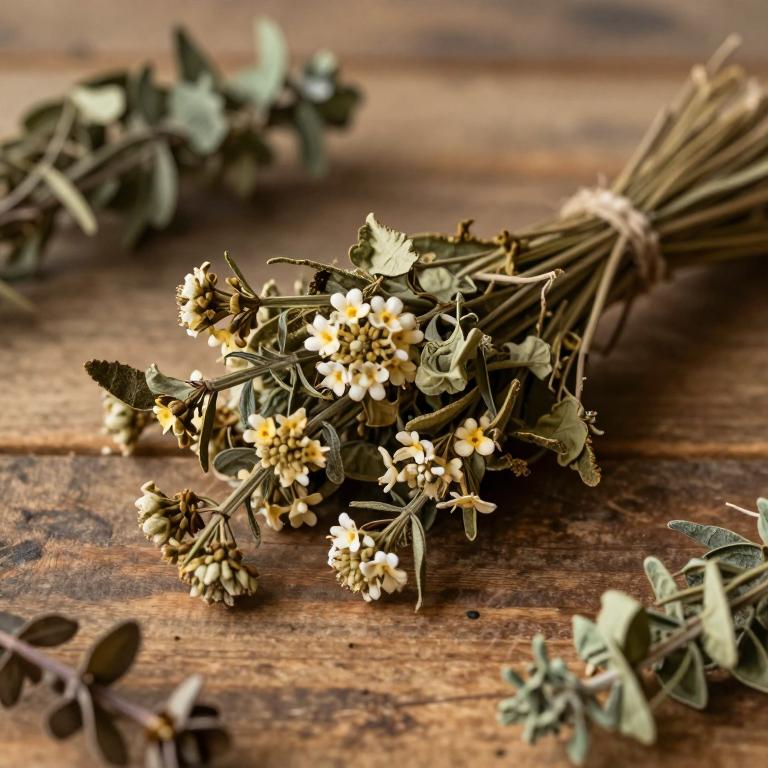
Names and Synonyms
Scientific Names
Accepted name
Catharanthus ovalisSynonyms
- Catharanthus ovalis subsp. grandiflorus
- Catharanthus ovalis var. tomentellus
Sources: Wikidata
Taxonomical Classification
This plant belongs to the kingdom Plantae and the phylum Streptophyta, falling under the class Equisetopsida and subclass Magnoliidae. Within the order Gentianaales, it is classified under the family Apocynaceae. Finally, its specific taxonomic designation is within the genus Catharanthus.
| Rank | Classification |
|---|---|
| Kingdom | Plantae |
| Phylum | Streptophyta |
| Class | Equisetopsida |
| Subclass | Magnoliidae |
| Order | Gentianales |
| Family | Apocynaceae |
| Genus | Catharanthus |
Sources: The World Checklist of Vascular Plants (WCVP)
Distribution
This plant is characterized by a very specific and localized geographical range. Its natural habitat is found exclusively within the Western Indian Ocean region. More specifically, the species is endemic to the island of Madagascar. Because of this limited occurrence, it is not found growing wild in other parts of the world. This unique distribution makes the plant a significant part of the island's local biodiversity.
| Region | Area |
|---|---|
| Western Indian Ocean | Madagascar |
Sources: The World Checklist of Vascular Plants (WCVP)
Botanical Identification
Life history
The life history of Catharanthus ovalis is characterized by its status as a perennial plant, allowing it to persist through multiple growing seasons. In terms of its structural life form, the species is classified as a hemicryptophyte, a growth habit where the perennating buds are located at the soil surface or just below it, protected by leaf litter or soil. This specific life form, consistent across its developmental classification as a hemicryptophyte, enables the plant to endure varying environmental conditions by maintaining its regenerative capacity at the ground level.
- Life form :
- hemicryptophyte
- Lifecycle :
- perennial
Morphology
The morphology of Catharanthus ovalis is characterized by a growth form classified as a herb, typically reaching an average plant height of 0.4 m. It functions as a self-supporting plant rather than a climber and maintains an independent status, not acting as a parasite. The species is strictly terrestrial in its ecological habit, meaning it is neither aquatic nor an epiphyte. In terms of structural composition, the plant is non-woody, lacking the lignified tissues found in more robust woody species.
- Aquatic :
- terrestrial
- Climber :
- self-supporting
- Epiphyte :
- terrestrial
- Growth form :
- herb
- Parasite :
- independent
- Plant height mean:
- 0.4 m
- Woodiness :
- non-woody
Physiology
The physiology of Catharanthus ovalis is characterized by specialized metabolic pathways geared toward the synthesis of complex indole alkaloids, which serve as secondary metabolites for chemical defense. Its physiological processes include efficient photosynthetic activity to support growth in coastal or rocky environments, where it manages osmotic stress through specific cellular adaptations. Regarding its nutrient acquisition and symbiotic capabilities, the plant does not function as a nitrogen fixer; it lacks the specialized root nodules or symbiotic relationships with diazotrophic bacteria required to convert atmospheric nitrogen into usable forms, meaning it relies entirely on the uptake of available nitrates and ammonium from the soil.
- Nitrogen fixer :
- no
Reproduction
Reproduction in Catharanthus ovalis is primarily driven by sexual processes mediated by specialized floral structures. The plant exhibits a reproductive strategy where self-fertilization is present, allowing for the development of seeds even in the absence of external pollinators, though cross-pollination remains a significant factor for genetic diversity. The flowering stage involves the production of nectar-rich blossoms designed to attract specific insect vectors, facilitating the transfer of pollen. Following successful fertilization, the plant develops seed capsules that eventually mature and dehisce, releasing seeds into the environment to initiate the next generation.
- Self fertilization :
- present
Sources: Global Inventory of Floras and Traits (GIFT)
Plant Parts
Catharanthus ovalis has 1 reported plant parts identified across 1 scientific publications and several other databases that are studied for medicinal purposes. The most consistently reported plant part include leaf.
| Plant part | Supporting sources | Consensus |
|---|---|---|
| Leaf | 1 supporting sources | ★☆☆☆☆ |
Leaf
- Frontiers in pharmacology
Chemicals
Catharanthus ovalis has 2 reported phytochemicals identified across 1 scientific publications and several other databases. The most consistently reported chemicals include CARVACROL, METHYL STEARATE.
| Chemical | Supporting sources | Consensus |
|---|---|---|
| CARVACROL | 1 supporting sources | ★☆☆☆☆ |
| METHYL STEARATE | 1 supporting sources | ★☆☆☆☆ |
CARVACROL
- Frontiers in pharmacology
METHYL STEARATE
- Frontiers in pharmacology
Activities
Catharanthus ovalis has 1 reported activities identified across 1 scientific publications and several other databases. The most consistently reported activities include Thrombolytic.
| Activity | Supporting sources | Consensus |
|---|---|---|
| Thrombolytic | 1 supporting sources | ★☆☆☆☆ |
Thrombolytic
- Frontiers in pharmacology
Conditions
Catharanthus ovalis has 2 reported investigations on conditions identified across 1 scientific publications and several other databases. The most consistently reported conditions include analgesic, hemolysis.
| Condition | Supporting sources | Consensus |
|---|---|---|
| Analgesic | 1 supporting sources | ★☆☆☆☆ |
| Hemolysis | 1 supporting sources | ★☆☆☆☆ |
Analgesic
- Frontiers in pharmacology
Hemolysis
- Frontiers in pharmacology
Preparations
Catharanthus ovalis has 1 reported preparations identified across 1 scientific publications and several other databases. The most consistently reported preparations include methanolic leaf extract.
| Preparation | Supporting sources | Consensus |
|---|---|---|
| Methanolic leaf extract | 1 supporting sources | ★☆☆☆☆ |
Methanolic leaf extract
- Frontiers in pharmacology