Castanopsis costata
Castanopsis costata · Accepted scientific name
Scientific literature: Very Sparse (6 studies) · ★☆☆☆☆
Castanopsis costata, scientifically known as Castanopsis costata, is a remarkable medicinal plant cherished in traditional healing practices. Renowned for its diverse therapeutic properties, it is frequently utilized to treat various ailments. Understanding its botanical characteristics and medicinal potential is essential for exploring its significant contributions to natural pharmacology.
- Family
- Fagaceae
- Native range
- Asia-Tropical
- Parts used
- Leaf
- Common names
- Not available
- Scientific synonyms
- Castanopsis Trisperma · Castanea Costata · 5 more
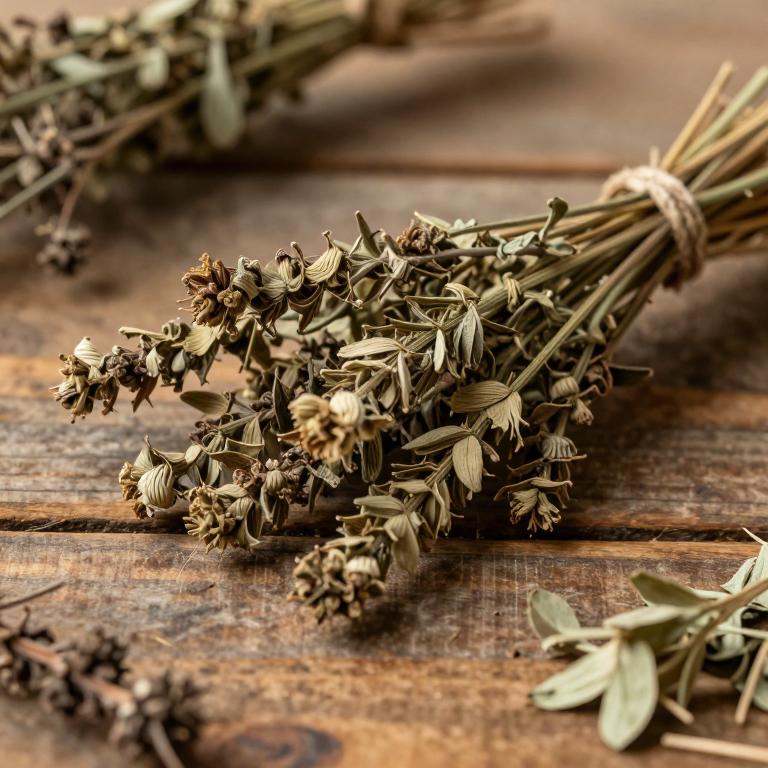
Names and Synonyms
Scientific Names
Accepted name
Castanopsis costataSynonyms
- Castanopsis trisperma
- Castanea costata
- Castanopsis spectabilis
- Castanea brevicuspis
- Castanea spectabilis
- Castanopsis costata var. bancana
- Castanopsis brevicuspis
Sources: Wikidata, Catalogue of Life
Taxonomical Classification
This plant belongs to the kingdom Plantae and the phylum Streptophyta, falling under the class Equisetopsida and subclass Magnoliidae. Within the order Fagales and the family Fagaceae, it is classified under the genus Castanopsis. Specifically, this medicinal species is identified as Castanopsis costata.
| Rank | Classification |
|---|---|
| Kingdom | Plantae |
| Phylum | Streptophyta |
| Class | Equisetopsida |
| Subclass | Magnoliidae |
| Order | Fagales |
| Family | Fagaceae |
| Genus | Castanopsis |
Sources: The World Checklist of Vascular Plants (WCVP)
Distribution
This plant exhibits a specific geographical distribution across several key regions in Southeast Asia. Within the Indo-China region, its presence is noted in Thailand. Moving into the Malesia zone, it can be found inhabiting the island of Borneo. The species is also distributed throughout the Malay Peninsula, commonly referred to as Malaya. Additionally, its range extends to the island of Sumatera within the Malesian territory.
| Region | Area |
|---|---|
| Indo-China | Thailand |
| Malesia | Borneo |
| Malesia | Malaya |
| Malesia | Sumatera |
Sources: The World Checklist of Vascular Plants (WCVP)
Botanical Identification
Life history
The life history of Castanopsis costata is characterized by its status as a perennial organism, allowing it to persist through multiple growing seasons and contribute to the long-term stability of its ecosystem. As a phanerophyte, its regenerative buds are located on aerial branches well above the ground, a structural adaptation that defines its growth habit and survival strategy. This plant maintains an evergreen deciduousness, ensuring that it retains its foliage year-round to maximize photosynthetic activity and resource acquisition across varying seasonal conditions.
- Deciduousness :
- evergreen
- Life form :
- phanerophyte
- Lifecycle :
- perennial
Morphology
The morphology of Castanopsis costata is characterized by a woody growth form, primarily manifesting as a tree that can reach a maximum plant height of 36 meters. Although some botanical classifications may associate climbing habits with similar taxa, this specific plant functions as an independent organism rather than a parasite, maintaining a terrestrial life habit instead of being epiphytic. Its structural development is defined by its robust, woody nature, which supports its substantial vertical growth in its natural habitat.
- Climber :
- self-supporting
- Epiphyte :
- terrestrial
- Growth form :
- tree
- Parasite :
- independent
- Plant height max:
- 36 m
- Woodiness :
- woody
Physiology
The physiology of Castanopsis costata is characterized by complex metabolic processes centered around its efficient management of nutrient uptake and photosynthetic energy conversion. As a member of the Fagaceae family, its physiological framework is optimized for forest canopy integration, where it manages gas exchange and transpiration rates to maintain cellular homeostasis under varying environmental stresses. Regarding its nutrient cycling capabilities, the plant does not function as a nitrogen fixer; it lacks the symbiotic relationship with diazotrophic bacteria, such as Rhizobium, required to convert atmospheric nitrogen into bioavailable forms. Consequently, its nitrogen acquisition is entirely dependent on the uptake of nitrates and ammonium from the soil through its extensive root system. This reliance on soil-based nitrogen dictates its physiological demand for organic matter decomposition within its habitat to sustain protein synthesis and chlorophyll production. Furthermore, its metabolic pathways are tuned to support robust secondary metabolite production, which serves as a physiological defense mechanism against herbivory and pathogens.
- Nitrogen fixer :
- no
Sources: Global Inventory of Floras and Traits (GIFT)
Plant Parts
Castanopsis costata has 1 reported plant parts identified across 1 scientific publications and several other databases that are studied for medicinal purposes. The most consistently reported plant part include leaf.
| Plant part | Supporting sources | Consensus |
|---|---|---|
| Leaf | 1 supporting sources | ★☆☆☆☆ |
Leaf
- Research in pharmaceutical sciences
Activities
Castanopsis costata has 5 reported activities identified across 1 scientific publications and several other databases. The most consistently reported activities include Analgesic, Antioxidant, Antipyretic, Hepatoprotective, Nephroprotective.
| Activity | Supporting sources | Consensus |
|---|---|---|
| Analgesic | 1 supporting sources | ★☆☆☆☆ |
| Antioxidant | 1 supporting sources | ★☆☆☆☆ |
| Antipyretic | 1 supporting sources | ★☆☆☆☆ |
| Hepatoprotective | 1 supporting sources | ★☆☆☆☆ |
| Nephroprotective | 1 supporting sources | ★☆☆☆☆ |
Analgesic
- Research in pharmaceutical sciences
Antioxidant
- Research in pharmaceutical sciences
Antipyretic
- Research in pharmaceutical sciences
Hepatoprotective
- Biomedical reports
Nephroprotective
- Biomedical reports
Preparations
Castanopsis costata has 6 reported preparations identified across 1 scientific publications and several other databases. The most consistently reported preparations include CcLF, EAFCC, EAFcC, WFCC, extract.
| Preparation | Supporting sources | Consensus |
|---|---|---|
| Cclf | 1 supporting sources | ★☆☆☆☆ |
| Eafcc | 1 supporting sources | ★☆☆☆☆ |
| Eafcc | 1 supporting sources | ★☆☆☆☆ |
| Wfcc | 1 supporting sources | ★☆☆☆☆ |
| Extract | 1 supporting sources | ★☆☆☆☆ |
| N-hfcc | 1 supporting sources | ★☆☆☆☆ |
Cclf
- Research in pharmaceutical sciences
Eafcc
- Research in pharmaceutical sciences
Eafcc
- Research in pharmaceutical sciences
Wfcc
- Research in pharmaceutical sciences
Extract
- Biomedical reports
N-hfcc
- Research in pharmaceutical sciences