Castanea dentata
Castanea dentata · Accepted scientific name
Scientific literature: Very Extensive (247 studies) · ★★★★★
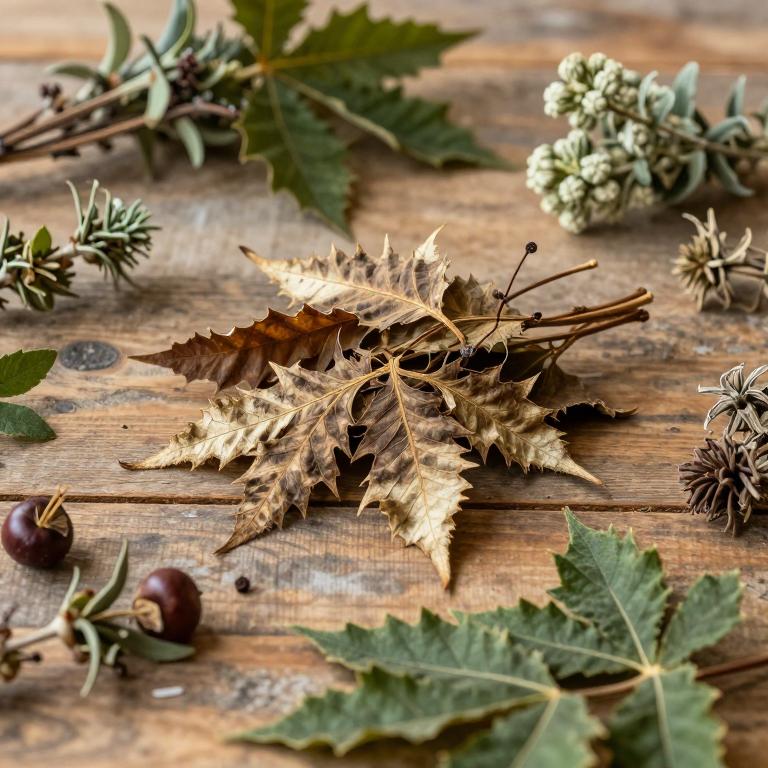
Castanea dentata, scientifically known as Castanea dentata, is the American chestnut, a legendary deciduous tree once dominant in eastern forests. Beyond its historical importance for timber, its nutrient-rich nuts have long provided sustenance and medicinal value, offering unique properties that have fascinated botanists and traditional healers for generations.
- Family
- Not available
- Native range
- Northern America
- Parts used
- Not available
- Common names
- Not available
- Scientific synonyms
- Not available
Names and Synonyms
Scientific Names
Accepted name
Castanea dentataDistribution
This plant exhibits a diverse range of locations across North America. In Eastern Canada, its presence is noted within the province of Ontario. Moving into the North-Central United States, it can be found in Illinois, Missouri, and Wisconsin. Additionally, the species extends into the Northeastern United States, specifically in Connecticut. Together, these regions define its specific geographical distribution.
| Region | Area |
|---|---|
| Eastern Canada | Ontario |
| North-Central U.S.A. | Illinois |
| North-Central U.S.A. | Missouri |
| North-Central U.S.A. | Wisconsin |
| Northeastern U.S.A. | Connecticut |
| Northeastern U.S.A. | Indiana |
| Northeastern U.S.A. | Maine |
| Northeastern U.S.A. | Massachusetts |
| Northeastern U.S.A. | Michigan |
| Northeastern U.S.A. | New Hampshire |
Sources: The World Checklist of Vascular Plants (WCVP)
Botanical Identification
Life history
The life history of Castanea dentata is characterized by its status as a perennial species, allowing it to persist through multiple growing seasons and establish a long-lived presence within its ecosystem. As a phanerophyte, its regenerative buds are located high above the ground on woody branches, a structural adaptation that enables it to thrive as a large tree. This phanerophytic life form is further defined by its significant vertical growth, which places its vital structures well beyond the reach of many surface-level environmental disturbances.
- Life form :
- phanerophyte
- Lifecycle :
- perennial
Morphology
The morphology of Castanea dentata is characterized by its stature as a large, woody tree, reaching an average height of approximately 35.025 meters. As a self-supporting organism, it possesses a robust growth form and does not function as a climber, liana, or vine. The plant is strictly terrestrial in its habitat, existing as an independent species rather than an epiphyte or a parasite. Its structural integrity is defined by its woody nature, providing the necessary support for its significant vertical development.
- Aquatic :
- terrestrial
- Climber :
- self-supporting
- Epiphyte :
- terrestrial
- Growth form :
- tree
- Parasite :
- independent
- Plant height mean:
- 35.025 m
- Woodiness :
- woody
Physiology
The physiology of Castanea dentata is characterized by a highly efficient metabolic framework adapted to temperate forest ecosystems. Primarily, the plant utilizes a C3 photosynthetic pathway, a trait common to most deciduous woody species, where carbon fixation occurs directly through the enzyme RuBisCO within the mesophyll cells. This C3 mechanism allows the plant to optimize gas exchange and energy production under the moderate light and temperature conditions typical of its native habitats. Alongside this metabolic foundation, its physiological processes include a robust vascular system designed for the long-distance transport of water and nutrients from the extensive root networks to the expansive canopy. The plant also exhibits significant seasonal physiological shifts, such as controlled dormancy and leaf abscission, which serve as survival mechanisms to mitigate the stresses of cold temperatures and reduced water availability during winter months.
- Photosynthetic pathway :
- C3
Reproduction
Reproduction in Castanea dentata is characterized by a complex dispersal strategy and specific seed morphological traits. The plant primarily employs a zoochorous dispersal syndrome, relying on animals to transport its seeds, although its reproductive ecology also encompasses elements of anemochory, autochory, hydrochory, and unspecialized dispersal methods. The seeds produced are relatively substantial in size, with a recorded mean seed mass of approximately 3.8235 g. Individual seed weights exhibit a specific range, with a documented maximum mass of 3.472 g and a minimum mass of 3.4625 g, reflecting the physical parameters of its reproductive output.
- Dispersal syndrome :
- zoochorous
- Seed mass max:
- 3.472 g
- Seed mass mean:
- 3.82351666666667 g
- Seed mass min:
- 3.4625 g
Sources: Global Inventory of Floras and Traits (GIFT)
Chemicals
Castanea dentata has 30 reported phytochemicals identified across 0 scientific publications and several other databases. The most consistently reported chemicals include Ash, CALCIUM, COPPER, FAT, GLUTAMIC ACID.
| Chemical | Supporting sources | Consensus |
|---|---|---|
| Ash | 1 supporting sources | ★☆☆☆☆ |
| CALCIUM | 1 supporting sources | ★☆☆☆☆ |
| COPPER | 1 supporting sources | ★☆☆☆☆ |
| FAT | 1 supporting sources | ★☆☆☆☆ |
| GLUTAMIC ACID | 1 supporting sources | ★☆☆☆☆ |
| IRON | 1 supporting sources | ★☆☆☆☆ |
| Isoleucine | 1 supporting sources | ★☆☆☆☆ |
| MAGNESIUM | 1 supporting sources | ★☆☆☆☆ |
| MANGANESE | 1 supporting sources | ★☆☆☆☆ |
| PHOSPHORUS | 1 supporting sources | ★☆☆☆☆ |
Ash
- Dr. Duke
CALCIUM
- Dr. Duke
COPPER
- Dr. Duke
FAT
- Dr. Duke
GLUTAMIC ACID
- Dr. Duke
IRON
- Dr. Duke
Isoleucine
- Dr. Duke
MAGNESIUM
- Dr. Duke
MANGANESE
- Dr. Duke
PHOSPHORUS
- Dr. Duke
Activities
Castanea dentata has 217 reported activities identified across 0 scientific publications and several other databases. The most consistently reported activities include ACE-Inhibitor, Adjuvant, Analgesic, Angiotensin-Receptor-Blocker, AntiADD.
| Activity | Supporting sources | Consensus |
|---|---|---|
| ACE-Inhibitor | 1 supporting sources | ★☆☆☆☆ |
| Adjuvant | 1 supporting sources | ★☆☆☆☆ |
| Analgesic | 1 supporting sources | ★☆☆☆☆ |
| Angiotensin-Receptor-Blocker | 1 supporting sources | ★☆☆☆☆ |
| AntiADD | 1 supporting sources | ★☆☆☆☆ |
| AntiBPH | 1 supporting sources | ★☆☆☆☆ |
| AntiCFS | 1 supporting sources | ★☆☆☆☆ |
| AntiCrohn's | 1 supporting sources | ★☆☆☆☆ |
| AntiHIV | 1 supporting sources | ★☆☆☆☆ |
| AntiLyme | 1 supporting sources | ★☆☆☆☆ |
ACE-Inhibitor
- Dr. Duke
Adjuvant
- Dr. Duke
Analgesic
- Dr. Duke
Angiotensin-Receptor-Blocker
- Dr. Duke
AntiADD
- Dr. Duke
AntiBPH
- Dr. Duke
AntiCFS
- Dr. Duke
AntiCrohn's
- Dr. Duke
AntiHIV
- Dr. Duke
AntiLyme
- Dr. Duke