Cape-Saffron
Cassine peragua subsp. peragua · Accepted scientific name
Scientific literature: Very Sparse (2 studies) · ★☆☆☆☆
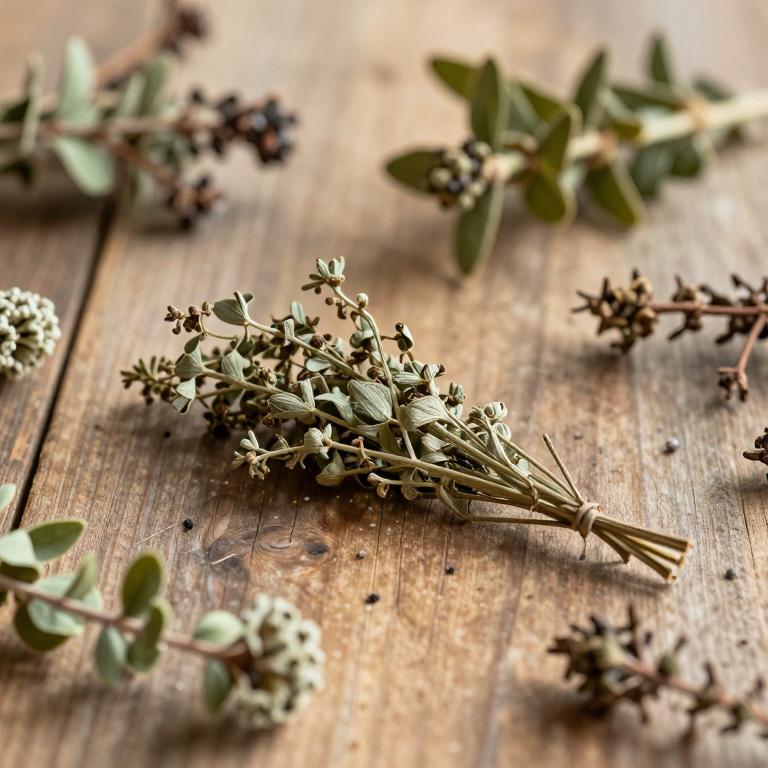
Cape-Saffron, scientifically known as Cassine peraagua subsp. peraagua, is a distinctive medicinal shrub native to Southern Africa. Renowned for its vibrant floral characteristics, this plant is valued in traditional healing practices for its bioactive properties. It serves as a fascinating subject for ethnobotanical study and natural pharmacological research.
Names and Synonyms
Common Names
- Cape-Saffron
- Forest Spoon-Wood
- Forest spoonwood
Scientific Names
Accepted name
Cassine peragua subsp. peraguaSynonyms
- Elaeodendron kraussianum
- Cassine colpoon
- Cassine kraussiana
- Cassine serratifolia
- Cassine sphaerocarpa
- Ilex crocea
- Euonymus colpoon
- Elaeodendron ilicifolium
- Maurocenia phylliraea
Sources: Wikidata, Catalogue of Life
Taxonomical Classification
This plant belongs to the kingdom Plantae and is classified under the phylum Streptophyta within the class Equisetopsida. As a member of the subclass Magnoliidae and the order Celastrales, it is further categorized into the family Celastraceae. Finally, it is specifically identified by the genus Cassine as the subspecies Cassine peraagua subsp. peraagua.
| Rank | Classification |
|---|---|
| Kingdom | Plantae |
| Phylum | Streptophyta |
| Class | Equisetopsida |
| Subclass | Magnoliidae |
| Order | Celastrales |
| Family | Celastraceae |
| Genus | Cassine |
Sources: The World Checklist of Vascular Plants (WCVP)
Distribution
This plant is native to various regions throughout Southern Africa. It can be found growing within the diverse landscapes of the Cape Provinces. Additionally, its distribution extends into the subtropical areas of KwaZulu-Natal. The species is also documented to occur in the nation of Eswatini. Finally, its range reaches into the northern reaches of the region within the Northern Provinces.
| Region | Area |
|---|---|
| Southern Africa | Cape Provinces |
| Southern Africa | KwaZulu-Natal |
| Southern Africa | Eswatini |
| Southern Africa | Northern Provinces |
Sources: The World Checklist of Vascular Plants (WCVP)
Chemicals
Cassine peragua subsp. peragua has 1 reported phytochemicals identified across 0 scientific publications and several other databases. The most consistently reported chemicals include acetone.
| Chemical | Supporting sources | Consensus |
|---|---|---|
| acetone | 1 supporting sources | ★☆☆☆☆ |
acetone
- Pharmaceutical biology
Activities
Cassine peragua subsp. peragua has 1 reported activities identified across 0 scientific publications and several other databases. The most consistently reported activities include Antifungal.
| Activity | Supporting sources | Consensus |
|---|---|---|
| Antifungal | 1 supporting sources | ★☆☆☆☆ |
Antifungal
- Pharmaceutical biology