appleblossom cassia
Cassia grandis · Accepted scientific name
Scientific literature: Very Sparse (34 studies) · ★☆☆☆☆
Appleblossom cassia, scientifically known as Cassia grandis, is a potent medicinal plant revered in traditional herbalism. Renowned for its diverse therapeutic properties, it is primarily utilized to support digestive health and alleviate inflammatory conditions. This versatile botanical serves as a natural remedy, offering significant holistic benefits for wellness.
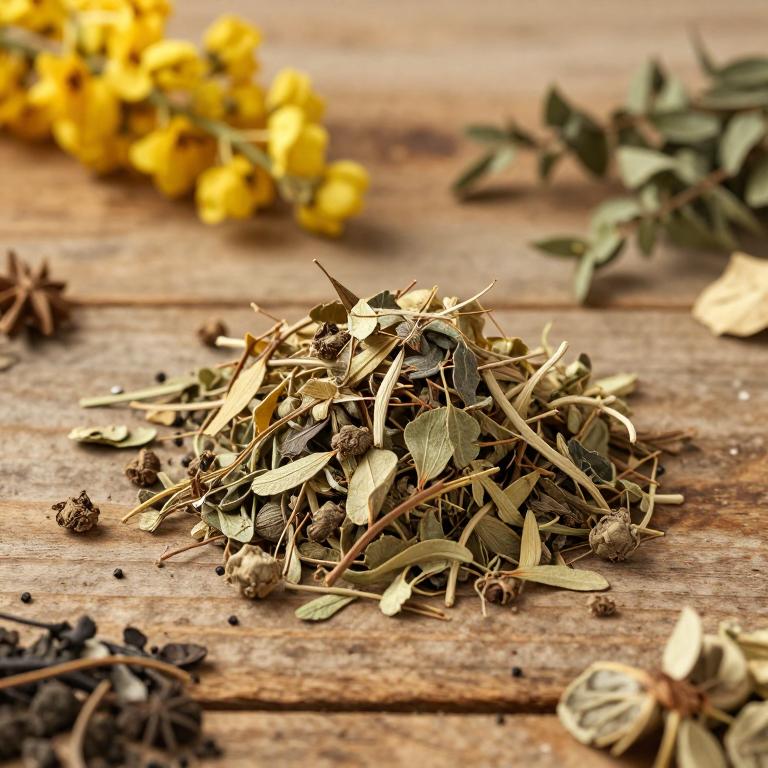
Names and Synonyms
Common Names
- appleblossom cassia
- coral shower
- horse cassia
- pink shower
- Pink Shower Tree
- Stinking Toe
Scientific Names
Accepted name
Cassia grandisSynonyms
- Bactyrilobium grande
- Cathartocarpus grandis
- Cassia brasiliana
- Cassia regia
- Cathartocarpus brasilianus
- Cassia mollis
- Cassia pachycarpa
- Bactyrilobium molle
- Cassia brasiliana var. tomentosa
- Cassia brasiliensis
- Cathartocarpus erubescens
Regional and Traditional Names
Spanish:
- Carao
- Canafistula cimarrona
- Cañandonga
- Bactyrilobium grande
- Cassia pachycarpa
- Cathartocarpus brasilianus
- Cassia brasiliana
- Canandonga
- Cassia brasiliensis
- Cathartocarpus erubescens
- Cathartocarpus grandis
- Cassia brasiliana var. tomentosa
- Bactyrilobium molle
- Cassia mollis
- Cañafistula cimarrona
- Cassia brasiliana var tomentosa
- sándalo
- árbol de fuego
- Carao
- Cañafístula
- Sandal
German:
- großfrüchtige Kassie
French:
- bâton casse
- casse du Brésil
Sources: Wikidata, Catalogue of Life
Taxonomical Classification
This plant belongs to the kingdom Plantae within the phylum Streptophyta and the class Equisetopsida. It is further classified under the subclass Magnoliidae in the order Fabales, belonging to the family Fabaceae. Finally, its taxonomic identity is defined by the genus Cassia.
| Rank | Classification |
|---|---|
| Kingdom | Plantae |
| Phylum | Streptophyta |
| Class | Equisetopsida |
| Subclass | Magnoliidae |
| Order | Fabales |
| Family | Fabaceae |
| Genus | Cassia |
Sources: The World Checklist of Vascular Plants (WCVP)
Distribution
This plant exhibits a wide geographical distribution across several key regions of the African continent. In West Tropical Africa, its presence is documented in Gambia, Sierra Leone, and Ivory Coast. Moving toward the center of the continent, it can also be found within West-Central Tropical Africa, specifically in the DR Congo. Furthermore, its range extends into East Tropical Africa, where it is located in Tanzania. Collectively, these locations highlight the diverse environments where the species thrives.
| Region | Area |
|---|---|
| West Tropical Africa | Gambia |
| West Tropical Africa | Ivory Coast |
| West Tropical Africa | Sierra Leone |
| West-Central Tropical Africa | DR Congo |
| East Tropical Africa | Tanzania |
| East Tropical Africa | Uganda |
| Indian Subcontinent | Bangladesh |
| Indian Subcontinent | East Himalaya |
| Indian Subcontinent | India |
| Indian Subcontinent | Sri Lanka |
Sources: The World Checklist of Vascular Plants (WCVP)
Botanical Identification
Ecology
The ecology of Cassia grandis is characterized by its adaptability to diverse forest environments, ranging from riparian forests and gallery forests to terra firme forests, seasonal semi-deciduous forests, and ombrophilous (rainforest) ecosystems. This species demonstrates a broad altitudinal distribution, thriving in habitats that span from sea level up to a maximum elevation of 1200 m AMSL.
- Elevational range max:
- 1200 m AMSL
- Elevational range min:
- 0 m AMSL
- Habitat :
- Floresta Ciliar ou Galeria, Floresta de Terra Firme, Floresta Estacional Semidecidual, Floresta Ombrófila (= Floresta Pluvial)
Life history
The life history of Cassia grandis is characterized by its nature as a perennial plant, allowing it to persist through multiple growing seasons and establish a long-term presence in its natural habitat. As a perennial species, it does not follow the rapid completion of a single season seen in annuals or the two-year cycle of biennials, but instead invests energy into woody structural development and long-term survival. This lifecycle enables the plant to undergo repeated cycles of vegetative growth and flowering, often leading to a robust canopy and a sustained reproductive capacity over many years. The perennial habit ensures that the plant can withstand seasonal fluctuations, eventually reaching a mature state where it contributes significantly to the local ecosystem through its continuous life stages.
- Lifecycle :
- perennial
Morphology
The morphology of Cassia grandis is characterized by its substantial stature and robust structural composition. It is a woody, self-supporting tree that reaches a mean height of approximately 20 m, with a maximum potential height of up to 30 m. As an independent organism, it does not function as a parasite or an epiphyte, maintaining a strictly terrestrial existence rather than being aquatic or semiaquatic. Its growth form is defined by a sturdy, self-supporting woody architecture, distinguishing it from climbers, vines, or lianas.
- Aquatic :
- terrestrial
- Climber :
- self-supporting
- Epiphyte :
- terrestrial
- Growth form :
- tree
- Parasite :
- independent
- Plant height max:
- 30 m
- Plant height mean:
- 20 m
- Woodiness :
- woody
Physiology
The physiology of Cassia grandis is characterized by a C3 photosynthetic pathway, which dictates its carbon fixation process and metabolic efficiency within its natural habitat. As a C3 plant, it utilizes the enzyme Rubisco to fix atmospheric carbon dioxide directly into the Calvin cycle, a process that typically involves higher rates of photorespiration compared to C4 or CAM species. Furthermore, this species is not a nitrogen fixer, meaning it does not possess a symbiotic relationship with nitrogen-fixing bacteria (such as rhizobia) to convert atmospheric nitrogen into usable forms, and therefore relies on the uptake of nitrates and ammonium from the soil to meet its nutritional requirements for growth and development.
- Nitrogen fixer :
- no
- Photosynthetic pathway :
- C3
Reproduction
The reproduction of Cassia grandis is driven by a biotic pollination syndrome, primarily relying on insect vectors to facilitate the transfer of pollen. This biological mechanism ensures successful fertilization, leading to the development of seeds characterized by significant morphological variability. The seeds produced by the plant exhibit a seed length ranging from a minimum of 15 mm to a maximum of 30 mm. In terms of weight, the seed mass varies considerably, with a minimum recorded mass of 0.11093 g and a maximum of 0.6173 g, resulting in a calculated mean seed mass of approximately 0.40941 g.
- Pollination syndrome :
- insect
- Pollination syndrome :
- biotic
- Seed length max:
- 30 mm
- Seed length min:
- 15 mm
- Seed mass max:
- 0.6173 g
- Seed mass mean:
- 0.40941 g
- Seed mass min:
- 0.11093 g
Sources: Global Inventory of Floras and Traits (GIFT)
Chemicals
Cassia grandis has 7 reported phytochemicals identified across 0 scientific publications and several other databases. The most consistently reported chemicals include Aloe emodin, (-)-Epiafzelechin, Afzelin, Epicatechin, Isoquercitrin.
| Chemical | Supporting sources | Consensus |
|---|---|---|
| Aloe emodin | 2 supporting sources | ★☆☆☆☆ |
| (-)-Epiafzelechin | 1 supporting sources | ★☆☆☆☆ |
| Afzelin | 1 supporting sources | ★☆☆☆☆ |
| Epicatechin | 1 supporting sources | ★☆☆☆☆ |
| Isoquercitrin | 1 supporting sources | ★☆☆☆☆ |
| RUTIN | 1 supporting sources | ★☆☆☆☆ |
| quercitrin | 1 supporting sources | ★☆☆☆☆ |
Aloe emodin
- Dr. Duke
- Natural product research
(-)-Epiafzelechin
- Natural product research
Afzelin
- Natural product research
Epicatechin
- Natural product research
Isoquercitrin
- Natural product research
RUTIN
- Natural product research
quercitrin
- Natural product research
Activities
Cassia grandis has 23 reported activities identified across 0 scientific publications and several other databases. The most consistently reported activities include Antibacterial, Antiherpetic, Antileukemic, Antisalmonella, Antiseptic.
| Activity | Supporting sources | Consensus |
|---|---|---|
| Antibacterial | 1 supporting sources | ★☆☆☆☆ |
| Antiherpetic | 1 supporting sources | ★☆☆☆☆ |
| Antileukemic | 1 supporting sources | ★☆☆☆☆ |
| Antisalmonella | 1 supporting sources | ★☆☆☆☆ |
| Antiseptic | 1 supporting sources | ★☆☆☆☆ |
| Antistaphylococcic | 1 supporting sources | ★☆☆☆☆ |
| Antitumor | 1 supporting sources | ★☆☆☆☆ |
| Antiviral | 1 supporting sources | ★☆☆☆☆ |
| Arylamine-N-Acetyltransferase-Inhibitor | 1 supporting sources | ★☆☆☆☆ |
| Calcium-Antagonist | 1 supporting sources | ★☆☆☆☆ |
Antibacterial
- Dr. Duke
Antiherpetic
- Dr. Duke
Antileukemic
- Dr. Duke
Antisalmonella
- Dr. Duke
Antiseptic
- Dr. Duke
Antistaphylococcic
- Dr. Duke
Antitumor
- Dr. Duke
Antiviral
- Dr. Duke
Arylamine-N-Acetyltransferase-Inhibitor
- Dr. Duke
Calcium-Antagonist
- Dr. Duke
Conditions
Cassia grandis has 3 reported investigations on conditions identified across 0 scientific publications and several other databases. The most consistently reported conditions include Aspergillus flavus, aches, back pain.
| Condition | Supporting sources | Consensus |
|---|---|---|
| Aspergillus flavus | 1 supporting sources | ★☆☆☆☆ |
| Aches | 1 supporting sources | ★☆☆☆☆ |
| Back pain | 1 supporting sources | ★☆☆☆☆ |
Aspergillus flavus
- Journal of ethnopharmacology
Aches
- Natural product research
Back pain
- Natural product research