Long-tail Cassia
Cassia abbreviata · Accepted scientific name
Scientific literature: Very Sparse (15 studies) · ★☆☆☆☆
Long-tail Cassia, scientifically known as Cassia abbreviata, is a versatile medicinal shrub native to tropical Africa. Renowned for its potent purgative properties, the plant's leaves and bark are traditionally used to treat digestive ailments. Modern research continues to explore its rich bioactive compounds for potential pharmacological applications worldwide.
- Family
- Fabaceae
- Native range
- Africa
- Parts used
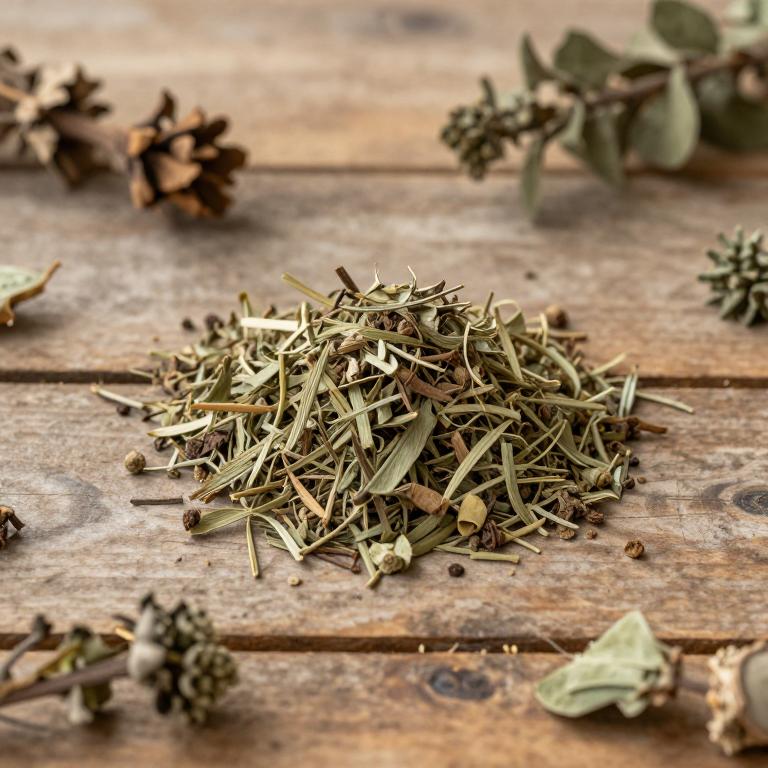
- Leaf · Root
- Common names
- Long-Tail Cassia · Sjambok-Pod · 1 more
- Scientific synonyms
- Not available
Names and Synonyms
Common Names
- Long-tail Cassia
- sjambok-pod
- long-pod-cassia
Scientific Names
Accepted name
Cassia abbreviataSources: Wikidata, Catalogue of Life
Taxonomical Classification
This plant belongs to the kingdom Plantae and the phylum Streptophyta within the class Equisetopsida. It is further classified under the subclass Magnoliidae and the order Fabales. Finally, it is a member of the family Fabaceae and falls under the genus Cassia.
| Rank | Classification |
|---|---|
| Kingdom | Plantae |
| Phylum | Streptophyta |
| Class | Equisetopsida |
| Subclass | Magnoliidae |
| Order | Fabales |
| Family | Fabaceae |
| Genus | Cassia |
Sources: The World Checklist of Vascular Plants (WCVP)
Distribution
This plant exhibits a wide geographical distribution across several distinct regions of the African continent. In West-Central Tropical Africa, its presence is specifically noted within the Democratic Republic of the Congo. Moving toward the northeast, the species can be found in the tropical landscapes of Somalia. Its range extends further into East Tropical Africa, where it inhabits both Kenya and Tanzania. Finally, the distribution reaches into South Tropical Africa, particularly within the borders of Malawi.
| Region | Area |
|---|---|
| West-Central Tropical Africa | DR Congo |
| Northeast Tropical Africa | Somalia |
| East Tropical Africa | Kenya |
| East Tropical Africa | Tanzania |
| South Tropical Africa | Malawi |
| South Tropical Africa | Mozambique |
| South Tropical Africa | Zambia |
| South Tropical Africa | Zimbabwe |
| Southern Africa | Botswana |
| Southern Africa | Caprivi Strip |
Sources: The World Checklist of Vascular Plants (WCVP)
Botanical Identification
Ecology
The ecology of Cassia abbreviata is characterized by its ability to thrive within specific altitudinal gradients, typically occupying habitats found between an elevation of 275 m AMSL and a maximum of 1200 m AMSL. Within this range, the species adapts to various environmental conditions, often favoring well-drained soils and specific moisture regimes common to its native tropical or subtropical landscapes. Its distribution is closely tied to these elevational parameters, which influence the temperature and humidity levels available to support its growth and reproductive cycles.
- Elevational range max:
- 1200 m AMSL
- Elevational range min:
- 275 m AMSL
Life history
The life history of Cassia abbreviata is characterized by its nature as a perennial species, allowing it to persist in its environment over multiple growing seasons. Throughout its existence, the plant exhibits a deciduous growth habit, periodically shedding its foliage as part of its seasonal physiological cycle.
- Deciduousness :
- deciduous
- Lifecycle :
- perennial
Morphology
The morphology of Cassia abbreviata is characterized by a woody growth form, specifically categorized as a tree. As a self-supporting species, it does not function as a climber or an epiphyte, maintaining a terrestrial existence rather than being aquatic or semiaquatic. The plant operates as an independent organism, lacking any parasitic tendencies. In terms of stature, it exhibits significant vertical variation, with plant heights ranging from a minimum of 0.3 m to a maximum of 13 m, maintaining an average height of approximately 8 m.
- Aquatic :
- terrestrial
- Climber :
- self-supporting
- Epiphyte :
- terrestrial
- Growth form :
- tree
- Parasite :
- independent
- Plant height max:
- 13 m
- Plant height mean:
- 8 m
- Plant height min:
- 0.3 m
- Woodiness :
- woody
Physiology
The physiology of Cassia abbreviata is characterized by a C3 photosynthetic pathway, utilizing the standard Calvin cycle to fix atmospheric carbon dioxide during the light-independent reactions. This metabolic process is typical of most woody dicotyledonous plants within the Fabaceae family, relying on the enzyme RuBisCO for carbon assimilation. Regarding its nutrient acquisition strategies, the plant does not function as a nitrogen fixer; it lacks the symbiotic relationship with rhizobia bacteria required to convert atmospheric nitrogen into ammonia, instead relying on the uptake of available nitrates and ammonium from the soil through its root system.
- Nitrogen fixer :
- no
- Photosynthetic pathway :
- C3
Reproduction
The reproduction of Cassia abbreviata is characterized by the production of dry fruits that contain seeds with specific morphological properties. The seeds exhibit a consistent volume, recorded at a mean, maximum, and minimum value of 340 mm³, indicating a highly uniform size distribution within the species. In terms of mass, the seeds show a degree of variability, with a minimum mass of 0.20069 g, a maximum mass of 0.35697 g, and an average seed mass of approximately 0.3100575 g. These reproductive components are housed within fruits characterized by their dry texture, distinguishing them from fleshy fruit types.
- Fruit dryness :
- dry
- Seed mass max:
- 0.35697 g
- Seed mass mean:
- 0.3100575 g
- Seed mass min:
- 0.20069 g
- Seed volume max:
- 340 mm³
Sources: Global Inventory of Floras and Traits (GIFT)
Plant Parts
Cassia abbreviata has 3 reported plant parts identified across 6 scientific publications and several other databases that are studied for medicinal purposes. The most consistently reported plant part include leaf, root, stem.
| Plant part | Supporting sources | Consensus |
|---|---|---|
| Leaf | 2 supporting sources | ★☆☆☆☆ |
| Root | 2 supporting sources | ★☆☆☆☆ |
| Stem | 2 supporting sources | ★☆☆☆☆ |
Leaf
- Journal of nematology
- Annals of tropical medicine and parasitology
Root
- Annals of tropical medicine and parasitology
- Journal of ethnopharmacology
Stem
- Journal of nematology
- The Central African journal of medicine
Chemicals
Cassia abbreviata has 2 reported phytochemicals identified across 6 scientific publications and several other databases. The most consistently reported chemicals include histamine, polyphenols.
| Chemical | Supporting sources | Consensus |
|---|---|---|
| histamine | 1 supporting sources | ★☆☆☆☆ |
| polyphenols | 1 supporting sources | ★☆☆☆☆ |
histamine
- The Central African journal of medicine
polyphenols
- Molecules (Basel, Switzerland)
Activities
Cassia abbreviata has 1 reported activities identified across 6 scientific publications and several other databases. The most consistently reported activities include Abortifacient.
| Activity | Supporting sources | Consensus |
|---|---|---|
| Abortifacient | 1 supporting sources | ★☆☆☆☆ |
Abortifacient
- The Central African journal of medicine
Conditions
Cassia abbreviata has 5 reported investigations on conditions identified across 6 scientific publications and several other databases. The most consistently reported conditions include Plasmodium falciparum, blood pressure, malaria, sexually transmitted diseases, venereal diseases.
| Condition | Supporting sources | Consensus |
|---|---|---|
| Plasmodium falciparum | 1 supporting sources | ★☆☆☆☆ |
| Blood pressure | 1 supporting sources | ★☆☆☆☆ |
| Malaria | 1 supporting sources | ★☆☆☆☆ |
| Sexually transmitted diseases | 1 supporting sources | ★☆☆☆☆ |
| Venereal diseases | 1 supporting sources | ★☆☆☆☆ |
Plasmodium falciparum
- Annals of tropical medicine and parasitology
Blood pressure
- The Central African journal of medicine
Malaria
- Journal of ethnopharmacology
Sexually transmitted diseases
- Journal of ethnopharmacology
Venereal diseases
- Tropical medicine and health
Preparations
Cassia abbreviata has 8 reported preparations identified across 6 scientific publications and several other databases. The most consistently reported preparations include extracts, Aqueous and organic fractions, acetone extracts, crude extract of the stem bark, crude extracts.
| Preparation | Supporting sources | Consensus |
|---|---|---|
| Extracts | 2 supporting sources | ★☆☆☆☆ |
| Aqueous and organic fractions | 1 supporting sources | ★☆☆☆☆ |
| Acetone extracts | 1 supporting sources | ★☆☆☆☆ |
| Crude extract of the stem bark | 1 supporting sources | ★☆☆☆☆ |
| Crude extracts | 1 supporting sources | ★☆☆☆☆ |
| Methanol extracts | 1 supporting sources | ★☆☆☆☆ |
| Root extracts | 1 supporting sources | ★☆☆☆☆ |
| Water extracts | 1 supporting sources | ★☆☆☆☆ |
Extracts
- Molecules (Basel, Switzerland)
- Journal of ethnopharmacology
Aqueous and organic fractions
- Annals of tropical medicine and parasitology
Acetone extracts
- Journal of ethnopharmacology
Crude extract of the stem bark
- The Central African journal of medicine
Crude extracts
- The Central African journal of medicine
Methanol extracts
- Journal of ethnopharmacology
Root extracts
- Journal of ethnopharmacology
Water extracts
- Journal of ethnopharmacology