wild sage
Casearia sylvestris · Accepted scientific name
Scientific literature: Sparse (86 studies) · ★★☆☆☆
Wild sage, scientifically known as Casearia sylvestris, is a versatile medicinal shrub native to South American forests. Renowned for its diverse therapeutic properties, it is traditionally used to treat inflammation, digestive issues, and skin ailments. This potent plant continues to be a vital resource in ethnobotanical studies and herbal medicine.
- Family
- Salicaceae
- Native range
- Northern America
- Parts used
- Leaf
- Common names
- Wild Sage · Crackopen
- Scientific synonyms
- Guidonia Sylvestris · Samyda Sylvestris
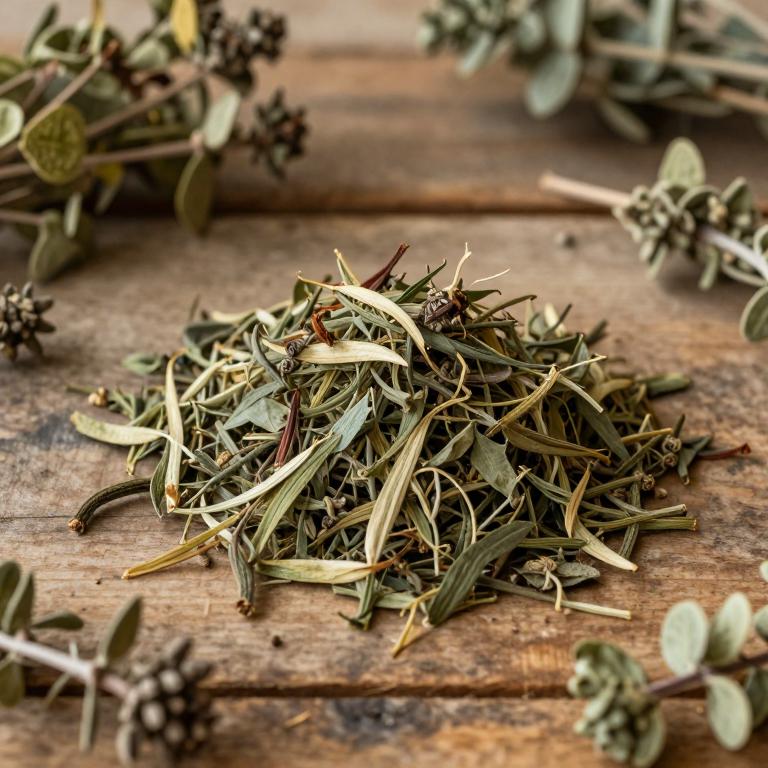
Names and Synonyms
Common Names
- wild sage
- crackopen
Scientific Names
Accepted name
Casearia sylvestrisSynonyms
- Guidonia sylvestris
- Samyda sylvestris
Regional and Traditional Names
Spanish:
- sombra de conejo
- sombre de armada
- Burro caá
- Quiubra
- botoncillo
Sources: Wikidata, Catalogue of Life
Taxonomical Classification
This plant belongs to the kingdom Plantae and is classified within the phylum Streptophyta and the class Equisetopsida. It further descends through the subclass Magnoliidae and the order Malpighiales, eventually placing it in the family Salicaceae. Specifically, Casearia sylvestris is identified by the genus Casearia.
| Rank | Classification |
|---|---|
| Kingdom | Plantae |
| Phylum | Streptophyta |
| Class | Equisetopsida |
| Subclass | Magnoliidae |
| Order | Malpighiales |
| Family | Salicaceae |
| Genus | Casearia |
Sources: The World Checklist of Vascular Plants (WCVP)
Distribution
This plant exhibits a broad presence across several distinct regions within the country of Mexico. It can be found growing throughout the central part of Mexico, serving as a key component of that local flora. Its distribution also extends into the northeast, covering a significant portion of that territory. Furthermore, the species is present in the Gulf region, flourishing in those specific environmental conditions. Finally, the plant's range reaches the northwest and southwest areas, completing its extensive geographical footprint.
| Region | Area |
|---|---|
| Mexico | Mexico Central |
| Mexico | Mexico Northeast |
| Mexico | Mexico Gulf |
| Mexico | Mexico Northwest |
| Mexico | Mexico Southwest |
| Mexico | Mexico Southeast |
| Central America | Belize |
| Central America | Costa Rica |
| Central America | El Salvador |
| Central America | Guatemala |
Sources: The World Checklist of Vascular Plants (WCVP)
Botanical Identification
Ecology
The ecology of Casearia sylvestris is characterized by a broad altitudinal distribution and a versatile capacity to inhabit diverse ecosystems. It can be found across an extensive elevational range, spanning from sea level (0 m AMSL) up to a maximum altitude of 2300 m AMSL. This species demonstrates significant ecological adaptability, thriving in varied environments such as high-altitude forests (bosque alto), the open savanna landscapes of the cerrado, and even within disturbed areas.
- Elevational range max:
- 2300 m AMSL
- Elevational range min:
- 0 m AMSL
- Habitat :
- Bosque alto, cerrado, disturbed areas
Life history
The life history of Casearia sylvestris is characterized by its status as a perennial species, allowing it to persist in its ecosystem over many years. As a phanerophyte, it maintains its photosynthetic organs on elevated branches above the ground, contributing to the structural complexity of its habitat. This plant exhibits an evergreen deciduousness, meaning it retains its foliage throughout the year without undergoing a seasonal shedding period. Its biological strategy as a phanerophyte ensures a continuous presence within its environment, supporting long-term survival through its stable life cycle and consistent vegetative cover.
- Deciduousness :
- evergreen
- Life form :
- phanerophyte
- Lifecycle :
- perennial
Morphology
The morphology of Casearia sylvestris is characterized by a woody growth form that can manifest as either a shrub or a tree. As a terrestrial organism, it functions as an independent species without parasitic tendencies. The plant is self-supporting rather than acting as a climber or liana, maintaining a robust structural integrity. In terms of stature, it exhibits significant vertical development, with a plant height ranging from a minimum of 5 meters to a maximum of 20 meters, maintaining an average height of approximately 6 meters.
- Aquatic :
- terrestrial
- Climber :
- self-supporting
- Epiphyte :
- terrestrial
- Growth form :
- tree
- Growth form :
- shrub
- Parasite :
- independent
- Plant height max:
- 20 m
- Plant height mean:
- 6 m
- Plant height min:
- 5 m
- Woodiness :
- woody
Physiology
The physiology of Casearia sylvestris is characterized by a C3 photosynthetic pathway, which governs its carbon fixation processes. The plant exhibits specific leaf traits, including a mean leaf size of 27.765 cm² and a mean Specific Leaf Area (SLA) of 148.5735 cm²/g, reflecting its resource acquisition strategy. Its leaf dry matter content (LDMC) shows moderate variability, with a mean value of 448.233333333333 mg/g, ranging from a minimum of 429.1 mg/g to a maximum of 484.7 mg/g. In terms of structural biomass, the stem displays a mean specific density (SSD) of 800 mg/cm³. Additionally, the species does not function as a nitrogen fixer, relying instead on external soil nitrogen availability for its metabolic requirements.
- Leaf dry matter content (LDMC) max:
- 484.7 mg/g
- Leaf dry matter content (LDMC) mean:
- 448.233333333333 mg/g
- Leaf dry matter content (LDMC) min:
- 429.1 mg/g
- Leaf size mean:
- 27.765 cm²
- Nitrogen fixer :
- no
- Photosynthetic pathway :
- C3
- Specific Leaf Area (SLA) mean:
- 148.5735 cm²/g
- Stem specific density (SSD) mean:
- 800 mg/cm³
Reproduction
The reproduction of Casearia sylvestris is characterized by a biotic pollination syndrome, primarily driven by insects, with bees playing a significant role in the fertilization process. The plant produces dry fruits that contain seeds with varying physical dimensions; these seeds exhibit a mean length of 2 mm, ranging from a minimum of 1 mm to a maximum of 6 mm. In terms of mass, the seeds are quite light, with a mean mass of 0.003305 g, though they can vary from a minimum of 0.001 g to a maximum of 0.00561 g. The seed volume is consistent across its measurements, maintaining a mean, minimum, and maximum value of 1.8 mm³. Following successful fertilization, the plant utilizes a zoochorous dispersal syndrome, relying on animals to aid in the distribution of its seeds throughout its habitat.
- Dispersal syndrome :
- zoochorous
- Fruit dryness :
- dry
- Pollination syndrome :
- insect
- Pollination syndrome :
- bee
- Pollination syndrome :
- biotic
- Seed length max:
- 6 mm
- Seed length mean:
- 2 mm
- Seed length min:
- 1 mm
- Seed mass max:
- 0.00561 g
- Seed mass mean:
- 0.003305 g
- Seed mass min:
- 0.001 g
- Seed volume max:
- 1.8 mm³
Sources: Global Inventory of Floras and Traits (GIFT)
Plant Parts
Casearia sylvestris has 1 reported plant parts identified across 8 scientific publications and several other databases that are studied for medicinal purposes. The most consistently reported plant part include leaf.
| Plant part | Supporting sources | Consensus |
|---|---|---|
| Leaf | 8 supporting sources | ★★★★☆ |
Leaf
- Journal of ethnopharmacology
- Applied radiation and isotopes : including data, instrumentation and methods for use in agriculture, industry and medicine
- Toxicology in vitro : an international journal published in association with BIBRA
- Anais da Academia Brasileira de Ciencias
- Journal of natural products
View 3 additional sources
- Birth defects research
- Phytochemical analysis : PCA
- Antioxidants (Basel, Switzerland)
Chemicals
Casearia sylvestris has 22 reported phytochemicals identified across 8 scientific publications and several other databases. The most consistently reported chemicals include Br-, CA, CO, CR, CS.
| Chemical | Supporting sources | Consensus |
|---|---|---|
| Br- | 1 supporting sources | ★☆☆☆☆ |
| CA | 1 supporting sources | ★☆☆☆☆ |
| CO | 1 supporting sources | ★☆☆☆☆ |
| CR | 1 supporting sources | ★☆☆☆☆ |
| CS | 1 supporting sources | ★☆☆☆☆ |
| Casearin J | 1 supporting sources | ★☆☆☆☆ |
| Cl- | 1 supporting sources | ★☆☆☆☆ |
| Diterpene | 1 supporting sources | ★☆☆☆☆ |
| FE | 1 supporting sources | ★☆☆☆☆ |
| LA | 1 supporting sources | ★☆☆☆☆ |
Br-
- Applied radiation and isotopes : including data, instrumentation and methods for use in agriculture, industry and medicine
CA
- Applied radiation and isotopes : including data, instrumentation and methods for use in agriculture, industry and medicine
CO
- Applied radiation and isotopes : including data, instrumentation and methods for use in agriculture, industry and medicine
CR
- Applied radiation and isotopes : including data, instrumentation and methods for use in agriculture, industry and medicine
CS
- Applied radiation and isotopes : including data, instrumentation and methods for use in agriculture, industry and medicine
Casearin J
- Antioxidants (Basel, Switzerland)
Cl-
- Applied radiation and isotopes : including data, instrumentation and methods for use in agriculture, industry and medicine
Diterpene
- Anais da Academia Brasileira de Ciencias
FE
- Applied radiation and isotopes : including data, instrumentation and methods for use in agriculture, industry and medicine
LA
- Applied radiation and isotopes : including data, instrumentation and methods for use in agriculture, industry and medicine
Activities
Casearia sylvestris has 12 reported activities identified across 8 scientific publications and several other databases. The most consistently reported activities include Antifungal, Antitumor, Antiulcer, Analgesic, Antihyperlipidemic.
| Activity | Supporting sources | Consensus |
|---|---|---|
| Antifungal | 3 supporting sources | ★★☆☆☆ |
| Antitumor | 3 supporting sources | ★★☆☆☆ |
| Antiulcer | 2 supporting sources | ★☆☆☆☆ |
| Analgesic | 1 supporting sources | ★☆☆☆☆ |
| Antihyperlipidemic | 1 supporting sources | ★☆☆☆☆ |
| Antimicrobial | 1 supporting sources | ★☆☆☆☆ |
| Antioxidant | 1 supporting sources | ★☆☆☆☆ |
| Antiparasitic | 1 supporting sources | ★☆☆☆☆ |
| Antiproteolytic | 1 supporting sources | ★☆☆☆☆ |
| Antiprotozoal | 1 supporting sources | ★☆☆☆☆ |
Antifungal
- Journal of natural products
- Chemistry & biodiversity
- Anais da Academia Brasileira de Ciencias
Antitumor
- Anais da Academia Brasileira de Ciencias
- Journal of ethnopharmacology
- Chemical & pharmaceutical bulletin
Antiulcer
- Anais da Academia Brasileira de Ciencias
- Chemistry & biodiversity
Analgesic
- Memorias do Instituto Oswaldo Cruz
Antihyperlipidemic
- Journal of ethnopharmacology
Antimicrobial
- Chemistry & biodiversity
Antioxidant
- Antioxidants (Basel, Switzerland)
Antiparasitic
- Journal of ethnopharmacology
Antiproteolytic
- Antioxidants (Basel, Switzerland)
Antiprotozoal
- Chemistry & biodiversity
Conditions
Casearia sylvestris has 21 reported investigations on conditions identified across 8 scientific publications and several other databases. The most consistently reported conditions include ulcers, wounds, diarrhea, gastrointestinal disorders, pain.
| Condition | Supporting sources | Consensus |
|---|---|---|
| Ulcers | 3 supporting sources | ★★☆☆☆ |
| Wounds | 3 supporting sources | ★★☆☆☆ |
| Diarrhea | 2 supporting sources | ★☆☆☆☆ |
| Gastrointestinal disorders | 2 supporting sources | ★☆☆☆☆ |
| Pain | 2 supporting sources | ★☆☆☆☆ |
| Snakebites | 2 supporting sources | ★☆☆☆☆ |
| Candida albicans | 1 supporting sources | ★☆☆☆☆ |
| Leishmaniasis | 1 supporting sources | ★☆☆☆☆ |
| Schistosoma mansoni | 1 supporting sources | ★☆☆☆☆ |
| Schistosomiasis | 1 supporting sources | ★☆☆☆☆ |
Ulcers
- Current topics in medicinal chemistry
- Journal of ethnopharmacology
- Birth defects research
Wounds
- Anais da Academia Brasileira de Ciencias
- Journal of ethnopharmacology
- Birth defects research
Diarrhea
- Anais da Academia Brasileira de Ciencias
- Birth defects research
Gastrointestinal disorders
- Journal of ethnopharmacology
- Anais da Academia Brasileira de Ciencias
Pain
- Journal of ethnopharmacology
- Birth defects research
Snakebites
- Anais da Academia Brasileira de Ciencias
- Journal of ethnopharmacology
Candida albicans
- Anais da Academia Brasileira de Ciencias
Leishmaniasis
- Anais da Academia Brasileira de Ciencias
Schistosoma mansoni
- Chemistry & biodiversity
Schistosomiasis
- Chemistry & biodiversity
Preparations
Casearia sylvestris has 15 reported preparations identified across 8 scientific publications and several other databases. The most consistently reported preparations include 10% infusion (dry plant), 20% (fresh plant), Ethanolic extracts, Leaf water extracts, aqueous extract.
| Preparation | Supporting sources | Consensus |
|---|---|---|
| 10% infusion (dry plant) | 1 supporting sources | ★☆☆☆☆ |
| 20% (fresh plant) | 1 supporting sources | ★☆☆☆☆ |
| Ethanolic extracts | 1 supporting sources | ★☆☆☆☆ |
| Leaf water extracts | 1 supporting sources | ★☆☆☆☆ |
| Aqueous extract | 1 supporting sources | ★☆☆☆☆ |
| Crude ethanolic extract | 1 supporting sources | ★☆☆☆☆ |
| Essential oil of their leaves | 1 supporting sources | ★☆☆☆☆ |
| Ethanol extract of the leaves | 1 supporting sources | ★☆☆☆☆ |
| Extracts | 1 supporting sources | ★☆☆☆☆ |
| Fraction with casearins (fc) | 1 supporting sources | ★☆☆☆☆ |
10% infusion (dry plant)
- Memorias do Instituto Oswaldo Cruz
20% (fresh plant)
- Memorias do Instituto Oswaldo Cruz
Ethanolic extracts
- Anais da Academia Brasileira de Ciencias
Leaf water extracts
- Anais da Academia Brasileira de Ciencias
Aqueous extract
- Journal of ethnopharmacology
Crude ethanolic extract
- Toxicology in vitro : an international journal published in association with BIBRA
Essential oil of their leaves
- Anais da Academia Brasileira de Ciencias
Ethanol extract of the leaves
- Journal of ethnopharmacology
Extracts
- Evidence-based complementary and alternative medicine : eCAM
Fraction with casearins (fc)
- Journal of ethnopharmacology